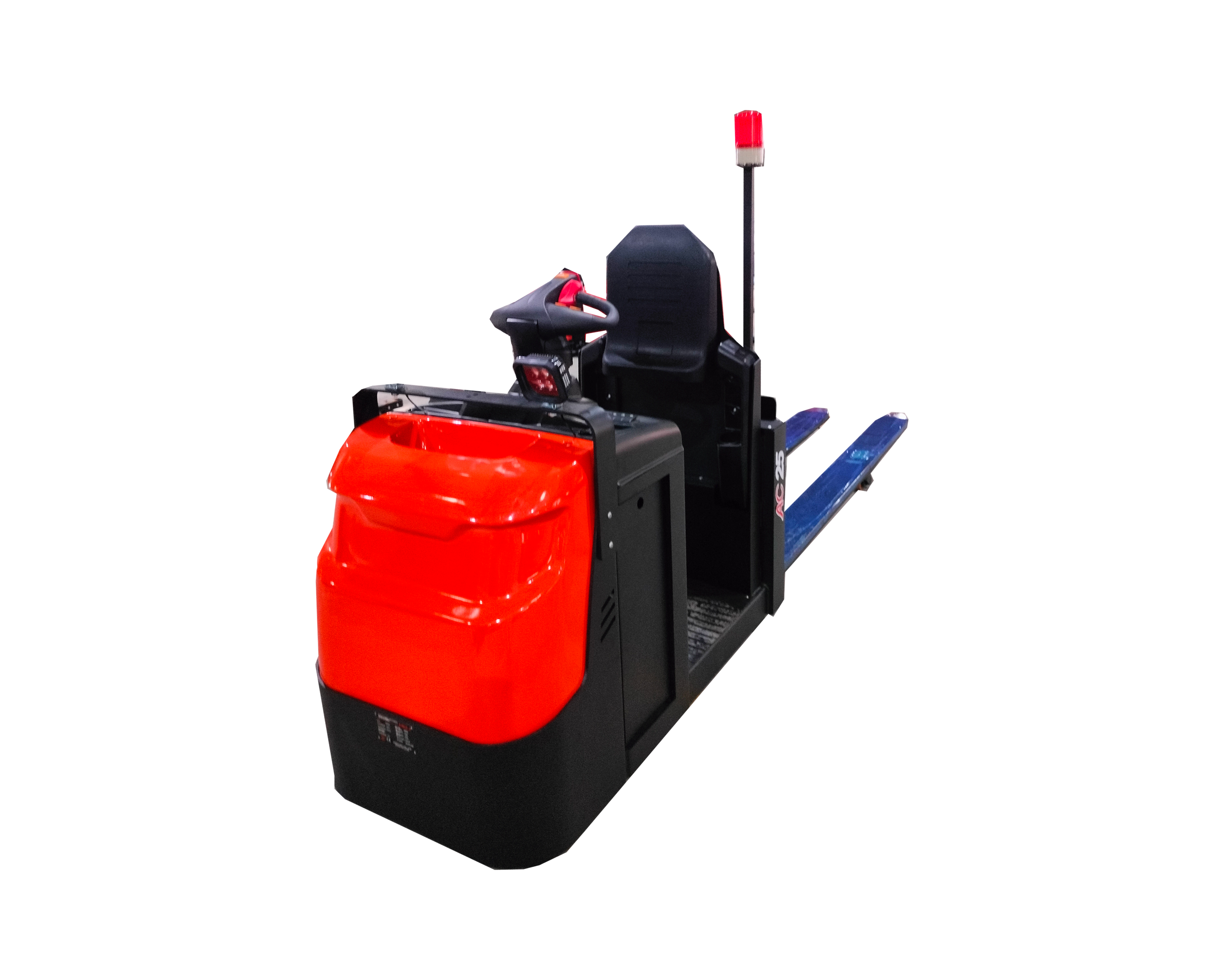
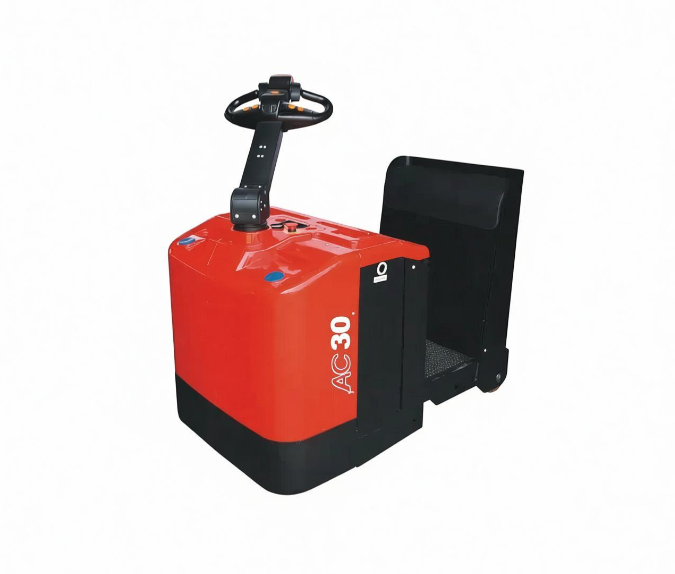
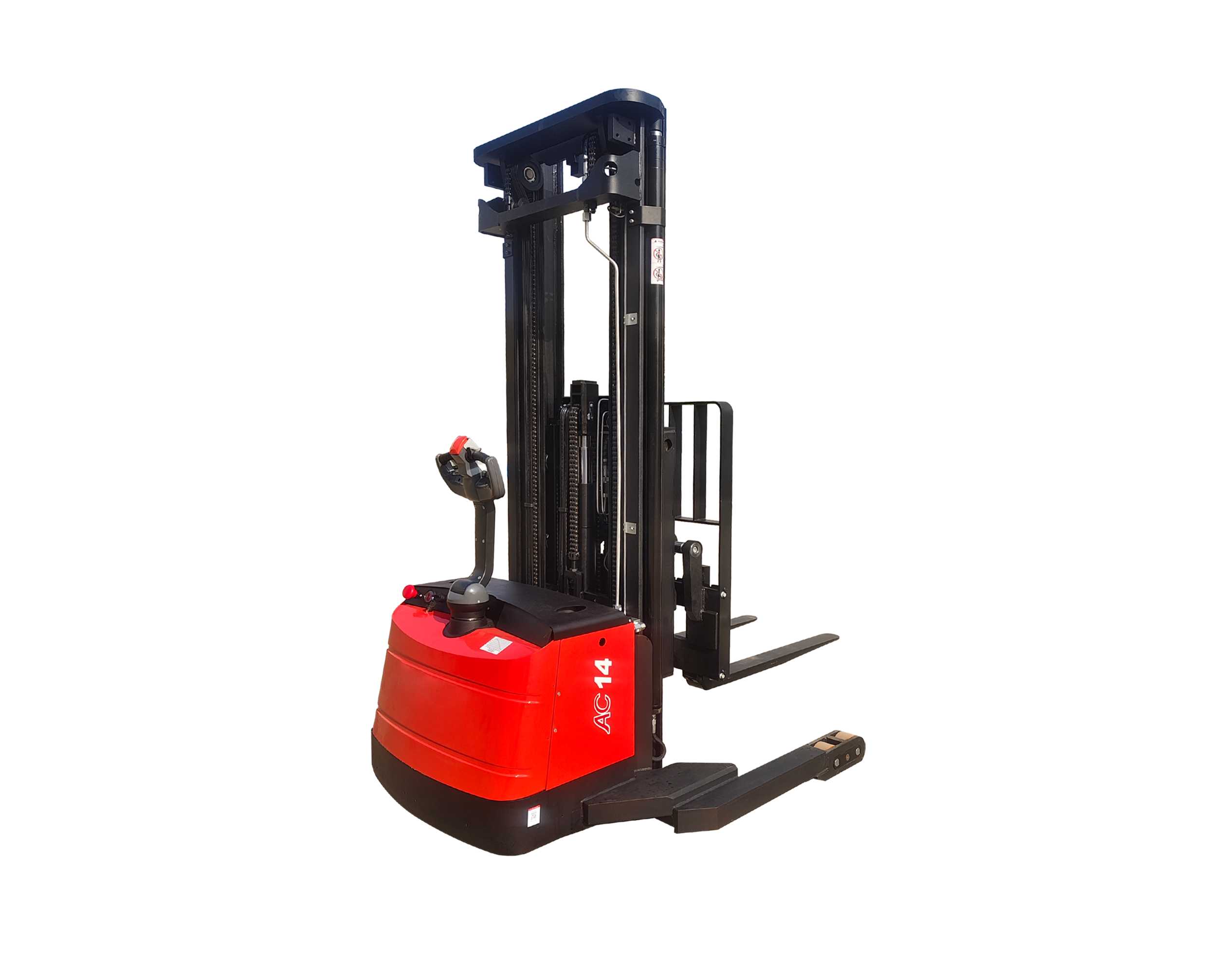
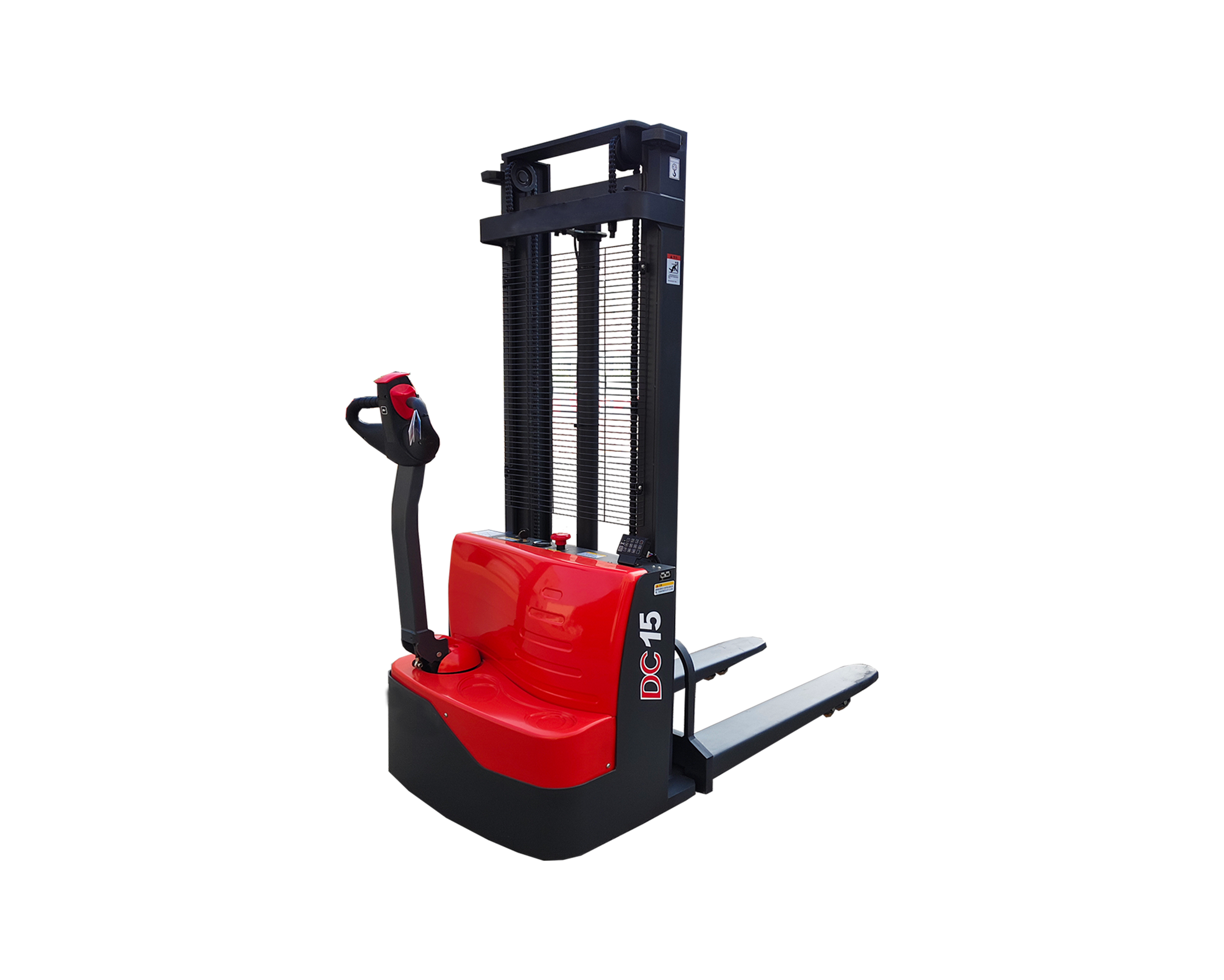
A powered pallet truck is designed to move palletized loads efficiently, but safe operation depends on proper inspection, load handling, route planning, and operator training. Whether you use a walk-behind electric pallet truck or a rider model, understanding the correct operating procedure helps reduce handling risks and supports reliable warehouse operations.
This guide explains how to use a powered pallet truck step by step, from pre-operation checks and pallet pickup to transporting loads, unloading, parking, and routine safety practices. Always follow the operating manual for your specific truck, as control layouts, operating modes, and safety features vary by model.
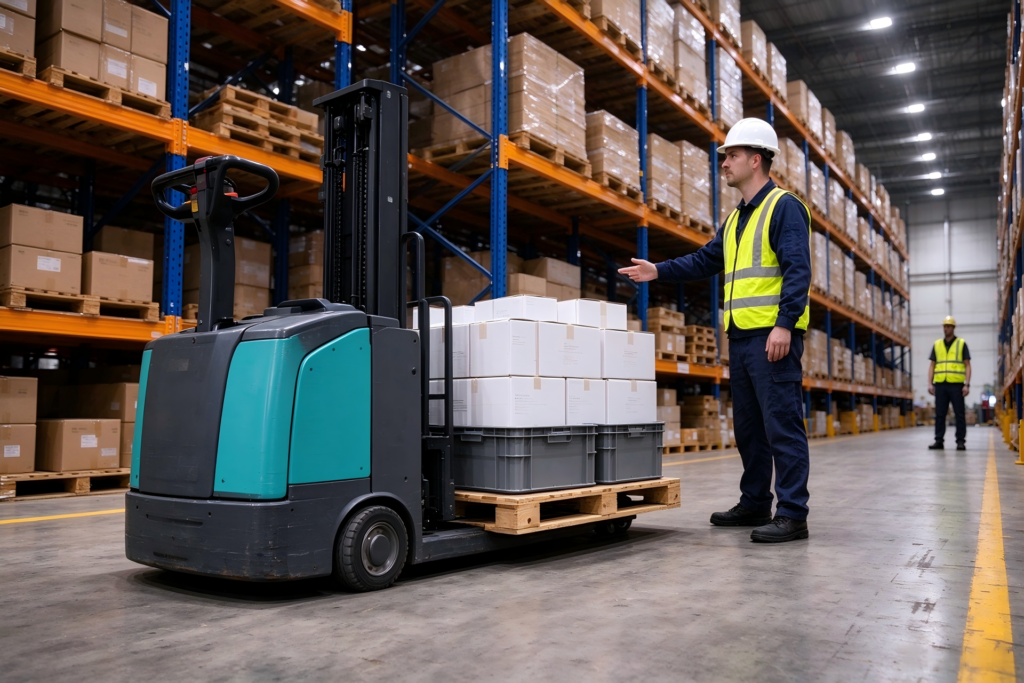
1. Understand the Powered Pallet Truck Before Use
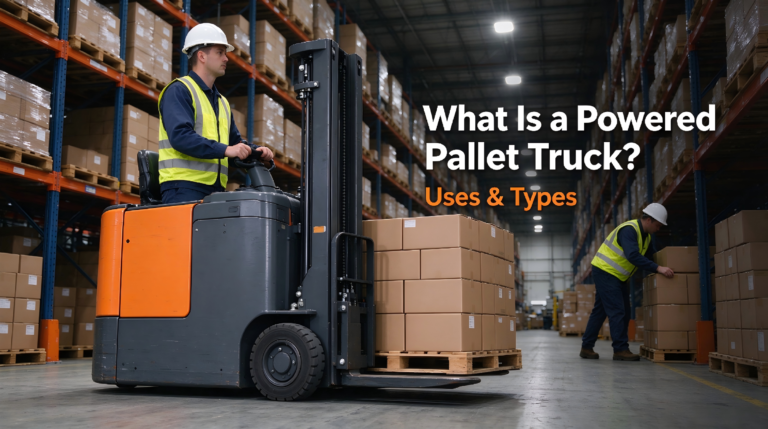
A powered pallet truck uses an electric drive system to move palletized goods and typically uses a powered lifting mechanism to raise the forks slightly above floor level. It is primarily designed for horizontal material transportation, rather than placing pallets on elevated warehouse racks.
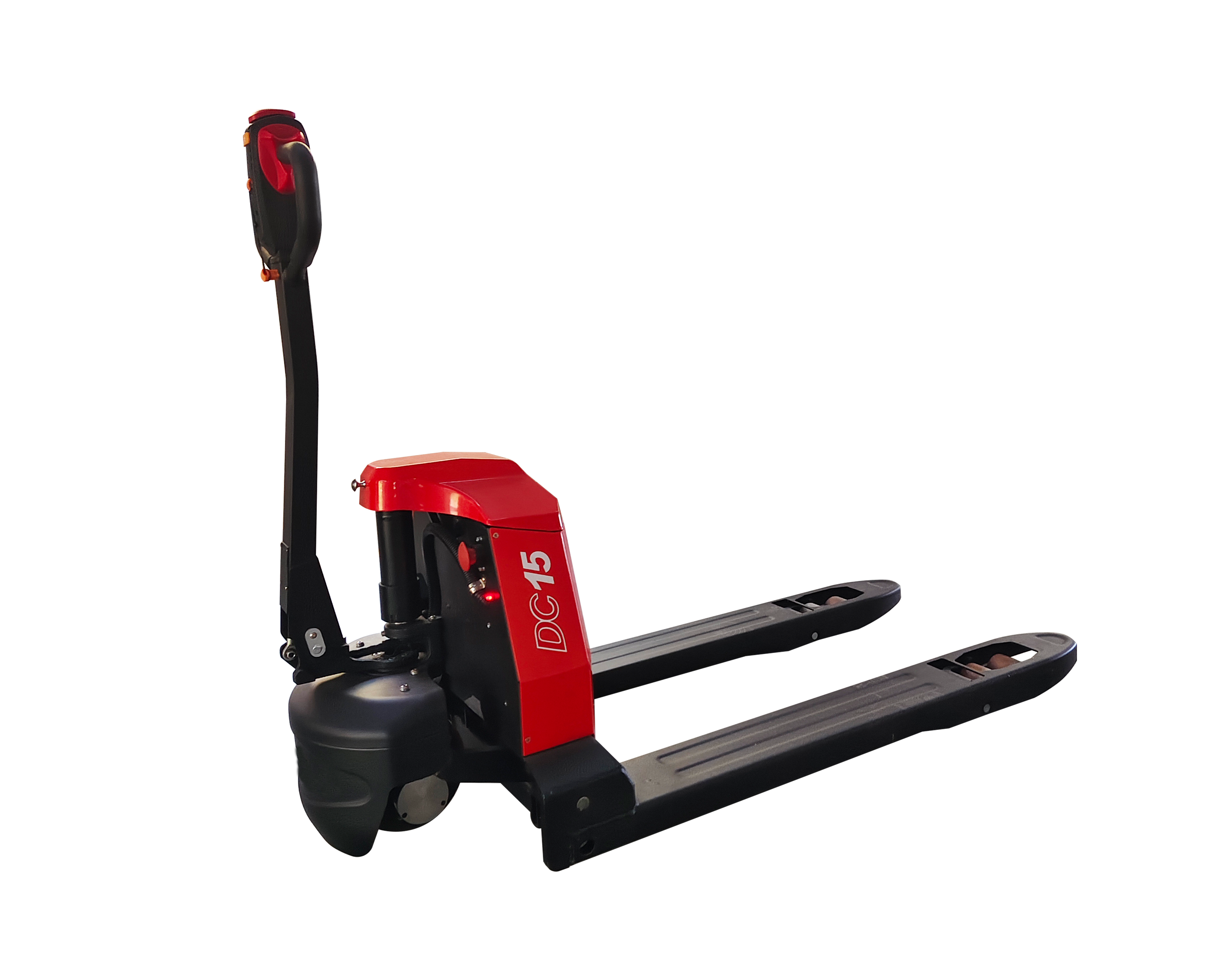
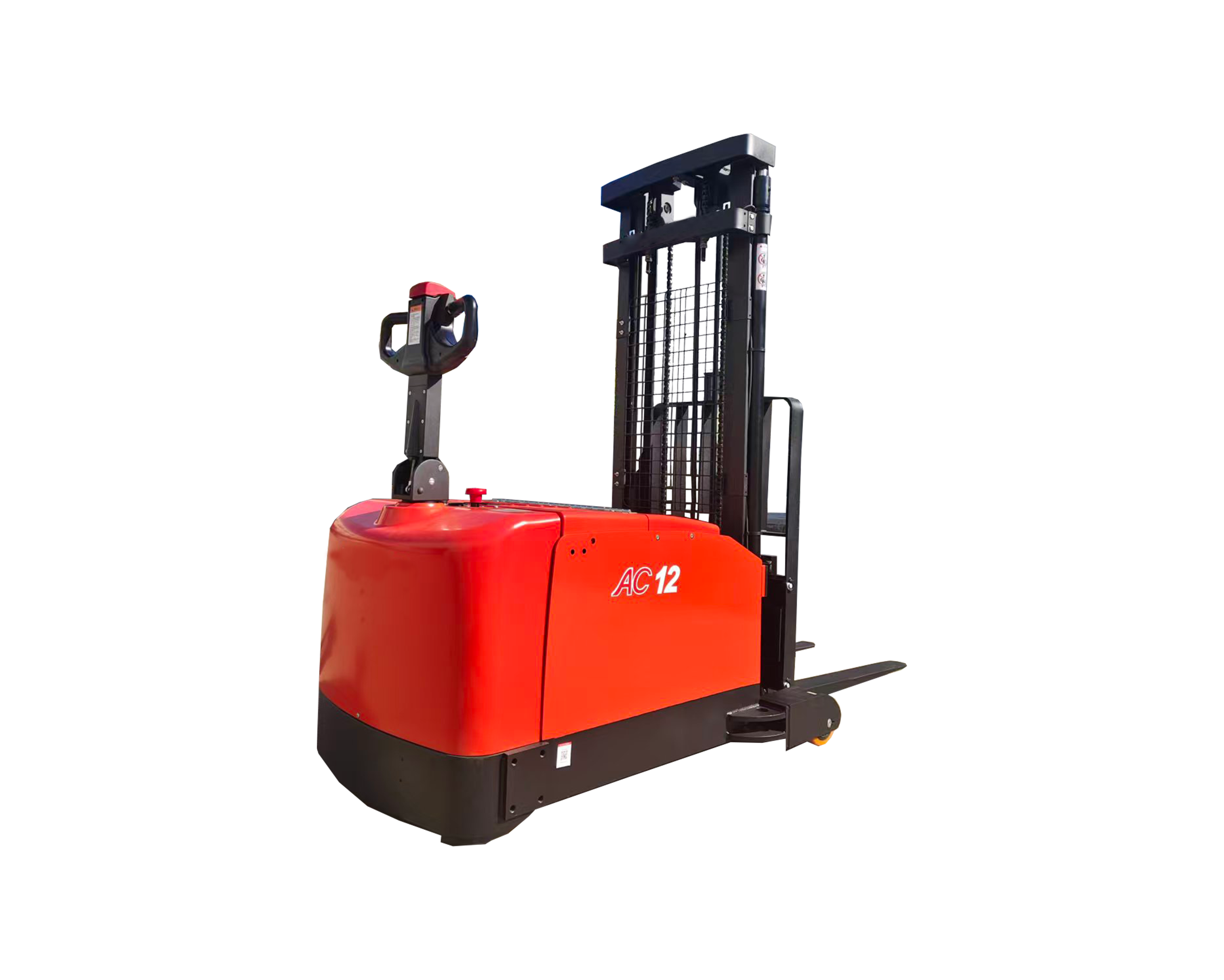
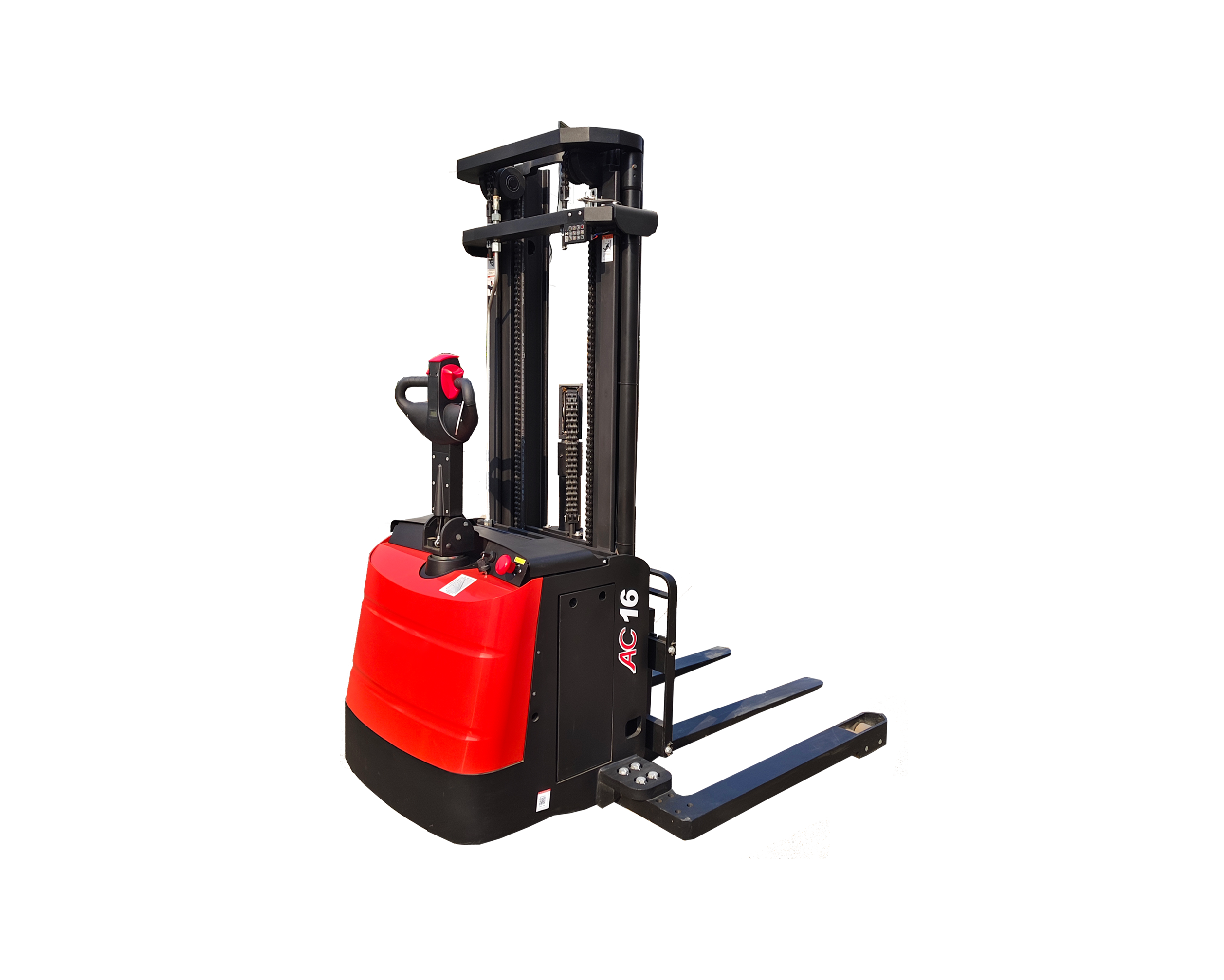
Before operating the equipment, identify its main components and understand their functions:
- Forks: Enter beneath the pallet and support the load during transportation.
- Control handle or control interface: Provides the designated controls for steering, travel, and lifting functions.
- Drive wheel and load wheels: Support powered movement and load handling.
- Battery and charging system: Supply electrical energy to the truck.
- Lifting mechanism: Raises and lowers the forks.
- Braking and safety devices: Help control the equipment and provide model-specific safety functions.
The exact component arrangement depends on the equipment design. Before use, review the manufacturer’s instructions, rated capacity, warning labels, and emergency procedures.
2. Inspect the Powered Pallet Truck Before Starting
A pre-operation inspection helps identify visible damage or faults before the truck enters service. OSHA provides sample powered industrial truck inspection checklists and emphasizes that inspection procedures should be adapted to the specific equipment and manufacturer’s instructions.
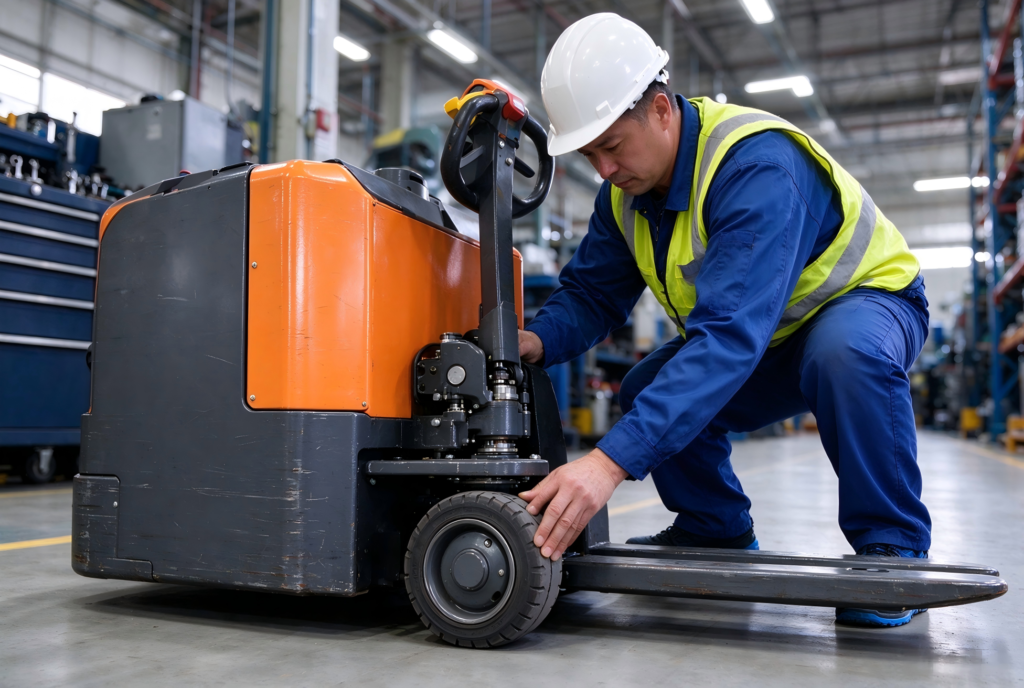
Check the following items before use, as applicable to your model:
- Forks and chassis: Look for visible cracks, deformation, or other structural damage.
- Wheels and tires: Check for excessive wear, damage, or debris that could affect movement.
- Battery and cables: Look for visible damage, loose connections, or other abnormalities. Follow the approved procedure for the battery type.
- Hydraulic system: Check for visible leaks or damaged components where accessible.
- Controls and emergency functions: Confirm that controls, braking, and fitted safety devices operate as specified.
- Warning labels and rated capacity information: Ensure that required information is legible and matches the equipment.
- Operating environment: Check the floor, aisle, pedestrian traffic, loading areas, and potential obstructions.
If the truck has a fault that could affect safe operation, remove it from service, report the problem, and arrange an appropriate inspection or repair. Do not attempt to operate defective equipment.
The required inspection frequency and checklist should follow applicable regulations, workplace procedures, and the manufacturer’s instructions.
3. Start the Powered Pallet Truck Correctly
Starting procedures differ between powered pallet truck models, so operators should use the controls and sequence specified in the operator’s manual.
Follow these general principles:
- Confirm that you are authorized and trained to operate the specific type of equipment.
- Make sure the intended travel route is clear and the surrounding area is safe.
- Position yourself in the designated operating position for the truck.
- Activate the truck using the manufacturer’s specified starting or access procedure.
- Check the battery or status indicators and confirm that no warning or fault condition is present.
- Test the designated travel, steering, braking, and lifting functions in a safe area, following the manual.
Become familiar with the forward and reverse controls, speed settings if fitted, emergency stop or emergency disconnect functions where provided, and the approved stopping procedure before transporting a load.
Never assume that the controls on one powered pallet truck operate in the same way as those on another model.
4. Position the Forks and Pick Up the Pallet
Correct pallet positioning helps support the load and reduces the risk of instability during movement.
Step 1: Assess the load
Check the pallet for visible damage, loose items, uneven weight distribution, and any other condition that could make the load unsafe to move. Confirm that the complete load is within the truck’s rated capacity and permitted operating limits.
Do not transport a damaged or unstable load until it has been made safe.
Step 2: Align the truck with the pallet
Approach the pallet at a controlled speed and align the forks with the pallet openings. Ensure that the intended route and surrounding area remain clear.
Step 3: Insert the forks
Insert the forks as far as the pallet design and equipment instructions require. Confirm that the pallet is properly supported and that the load is positioned within the truck’s permitted handling configuration.
Step 4: Raise the load
Use the designated lift control to raise the pallet only enough to provide the ground clearance required for travel. Avoid unnecessary lifting during transportation.
Step 5: Confirm stability
Before moving, check that the load remains stable and that nothing is caught beneath the pallet or obstructing the wheels. If the load shifts, stop and correct the problem before continuing.
5. Transport the Load Safely
Safe load transportation requires controlled movement, adequate visibility, and awareness of pedestrians and surrounding equipment.
Maintain a controlled speed
Move at a speed appropriate for the load, floor condition, available space, and workplace traffic. Avoid sudden acceleration, abrupt stops, and sharp turns that could destabilize the load.
Keep the load low
Transport the pallet with the forks at the low travel height specified by the manufacturer. Raising the load higher than necessary can increase instability and interfere with visibility.
Watch the travel route
Look ahead and check intersections, blind corners, doorways, and pedestrian crossings. Use designated travel routes where available and follow workplace traffic rules.
Maintain visibility
Do not continue in a direction that leaves you unable to see the route safely. Follow the truck manufacturer’s instructions for situations in which the load obstructs the operator’s view, and use an approved alternative travel direction or assistance where required.
Avoid unsafe surfaces
Check for slippery floors, potholes, debris, uneven transitions, and other hazards. Do not use a powered pallet truck on ramps or slopes unless the specific model is approved for that application and its operating instructions are followed.
Keep people clear of the truck and load
Never allow people to stand beneath a raised load or place their feet, hands, or other body parts where the truck, forks, pallet, or wheels could cause injury. Keep pedestrians clear of the operating path.
These principles are general safety guidance, not a substitute for hands-on training and the operating instructions for the equipment in use.
6. Unload the Pallet at the Destination
Correct unloading helps prevent product damage and keeps the receiving area organized.
- Approach the designated unloading location at a controlled speed.
- Confirm that the placement area is clear, level where required, and suitable for the pallet and load.
- Bring the truck to a controlled stop and position the pallet over the intended placement area.
- Lower the forks using the designated control until the pallet is properly supported by the floor or approved supporting surface.
- Confirm that the pallet is stable and that the forks can be withdrawn without dragging or damaging the load.
- Withdraw the forks carefully and clear the area before moving to the next task.
Do not leave a pallet partially supported or positioned where it could obstruct an aisle, emergency exit, pedestrian route, or other workplace access point.
7. Park and Secure the Powered Pallet Truck
Proper parking prevents unintended movement and helps keep warehouse routes clear.
When finishing a task or leaving the truck unattended:
- Move to a designated parking location that does not obstruct pedestrian routes, emergency exits, fire equipment, or loading access.
- Bring the truck to a complete stop.
- Lower the forks fully.
- Place the controls in the specified neutral or safe position.
- Switch off or deactivate the equipment according to the manufacturer’s instructions.
- Apply the parking brake or other specified securing measure, if fitted.
- Remove the access key or secure the truck against unauthorized use where applicable.
Never leave a powered pallet truck with raised forks in an area where people could be exposed to a hazard. Parking on a slope should be avoided unless specifically permitted by the manufacturer and workplace procedures.
8. Common Powered Pallet Truck Operating Mistakes
Avoiding common mistakes helps improve workplace safety and reduce unnecessary equipment damage.
| Common mistake | Why it matters | Better practice |
|---|---|---|
| Exceeding rated capacity | Can compromise safe handling and equipment stability | Check the rated capacity and load conditions before moving the pallet. |
| Carrying an unstable load | Goods may shift or fall during transportation | Reposition or secure the load before moving it. |
| Traveling too fast | Reduces the time available to react to hazards | Maintain a controlled speed suitable for the environment. |
| Turning abruptly | Can destabilize the load or cause loss of control | Slow down and maneuver smoothly. |
| Raising the load too high while traveling | Can increase instability and reduce visibility | Use the manufacturer’s specified low travel height. |
| Ignoring warning indicators or unusual noises | May indicate a fault that affects safe operation | Stop, report the issue, and follow the approved fault procedure. |
| Using the truck on an unsuitable slope | Can exceed the equipment’s permitted operating conditions | Check the model’s instructions and gradeability limitations. |
| Allowing pedestrians into the travel path | Creates collision and crushing hazards | Keep the operating route clear and follow workplace traffic controls. |
9. Battery Charging and Routine Care
Battery condition affects the availability and operation of an electric pallet truck. Charging and maintenance procedures depend on the installed battery chemistry, charger, and equipment design.
For routine care:
- Check the battery charge indicator before starting work.
- Follow the manufacturer’s charging procedure and use a compatible, approved charger.
- Inspect charging cables and connectors for visible damage.
- Keep the charging area suitable for the battery type and workplace requirements.
- Do not use damaged charging equipment or bypass battery safety systems.
- Follow the specified maintenance schedule and report abnormal battery behavior.
Lithium-ion and lead-acid batteries have different handling, charging, and maintenance requirements. Do not apply one battery type’s maintenance procedure to another without confirmation from the manufacturer.
If a battery becomes unusually hot, swollen, damaged, or emits an unusual odor, stop using it and follow the workplace emergency and reporting procedures. Do not attempt unauthorized repairs.
10. Operator Training and Workplace Safety
Safe powered pallet truck operation requires training that reflects the equipment and the workplace where it will be used.
In the United States, OSHA’s powered industrial truck standard establishes training and evaluation requirements for covered equipment and operations. Employers must ensure that operators have demonstrated the ability to operate the relevant equipment safely. Requirements should be assessed for the specific truck type and workplace rather than assuming every model has identical training needs.
Training should address, as applicable:
- The truck’s operating instructions, warnings, controls, and limitations.
- Rated capacity and safe load handling.
- Steering, maneuvering, stopping, and visibility.
- Pedestrian traffic and restricted spaces.
- Floor conditions, ramps, loading areas, and other workplace hazards.
- Pre-operation inspection and fault reporting.
- Battery charging and maintenance responsibilities.
New operators should receive appropriate instruction and supervised practical training before being permitted to operate equipment independently. Refresher training and evaluation may be required when unsafe operation is observed, an incident occurs, a different type of truck is assigned, or relevant workplace conditions change.
Refer to the applicable regulations, employer training program, and manufacturer documentation for the exact requirements.
Frequently Asked Questions
Do you need training to use a powered pallet truck?
Yes. Operators should receive training appropriate to the equipment and workplace before using a powered pallet truck independently. In the United States, applicable OSHA powered industrial truck requirements should be reviewed to determine the required training and evaluation.
Can a powered pallet truck carry any pallet that fits on its forks?
No. Physical fit alone does not establish that a load is safe to carry. Check the truck’s rated capacity, load distribution, pallet condition, and the manufacturer’s operating limitations before moving the load.
Should the forks stay raised while traveling?
The forks should generally remain at the low travel height specified by the manufacturer, providing sufficient ground clearance. Avoid carrying a load higher than necessary during travel.
Can a powered pallet truck be used on ramps?
Only when the specific truck is approved for the intended slope and the manufacturer’s operating instructions permit the application. Check the permitted gradient, load restrictions, travel direction, and any other relevant limitations before use.
What should you do if a powered pallet truck stops working?
Stop the operation, secure the equipment if it is safe to do so, and report the fault to the appropriate supervisor or service personnel. Do not bypass safety systems or attempt repairs outside your authorization and training.
How often should a powered pallet truck be inspected?
Inspection frequency depends on applicable regulations, workplace procedures, the equipment type, and manufacturer instructions. For covered powered industrial trucks in U.S. workplaces, OSHA requires examination at least daily before service and after each shift for trucks used around the clock. Confirm the applicable requirement for the specific equipment and operating environment.
Conclusion: Use a Powered Pallet Truck Safely and Effectively
Using a powered pallet truck correctly involves more than operating the travel and lift controls. Operators need to inspect the equipment, assess the load, position the forks correctly, maintain a controlled speed, watch for pedestrians, unload safely, and secure the truck after use.
For warehouse managers and equipment buyers, choosing the right configuration is equally important. Load capacity, pallet dimensions, travel distance, floor conditions, battery requirements, and operator needs should all be considered when selecting equipment.
LI-UNILIFT supplies material handling equipment for warehouse, factory, and logistics applications. If you are evaluating electric pallet trucks for your operation, review the available product specifications and discuss your application requirements with the LI-UNILIFT team.
Need help selecting a suitable electric pallet truck? Contact LI-UNILIFT to discuss your load requirements, warehouse layout, and material handling needs.
Follow UNILIFT MHE for More Material Handling Insights
Stay connected with UNILIFT MHE for the latest updates on electric pallet trucks, electric stackers, electric tuggers, warehouse equipment, material handling solutions, and industry insights. Follow our social media channels to discover new products, application scenarios, company updates, and practical information for modern warehouse and logistics operations.
Explore reliable electric pallet trucks, electric stackers, and material handling solutions at Unilift MHE.
If you would like to contact us, please click here.
If you would like to learn more about our news, please click here.
Facebook: Follow UNILIFT MHE on Facebook
TikTok: Follow UNILIFT MHE on TikTok
Instagram: Follow UNILIFT MHE on Instagram
X: Follow UNILIFT MHE on X
Pinterest: Explore UNILIFT MHE on Pinterest
LinkedIn: Connect with UNILIFT MHE on LinkedIn