Introduction
Reach truck forklifts play an important role in modern warehouse operations by helping businesses store and move pallets efficiently in narrow aisles and high-level racks.However, operating this equipment requires proper knowledge and training. Incorrect handling can result in product damage, equipment failure, or workplace accidents.Understanding how to operate a reach truck forklift correctly is essential for maintaining safety, improving productivity, and maximizing warehouse performance.
This guide explains the key steps of reach truck forklift operation, important safety practices, and ways to improve operating efficiency.
What Is an Electric Reach Truck Forklift?
An electric reach truck forklift is a battery-powered industrial vehicle with a compact design and extendable forks, ideal for narrow aisles and high-density storage. It offers quiet, clean operation and requires less maintenance compared to non-battery forklifts.
Why Proper Electric Reach Truck Operation Matters
Why Proper Electric Reach Truck Operation Matters: Correct reach truck forklift operation directly impacts warehouse safety and productivity. Professional operation helps reduce workplace accidents, protect stored goods, improve handling speed, and extend equipment service life, enabling a well – trained operator to achieve efficient operation while maintaining a safe working environment.
Forklifts are essential material handling equipment in logistics and warehousing. Proper operation is crucial for personnel safety and cargo integrity. Before operating a forklift, operators must obtain the necessary qualifications and fully understand the machine’s structure and safety operating procedures.
This article introduces the basic structure of battery reach forklifts, operating methods, and necessary safety precautions, providing practical guidance for both novice and experienced operators.
Step-by-Step Guide on How to Operate a Reach Truck Forklift
How to Operate a Forklift? The following content helps novice and experienced operators gain a detailed understanding of the structure and operating procedures of forklifts, thereby reducing operational risks.
Before Operating a Forklift
Hold Valid Qualifications
Only individuals holding a forklift operator certificate recognized by their country or region are permitted to operate a forklift. Operations must be conducted within the approved forklift type, scope of operation, and validity period of the certification. Operating without a valid certificate, with an expired certificate, or beyond the authorized scope is considered a violation.
Comply with Operational Requirements
Operators must be familiar with the model, performance, operating procedures, and safety precautions of the forklift they operate, and strictly adhere to the equipment manual and on – site safety regulations. Additionally, they must possess sufficient emergency response skills to handle unexpected situations during operation, such as equipment malfunctions or collision risks.
Familiarize yourself with the forklift: components, controls, and instruments, and conduct inspections
Forklift components
This includes the power system, steering system, braking system, working equipment, and safety devices, which should be prioritized for inspection.
Control Component Inspection
The operating handles include the lifting and tilting levers, which are used to control the lifting, tilting, and other movements of the forklift. For example, UNiLIFT-mhe forklifts are equipped with a central longitudinal joystick featuring fine-tuning control, allowing for easy millimeter-level adjustments to achieve precise forklift operation. Other control components to be inspected include pedals, the parking brake, and the steering wheel.
Instrument Components
The fuel gauge indicates the remaining fuel level of the forklift. Operators should verify the fuel level during the pre-operation inspection to avoid operating the forklift when fuel levels are too low. Additionally, other instruments include the oil pressure gauge, temperature gauge, hour meter, and battery discharge indicator.
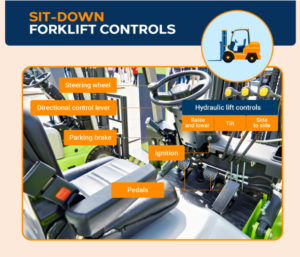
How to Operate a Forklift: A 5-Step Guide
Pre-Start Vehicle Inspection
Before operating the forklift, conduct a quick pre-operation check: inspect the body, forks, and tires for damage; verify hydraulic oil levels and test for leaks; check fuel, oil, and coolant levels (or battery charge for electric models); ensure the brakes are responsive; and confirm dashboard instruments show normal readings without any warning alarms.
Mounting, Starting, and Moving
① Mount the Forklift
Approach the forklift from the side, grasp the assist handle to maintain balance, and sit down smoothly in the seat. Fasten your seatbelt and adjust the seat to ensure comfortable operation and good visibility.
② Start the Vehicle
*For internal combustion forklifts:* Place the gear shift in neutral and engage the parking brake. Insert the key and turn it to the start position to ignite the engine. Allow the engine to idle smoothly, then check the dashboard for any abnormalities.
*For electric forklifts:* Confirm the parking brake is engaged, insert the key, and turn it to the “ON” position. Wait for the system self-check to complete and ensure the dashboard displays normal readings before operating.
③ Prepare to Move
Release the parking brake and shift the directional control lever to the desired direction of travel. Gently press the accelerator pedal until the forklift moves smoothly. Always start slowly and remain observant of your surroundings.
Safe Steering and Maneuvering
① Steering Operations
Turn the steering wheel smoothly and slowly, avoiding sharp turns. Before turning, reduce speed and sound the horn, while observing the area ahead for pedestrians or obstacles. Due to the differential effect of the inner wheels during a turn, always allow ample turning space to prevent collisions.
② Vehicle Maneuvering
When driving on flat surfaces, maintain a steady speed and avoid sudden acceleration or braking. When navigating ramps or uneven surfaces, slow down to prevent loads from shaking, falling, or causing a loss of vehicle control. Throughout the journey, stay highly attentive to changes in the environment ahead and on both sides, and always maintain a safe distance.
Load Handling: Lifting, Transporting, and Unloading
① Lifting the Load
Slowly drive the forklift to a position 0.3 meters (1 foot) away from the load. Adjust the fork spacing to align with the pallet or load insertion holes. Carefully advance the forks until they are fully inserted. Operate the lift control lever to slowly raise the load until the bottom of the load is about 5-10 cm (2-4 inches) off the ground. Simultaneously, adjust the tilt control lever to tilt the mast slightly backward to prevent the load from tipping forward or sliding.
② Transporting the Load
During transportation, maintain a low lifting height for the load to ensure vehicle stability. Drive at a steady speed and avoid sudden braking or sharp turns. When passing through narrow aisles and doorways, verify in advance that there is sufficient space and proceed slowly.
③ Unloading the Load
Move the forklift to the unloading area, adjust the position to align the load with the unloading point, and then slowly operate the lift control lever to securely place the load in the desired position. Once the load is stably placed, slowly reverse the forklift to disengage the forks from the load. If necessary, slightly adjust the tilt or lift control levers to assist in smoothly withdrawing the forks.
Reversing, Parking, and Shutdown Procedures
① Reversing Operations
Before reversing, always check the area behind the forklift. If visibility is obstructed, dismount to inspect the area or sound the horn to warn others. While reversing, turn the steering wheel slowly, maintain a steady speed, and constantly watch for pedestrians and obstacles behind the vehicle. Use the rearview mirrors to assist with observation if necessary.
② Parking and Shutdown
Choose a flat, unobstructed area for parking. Depress the brake pedal to bring the vehicle to a complete stop, shift into neutral, and engage the parking brake. Operate the control lever to lower the forks completely to the ground to eliminate any tripping hazards. If the forks are tilted, return the mast to a vertical position before shutting down. For internal combustion forklifts, allow the engine to idle for 2-3 minutes before turning it off. For electric forklifts, ensure the power is disconnected and the truck is securely locked.
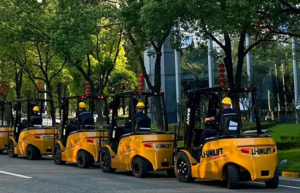
Essential Electric Reach Truck Forklift Safety Practices
Ensure Forklift Stability
Forklifts are far less stable than regular vehicles, and tip-overs are one of the leading causes of operator injury or death. It is essential to ensure that both the forklift and the load remain stable and balanced. Strictly adhere to the forklift’s rated load capacity and avoid overloading. Exercise extra caution when driving, turning, or operating on inclines, and avoid sudden acceleration, braking, or sharp turns.
Follow Load Capacity Limits
Because overloading is one of the most common causes of forklift accidents, operators must strictly adhere to load capacity limits by always verifying the maximum load capacity, load position, and forklift stability to ensure safety rules are followed, thereby protecting both personnel and equipment.
Maintain Safe Driving Speed
Because high-speed operation increases the risk of collisions, load instability, and loss of control, operators must maintain controlled speeds, especially when navigating narrow aisles, busy warehouse areas, and loading zones.
Maintain a Safe Distance
During operations, always keep a safe distance from the edges of platforms or ramps to prevent the forklift from tipping over or falling. After loading or unloading cargo, reverse the forklift and ensure an 8- to 12-inch clearance between the forks and the pallet before lowering or moving the equipment, thereby avoiding damage to the pallets or racks.
Keep Clear Visibility
Because large loads can obstruct visibility and compromise warehouse reach truck forklift safety, operators must maintain clear visibility by driving carefully when sight is limited, utilizing mirrors and warehouse signals, and requesting assistance when necessary.
Avoid Improper Maneuvers
To help prevent accidents, operators must avoid improper maneuvers and adhere to professional forklift safety practices by refraining from common unsafe behaviors such as turning too quickly, carrying unstable loads, parking incorrectly, and ignoring warning signs.
In shared work areas, it is essential to constantly stay alert to other workers and pedestrians. When approaching intersections, corners, or blind aisles, sound the horn to warn others of the forklift’s presence. Strictly adhere to the speed limits in the work zone to avoid being unable to react to unexpected situations due to speeding.
Common Mistakes During Electric Reach Truck Forklift Operation
Operators should avoid these common mistakes:
1. Ignoring Load Limits
Overloading can affect stability and safety.
2. Driving Too Fast
High speeds reduce reaction time.
3. Skipping Inspections
Small equipment problems can become major failures.
4. Incorrect Parking
Forklifts should always be parked in designated areas safely.
5.Improper battery maintenance
Incorrect charging or neglecting battery maintenance, affecting performance and lifespan.
6.Incorrect slope operation
Incorrect parking, starting, or driving on slopes.
Conclusion
Safe and efficient electric reach truck forklift operation is essential for modern warehouses with high-density storage and fast material handling needs. By following proper operating procedures, receiving professional training, and applying effective safety practices, companies can improve productivity, reduce risks, protect inventory, and extend equipment life. Whether using a traditional reach truck or an electric reach truck forklift, correct operation is the key to achieving safe, reliable, and efficient warehouse performance.
FAQ
Q1.How should a beginner operate a forklift?
To operate a forklift, a beginner must first obtain the relevant qualification certificate. Before starting, they must conduct a comprehensive inspection of the equipment’s condition. Once in the cab, they should fasten their seatbelt, start at a low speed following the operating procedures, and become familiar with the steering, braking, and hydraulic lever operations. When loading and unloading cargo, they must strictly control the fork height and mast tilt angle. After parking, they should properly secure the equipment and strictly adhere to safety protocols throughout the entire process.
Q2.Is it easy to learn to operate a forklift?
The difficulty of learning to operate a forklift varies from person to person. If you take professional training seriously and become familiar with the equipment’s operating principles and safety protocols, mastering the basic operations is not difficult. However, achieving a proficient, precise, and absolutely safe operating level requires long-term practice and accumulated experience. Generally speaking, it takes about two weeks of training to master the basic operations of a forklift.
Q3.What is the “Three-Feet Rule” for forklifts?
The “Three-Feet Rule” in forklift operation stipulates that operators should focus their attention within a three-foot radius while operating the forklift, in order to better control the surrounding environment and prevent accidents. When operating at intersections or in areas with low visibility, operators must slow down and honk the horn to alert others. If someone enters this safety distance, the operator must immediately stop the operation to ensure everyone’s safety. When loading and unloading goods, operators should also handle the cargo smoothly and slowly to prevent it from tipping over and damaging surrounding equipment.
Q4.Can I operate any type of forklift after receiving forklift safety training?
After completing forklift safety training and obtaining the relevant qualifications, you can only operate the specific types of forklifts covered by your training and qualification certificates. You cannot operate all types of forklifts. This is because different types of forklifts vary in structure, operating principles, and safety requirements. If you need to operate another type of forklift, you must receive the corresponding safety training and pass the assessment.