Introduction
In today’s fast-paced logistics and fulfillment environment, warehouse efficiency plays a critical role in business success. As customer expectations continue to rise, companies are under increasing pressure to process orders faster, improve inventory accuracy, and reduce operational costs.
For businesses planning to invest in warehouse equipment, choosing the right order picker is one of the most important decisions they can make. However, selecting the best equipment is not simply about comparing product specifications or prices. The process begins with understanding warehouse needs and identifying the operational challenges that the equipment must solve.
This order picker selection guide explains how businesses can evaluate their warehouse requirements and choose the most suitable solution for long-term operational success.
Why Warehouse Needs Should Guide Your Equipment Selection
No two warehouses operate in exactly the same way. Differences in storage layouts, inventory profiles, order volumes, and fulfillment strategies mean that equipment requirements can vary significantly.This is why warehouse order picker solutions should always be selected based on operational needs rather than generic recommendations.
The Cost of Choosing the Wrong Order Picker
Selecting equipment without a proper needs assessment can lead to:
Reduced picking efficiency
Higher labor costs
Increased maintenance expenses
Safety concerns
Limited scalability
An unsuitable machine can create operational bottlenecks that negatively affect warehouse performance.
Benefits of a Customized Equipment Strategy
Businesses that focus on warehouse equipment selection based on actual operational requirements often benefit from:
Faster order fulfillment
Better inventory control
Lower operating costs
Improved workplace safety
Higher return on investment
Understanding Your Warehouse Needs Before Choosing an Order Picker
A successful order picker buying guide always starts with a detailed evaluation of warehouse operations.
Warehouse Layout and Aisle Width
The physical design of your warehouse significantly influences equipment selection.
Questions to consider include:
How wide are your aisles?
How much maneuvering space is available?
Is storage density a priority?
Facilities with limited space may benefit from specialized equipment designed for narrow operating environments.
Storage Rack Height
Storage height is one of the most important factors when selecting the best order picker.
Warehouses with high-rack storage systems often require equipment capable of safely reaching elevated inventory locations while maintaining productivity.
Inventory Types and SKU Volume
Analyze your inventory profile:
Number of SKUs
Product dimensions
Product weight
Inventory turnover rates
Different products may require different warehouse picking equipment configurations.
Daily Picking Requirements
Businesses processing hundreds or thousands of orders daily need equipment designed for high-volume operations.
Understanding daily picking activity helps determine the ideal equipment capacity and performance requirements.
Future Business Growth
One of the most common mistakes in choosing warehouse picking equipment is focusing only on current requirements.
As order volumes increase, warehouses often need equipment that can support future expansion and operational growth.
Types of Order Pickers and Their Ideal Applications
Order pickers can be classified into three categories based on their drive type. However, in the modern warehousing industry, electric order pickers have become the dominant and most widely used type due to their higher efficiency, lower operating costs, and improved productivity.
Electric operated order picker offers a highly efficient and environmentally friendly solution for modern warehouse picking operations. Powered by batteries, it helps reduce operating costs, eliminate emissions, provide quieter operation, and support longer working hours. Due to its efficiency, reliability, and sustainability advantages, electric models are becoming increasingly popular among businesses aiming to improve warehouse productivity and achieve greener material handling operations.
Based on their applications, order pickers can be divided into the following three categories:
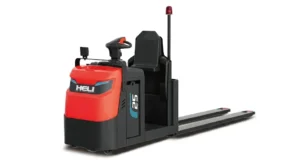
Low Level Order Picker
A Low Level Order Picker is designed for picking goods from lower shelf levels, typically at ground level or the first few storage levels. It allows operators to quickly access and transport items without the need for extensive lifting. These machines are commonly used in e-commerce warehouses, retail distribution centers, and facilities with high-volume order fulfillment requirements.
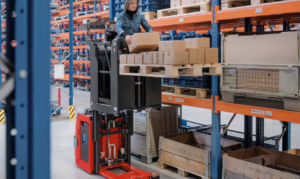
High Level Order Picker
A High Level Order Picker is designed for retrieving items from elevated storage locations, allowing operators to be lifted together with the platform to access higher shelves safely and efficiently. It is widely used in high-bay warehouses and distribution centers where maximizing vertical storage space is essential. This type of order picker improves picking accuracy and productivity while reducing the need for ladders or other access equipment.
Warehouse Order Picker
A Warehouse Order Picker is a general-purpose picking vehicle used to collect and transport products throughout warehouse operations. It can be configured for various picking heights and load capacities depending on the application. Warehouse order pickers help streamline order fulfillment, improve inventory accessibility, and increase overall warehouse efficiency by enabling faster and more organized picking processes.
How to Choose an Order Picker Based on Operational Goals?
The best approach to order picker for warehouse operations is aligning equipment capabilities with specific business objectives.
Improving Warehouse Efficiency
If the primary goal is to improve warehouse efficiency, focus on equipment that minimizes travel time and supports faster picking cycles.
Increasing Picking Productivity
Businesses seeking to increase picking productivity should evaluate equipment based on:
Travel speed
Lift speed
Ergonomic design
Technology integration
Reducing Labor Costs
Modern warehouse material handling equipment can help reduce labor dependency by enabling employees to complete more tasks in less time.
Maximizing Storage Space
For facilities experiencing capacity limitations, equipment designed for narrow aisles and vertical storage can significantly improve space utilization.
Enhancing Workplace Safety
Safety should remain a top priority during warehouse equipment selection.
Look for features such as:
Fall protection systems
Stability control technology
Emergency stop functions
Operator presence sensors
Common Mistakes When Selecting Warehouse Picking Equipment
Focusing Only on Price
The lowest-priced machine may not deliver the best long-term value.
Ignoring Scalability
Equipment should support future business growth rather than only current requirements.
Overlooking Maintenance Requirements
Maintenance costs directly impact total ownership expenses and equipment uptime.
Skipping Workflow Analysis
Many businesses purchase equipment before fully evaluating operational workflows.
A thorough assessment of warehouse processes is essential for selecting effective warehouse order picker solutions.
Benefits of Selecting the Best Order Picker for Your Warehouse
Businesses that invest time in understanding warehouse needs before purchasing equipment often experience measurable operational improvements.
Faster Order Fulfillment
Optimized equipment reduces travel time and increases picking speed.
Better Inventory Accuracy
Advanced technology integrations help minimize picking errors.
Lower Operating Costs
Improved efficiency leads to reduced labor and operational expenses.
Higher Return on Investment
The right equipment generates long-term productivity gains and supports sustainable business growth.
Conclusion
An order picker is an essential piece of logistics equipment designed to improve the speed, accuracy, and efficiency of warehouse picking operations. Depending on the application and working environment, businesses can choose from low-level, high-level, or general warehouse order picker models to meet their specific material handling needs. Among the various types available, the electric order picker has become the preferred choice for modern warehouses due to its high efficiency, low operating costs, reduced emissions, and operator-friendly design.
As warehousing and distribution demands continue to grow, order pickers play an increasingly important role in optimizing inventory management and order fulfillment processes. As a key category of industrial vehicles, electric order pickers help businesses enhance productivity, improve workplace safety, and achieve more efficient logistics operations. Choosing the right order picker can significantly contribute to better warehouse performance and long-term operational success.
Introduction to logistics equipment manufacturing companies
UNILIFT-MHE Logistics Equipment Company is a Chinese manufacturer committed to the intelligent and convenient development of logistics equipment. Our company has launched the Li-UNiLIFT industrial vehicle brand products, which boasts environmental advantages while also considering charging efficiency, economy, and ease of maintenance. This brand mainly includes the following forklift types: electric pallet trucks, electric stackers, reach trucks, electric order pickers, electric towing vehicles, and other warehouse material handling equipment for global logistics and industrial applications.