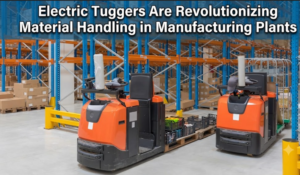
Introduction: The Changing Landscape of Manufacturing Material Handling
Modern manufacturing facilities face growing pressure to increase production efficiency while maintaining workplace safety, controlling labor costs, and meeting sustainability goals. As production volumes continue to rise and supply chains become more demanding, efficient internal material transportation has become a critical factor in overall factory performance.
Many factories still rely on manual pushing and pulling of carts, repetitive transportation of components between workstations, and labor-intensive material movement processes. These traditional methods often create bottlenecks, increase employee fatigue, and reduce operational efficiency.
By implementing an industrial electric tugger, manufacturers can achieve:
- Faster material flow throughout the facility
- Reduced worker fatigue and injury risks
- Improved production efficiency
- Enhanced workplace safety
- Lower long-term operating costs
What Role Do Electric Tuggers Play in Manufacturing Plants?
An electric tugger for manufacturing is specifically designed for horizontal transportation of wheeled loads. Instead of manually moving heavy carts or using larger equipment for simple towing tasks, factories can use electric tuggers to transport materials efficiently between production areas.
Common manufacturing applications include:
- Raw material transportation
- Assembly line material supply
- Work-in-progress (WIP) movement
- Finished product transfer
- Tool and equipment transportation
- Internal logistics support
Electric tuggers serve as a vital link between different stages of production, ensuring materials arrive at the right place at the right time.
Supporting Production Line Material Supply
Maintaining a continuous supply of materials is essential for production efficiency. Delays in material delivery can quickly disrupt operations and create costly downtime.
Electric tuggers support production line logistics by improving:
- Just-in-time (JIT) material delivery
- Line-side replenishment
- Continuous production flow
Benefits include:
- Fewer production interruptions
- Faster delivery of components and materials
- Better workflow organization
- Improved inventory movement control
Moving Heavy Industrial Carts
Manufacturing facilities frequently use carts, trailers, and racks to transport products and components. Moving these loads manually can be physically demanding and inefficient.
Electric tuggers can easily handle:
- Parts carts
- Storage racks
- Assembly fixtures
- Production trailers
- Equipment transport carts
Key advantages include:
- Higher towing capacity
- Stable and controlled movement
- Improved transportation efficiency
- Reduced physical workload for operators
Why Are Manufacturers Switching to Electric Tuggers?
Improving Factory Productivity
Manual transportation methods often slow down production by creating delays between workstations and consuming valuable labor resources.
Electric tuggers improve productivity by:
- Moving multiple carts in a single trip
- Reducing transportation time
- Improving workflow efficiency
- Supporting continuous material supply
As a result, employees spend less time transporting materials and more time performing value-added production activities.
Reducing Labor Intensity
Repeated pushing and pulling of heavy loads can cause fatigue and reduce worker performance throughout a shift.
Electric tuggers help manufacturers:
- Minimize physically demanding tasks
- Reduce operator fatigue
- Improve employee comfort
- Increase workforce productivity
This is particularly important in facilities operating multiple shifts or handling large volumes of materials daily.
Improving Workplace Safety
Manual cart handling often increases the risk of workplace injuries caused by excessive force, poor load control, and repetitive motion.
Electric tuggers improve safety by providing:
- Controlled towing speeds
- Smooth acceleration and braking
- Better load stability
- Reduced manual handling requirements
These features help create a safer and more ergonomic working environment.
Key Features of Electric Tuggers for Manufacturing Applications
High Towing Capacity for Industrial Loads
Different manufacturing environments require different towing capacities depending on the size and weight of transported materials.
| Application | Recommended Capacity |
|---|---|
| Small component carts | 1–3 Ton |
| Production material carts | 3–10 Ton |
| Heavy industrial equipment | 10 Ton+ |
Factors to consider when selecting capacity include:
- Total cart weight
- Number of carts per trip
- Travel distance
- Floor conditions
- Production volume
Choosing the correct towing capacity ensures safe and efficient operation.
Powerful Motor and Drive System
A manufacturing electric tugger should provide strong performance during frequent transportation cycles.
Important characteristics include:
- High torque output
- Smooth acceleration
- Reliable operation
- Consistent performance under load
Modern AC drive motors offer significant advantages:
- Lower maintenance requirements
- Improved energy efficiency
- Longer service life
- Stronger overall performance
These systems are ideal for automotive plants, machinery manufacturers, and metal processing facilities.
Durable Industrial Construction
Manufacturing environments can be demanding, requiring equipment capable of withstanding daily wear and heavy usage.
Important construction features include:
- Reinforced steel frame
- Heavy-duty towing hitch
- Industrial-grade wheels
- Protective powder-coated surfaces
Benefits include:
- Longer service life
- Better impact resistance
- Reduced maintenance costs
- Reliable operation in harsh industrial environments
Battery Performance for Continuous Operation
Many factories operate extended shifts, making battery performance a critical factor.
Lithium battery technology has become increasingly popular due to its advantages:
- Fast charging capability
- Longer cycle life
- Maintenance-free operation
- Opportunity charging during breaks
A high-performance battery system helps reduce downtime and ensures equipment remains available throughout production schedules.
Electric Tugger Applications Across Different Manufacturing Industries
Automotive Manufacturing
Automotive facilities rely heavily on efficient material transportation.
Typical applications include:
- Moving vehicle components
- Supplying assembly lines
- Transporting production carts
- Supporting lean manufacturing systems
Benefits include improved JIT delivery and reduced production delays.
Electronics Manufacturing
Electronics manufacturers require precise and efficient material movement.
Common applications include:
- Transporting component containers
- Delivering assembly materials
- Supporting clean production environments
Advantages include:
- Quiet operation
- Precise maneuverability
- Zero emissions during operation
Machinery and Heavy Equipment Manufacturing
Heavy manufacturing environments often involve large and heavy components.
Electric tuggers help move:
- Large machine parts
- Welding fixtures
- Production tools
- Heavy transport carts
These operations typically require higher towing capacities and durable construction.
Aerospace Manufacturing
Aerospace facilities demand strict safety standards and precise material handling.
Applications include:
- Moving aircraft components
- Transporting specialized tools
- Supporting production logistics
Key requirements include:
- High operational reliability
- Precise control
- Enhanced safety systems
Electric Tugger vs Manual Material Handling in Factories
| Feature | Electric Tugger | Manual Cart Handling |
|---|---|---|
| Load Capacity | High | Limited |
| Labor Requirement | Low | High |
| Transportation Speed | Faster | Slower |
| Worker Fatigue | Reduced | Higher |
| Safety | Improved | More Risks |
| Productivity | Higher | Lower |
Electric tuggers enable factories to move heavier loads more efficiently while reducing dependence on manual labor and improving overall operational performance.
Electric Tugger vs Forklift for Manufacturing Material Flow
| Feature | Electric Tugger | Forklift |
|---|---|---|
| Main Function | Horizontal Towing | Lifting and Stacking |
| Best Application | Carts and Trailers | Pallets and Racks |
| Space Requirement | Smaller | Larger |
| Noise Level | Lower | Higher |
| Best For | Production Line Supply | Warehouse Storage |
Electric tuggers excel in environments where materials are transported on wheeled carts. Forklifts remain essential for pallet handling and vertical storage tasks.
Many modern factories utilize both solutions to maximize operational efficiency.
How to Choose the Right Electric Tugger for a Manufacturing Plant
Step 1: Analyze Material Flow Requirements
Evaluate:
- Distance between workstations
- Transportation frequency
- Production layout
- Material flow routes
Understanding logistics requirements helps identify the most suitable solution.
Step 2: Determine Required Towing Capacity
Consider:
- Maximum load weight
- Number of carts per trip
- Future production expansion plans
Selecting a tugger with adequate capacity ensures long-term operational flexibility.
Step 3: Select the Correct Tugger Type
Walk-Behind Electric Tugger
Best suited for:
- Small manufacturing facilities
- Tight operating spaces
- Flexible transportation tasks
Advantages:
- Compact size
- Easy operation
- Excellent maneuverability
Ride-On Electric Tugger
Best suited for:
- Large production facilities
- Long transportation routes
- Continuous material supply operations
Advantages:
- Higher productivity
- Reduced operator fatigue
- Greater towing capacity
Step 4: Evaluate Safety and Maintenance
Before purchasing, review:
- Emergency stop systems
- Braking performance
- Battery accessibility
- Spare parts availability
- Technical support services
Reliable supplier support is essential for minimizing downtime.
How Electric Tuggers Support Smart Manufacturing
As Industry 4.0 technologies continue to evolve, electric tuggers are becoming increasingly integrated into smart manufacturing environments.
Modern systems may include:
- Battery monitoring technology
- Digital control systems
- Real-time diagnostics
- Usage data tracking
These capabilities support:
- Predictive maintenance
- Fleet optimization
- Improved operational visibility
- More efficient production logistics
Future Trends of Electric Tuggers in Manufacturing
Integration with Lean Manufacturing
Electric tuggers play a critical role in supporting:
- Milk-run logistics
- Just-in-time delivery systems
- Continuous production flow
These practices help eliminate waste and improve operational efficiency.
Automation and Smart Transportation
Future developments are expected to include:
- AGV-compatible towing systems
- Autonomous electric tuggers
- Automated material transportation routes
These innovations will further reduce labor requirements and improve logistics accuracy.
Sustainable Factory Operations
As manufacturers pursue environmental goals, electric tuggers contribute through:
- Reduced emissions
- Lower energy consumption
- Cleaner indoor environments
- Improved sustainability performance
Manufacturing Electric Tugger Buying Checklist
| Feature | What to Evaluate |
|---|---|
| Towing Capacity | Matches production loads |
| Motor | High torque and reliability |
| Battery | Supports factory operating hours |
| Structure | Heavy-duty industrial design |
| Safety | Operator protection systems |
| Size | Fits factory layout |
| Maintenance | Easy servicing and support |
Conclusion: Electric Tow Tractor Are Transforming Factory Material Handling
As manufacturing facilities continue to focus on efficiency, safety, and sustainability, electric tuggers are becoming an essential part of modern factory operations.
By improving internal logistics, supporting production line supply, reducing worker fatigue, and enhancing workplace safety, electric tuggers help manufacturers achieve higher productivity while lowering operating costs.
Whether operating in automotive, electronics, aerospace, or heavy equipment manufacturing, selecting the right electric tugger depends on several factors, including load requirements, factory layout, transportation frequency, and working environment.
Optimize your manufacturing material flow with reliable electric tugger solutions designed for production lines, factories, and industrial applications.
FAQ
1. What are electric tuggers used for in manufacturing plants?
Electric tuggers are used to transport wheeled carts, raw materials, components, tools, equipment, and finished products between different areas of a manufacturing facility.
2. How do electric tuggers improve manufacturing efficiency?
They improve efficiency by reducing transportation time, moving multiple carts simultaneously, supporting just-in-time material delivery, and creating smoother production workflows.
3. Can electric tuggers replace forklifts in factories?
Electric tuggers can replace forklifts for horizontal transportation tasks when materials are already placed on carts or trailers. However, forklifts are still required for lifting, stacking, and pallet storage operations.
4. What industries commonly use electric tuggers?
Electric tuggers are widely used in automotive manufacturing, electronics production, aerospace facilities, machinery manufacturing, metal processing plants, and general industrial production environments.
5. Are lithium battery electric tuggers better for manufacturing?
Yes. Lithium battery electric tuggers offer faster charging, longer battery life, lower maintenance requirements, and higher equipment availability, making them ideal for multi-shift manufacturing operations.