Introduction
For electric forklift buyers, the mast is one of the most important components that directly affects lifting capacity, operational stability, and workplace safety.
A forklift mast is not simply a welded steel frame. A reliable electric forklift mast manufacturing process requires carefully selected raw materials, precision machining, advanced welding technology, accurate assembly, and strict quality control.
As a professional electric forklift manufacturer, understanding how forklift masts are produced helps buyers evaluate supplier capabilities, product reliability, and long-term operating performance.
This article explains the complete process of manufacturing an electric forklift mast, from high-strength steel preparation to final performance testing.
What Is an Electric Forklift Mast?
An electric forklift mast is the vertical lifting structure of electric forklift that installed at the front of an electric forklift. It supports the forks and enables the lifting and lowering of loads through the hydraulic system.
The mast is responsible for maintaining load stability during material handling operations and plays a key role in determining the forklift’s lifting height, load capacity, and overall safety performance.
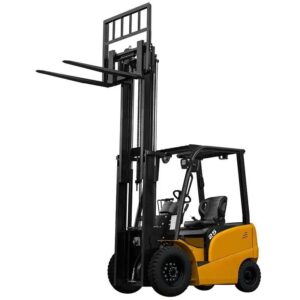
The main components of an electric forklift mast structure include:
Inner Mast
The inner mast is the movable part of the forklift mast that moves vertically during lifting operations. It helps increase lifting height, guide smooth movement, and support the load during handling.
Outer Mast
The outer mast is the fixed supporting frame connected to the forklift chassis. It provides structural support, improves overall mast stability, and transfers lifting forces to the forklift frame during operation.
Fork Carriage
The fork carriage is the component that connects the forks to the mast assembly and moves vertically along the mast rails. It securely holds the forks, transfers lifting forces, and supports different pallet loads during material handling operations.
Lift Cylinders
Lift cylinders generate the hydraulic force required to raise and lower the mast.
Working principle:Hydraulic pressure pushes the cylinder rod → mast sections move upward → forks lift the load.
Roller System
The roller system is installed between mast sections to reduce friction and guide smooth vertical movement during lifting operations. It helps lower mechanical resistance, improve lifting performance, and extend the service life of the mast structure.
Material Selection: Using High-Strength Steel for Forklift Mast Production
The quality of raw materials directly determines the durability and strength of the forklift mast.During daily operations, the mast must withstand:
- Heavy lifting pressure
- Repeated loading cycles
- Impact forces during transportation
- Long-term industrial use
At UNILIFT-MHE, material selection is a critical step in the electric forklift mast manufacturing process because the mast must withstand heavy loads, lifting pressure, and repeated impacts during daily operations.
We typically use HSLA Steel (High-Strength Low-Alloy Steel) as the primary material for electric forklift masts due to its excellent strength, rigidity, and deformation resistance. For heavy-duty electric forklifts, we select High-Strength Alloy Structural Steel to further improve mast stability, load-bearing capacity, and service life. These high-quality materials ensure safe and reliable forklift performance in warehouses, logistics centers, and industrial applications.
Advantages of High-Strength Steel Electric Forklift Mast
The forklift mast is a core load-bearing component that supports the weight of goods and withstands lifting forces. Its advantages and performance play a crucial role in determining the overall quality, stability, and reliability of the forklift.
Electric Forklift Mast Manufacturing Process Step by Step
The electric forklift mast production process includes several precision manufacturing stages, from steel cutting to final assembly.
Step 1: Steel Cutting and Preparation
The first stage of the forklift mast fabrication process is preparing raw steel materials.
Production process:
Raw steel plates → Cutting → Dimension inspection → Component preparation
Modern manufacturers use:
- CNC cutting equipment
- Laser cutting machines
- Automated positioning systems
The purpose is to ensure:
- Accurate component dimensions
- Consistent production quality
- Reduced material waste
Precise cutting provides a solid foundation for later welding and assembly processes.
Step 2: CNC Machining and Component Processing
After steel cutting, key components require further machining.
The forklift mast machining process focuses on improving component accuracy.
Main machining areas include:
- Roller mounting holes
- Cylinder installation points
- Connection brackets
- Structural positioning areas
CNC machining provides:
- Higher dimensional accuracy
- Better component matching
- Reduced vibration during operation
Accurate machining ensures that mast components work smoothly after assembly.
Step 3: Forklift Mast Welding Process
Welding is one of the most critical steps in forklift mast manufacturing.
The welding process connects individual steel components into a complete mast structure.
Main welding operations include:
- Frame welding
- Reinforcement welding
- Structural connection welding
Modern factories often use:
- Robotic welding systems
- Welding fixtures
- Automated positioning equipment
Compared with manual welding, robotic welding forklift mast production provides:
- Stronger welding joints
- More consistent quality
- Lower manufacturing errors
A high-quality welding process improves the mast’s ability to handle heavy loads and repeated operation.
Step 4: Mast Assembly and Alignment
After welding, all mast components are assembled together.
The forklift mast assembly process includes:
- Installing rollers
- Installing lift cylinders
- Connecting mast sections
- Adjusting component clearance
- Checking alignment
During assembly, manufacturers carefully adjust the relationship between moving parts to ensure:
- Smooth lifting movement
- Low friction operation
- Stable load handling
Proper alignment prevents abnormal wear and improves forklift reliability.
4. Surface Treatment and Corrosion Protection
After manufacturing and assembly, the forklift mast requires surface protection.
Rust Resistance
Protects steel structures from corrosion in humid or harsh working environments.
Surface Durability
Improves resistance against scratches and daily wear.
Equipment Lifespan
A durable forklift mast design reduces maintenance requirements and extends service life.
5. Forklift Mast Quality Control and Testing
Quality inspection is an essential part of the forklift mast manufacturing process.Before installation on an electric forklift, each mast must pass multiple inspection procedures.
Forklift Mast Load Testing
In addition to selecting qualified materials, essential testing procedures are also critical factors in evaluating the final quality and performance of a forklift.The forklift mast load testing process verifies whether the mast can safely handle rated loads.
Testing includes:
- Maximum lifting capacity
- Structural stability
- Load-bearing performance
This helps identify potential deformation or structural issues before delivery.
Operating Performance Test
Final testing evaluates:
- Smooth lifting operation
- Hydraulic performance
- Noise level
- Movement stability
Only qualified forklift masts can be assembled into finished electric forklifts.
6. Why High-Quality Mast Manufacturing Matters for Electric Forklifts?
A high-quality reinforced electric forklift mast directly improves forklift performance.
Improved Safety
A strong mast structure improves operational safety by reducing structural deformation, minimizing load instability, and lowering risks during lifting operations.
Better Lifting Performance
A well-manufactured mast enhances forklift performance by improving maximum lifting height, load handling efficiency, and operational accuracy.
Longer Service Life
High-quality mast manufacturing extends forklift service life by reducing maintenance frequency, component replacement costs, and unexpected downtime.
Conclusion
The electric forklift mast manufacturing process is a complex production system involving material selection, steel cutting, CNC machining, welding, assembly, surface treatment, and performance testing.
A well-designed high-strength steel electric forklift mast provides better stability, higher lifting performance, and longer service life.
For electric forklift buyers, understanding the manufacturing process helps identify reliable suppliers and select equipment with better durability, safety, and operational efficiency.
Choosing a manufacturer with advanced production technology and strict quality control is essential for achieving long-term value from electric forklift investments.