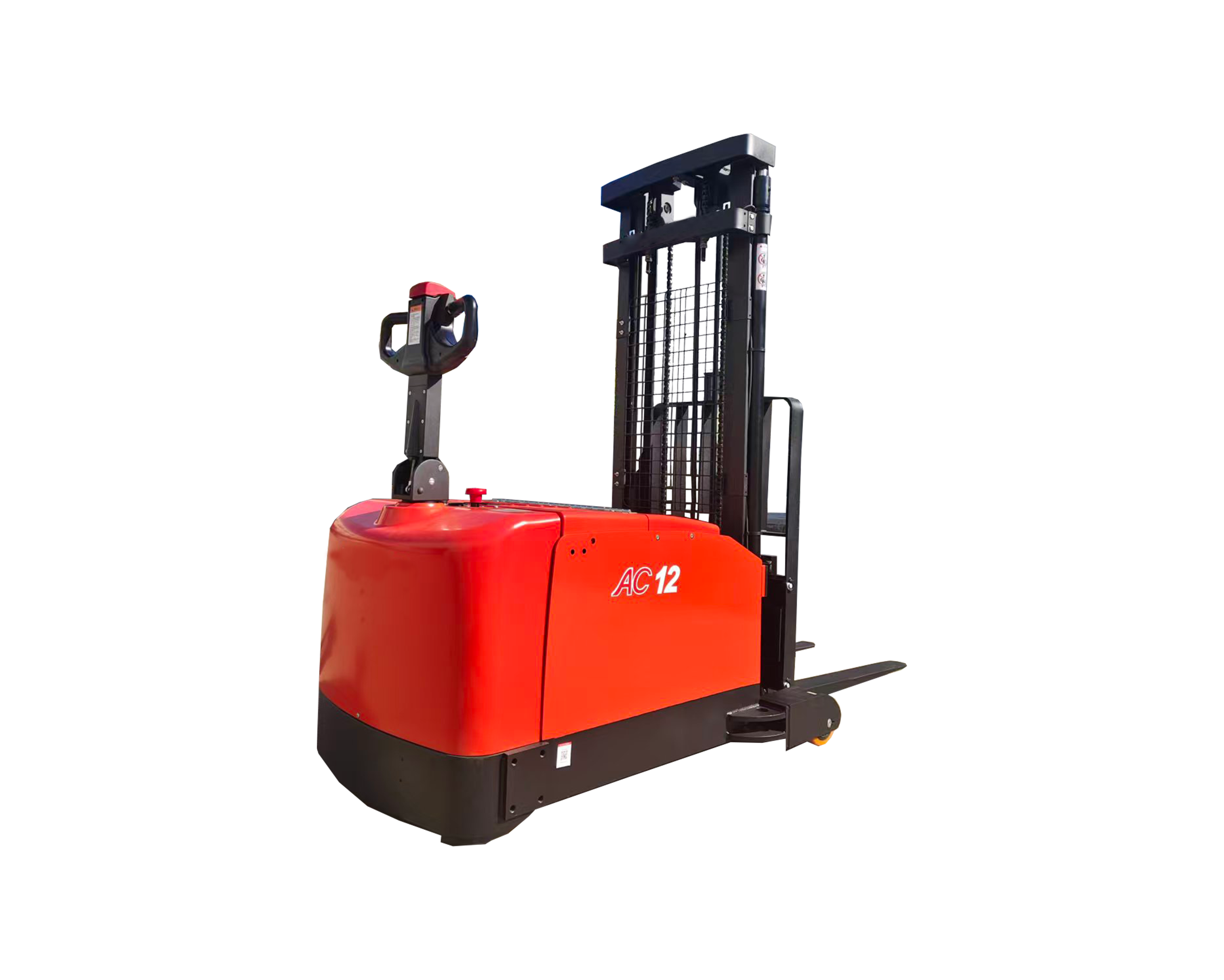
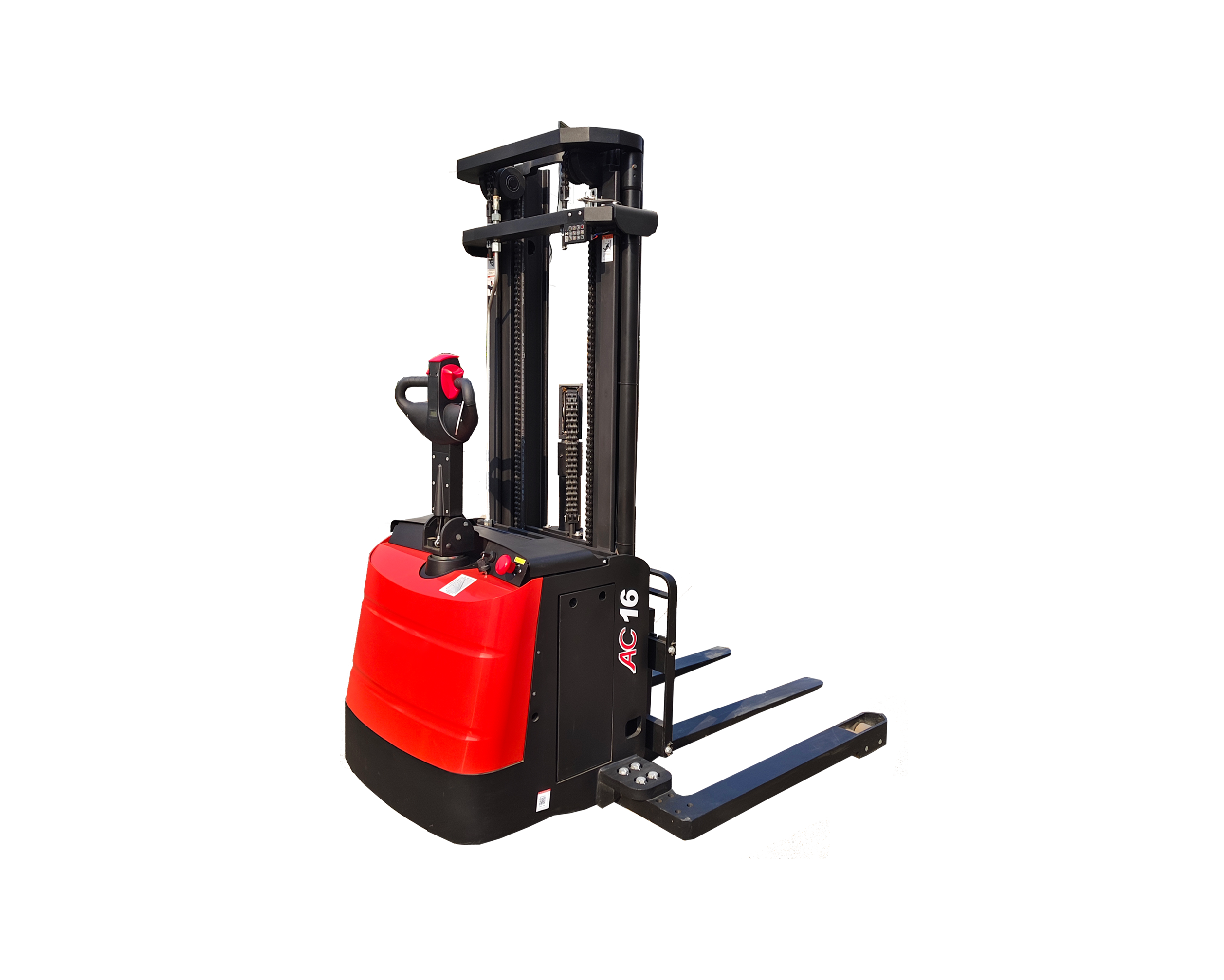
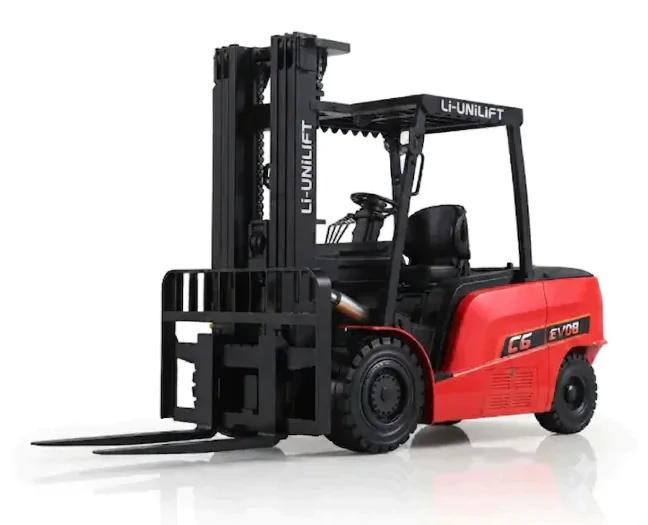
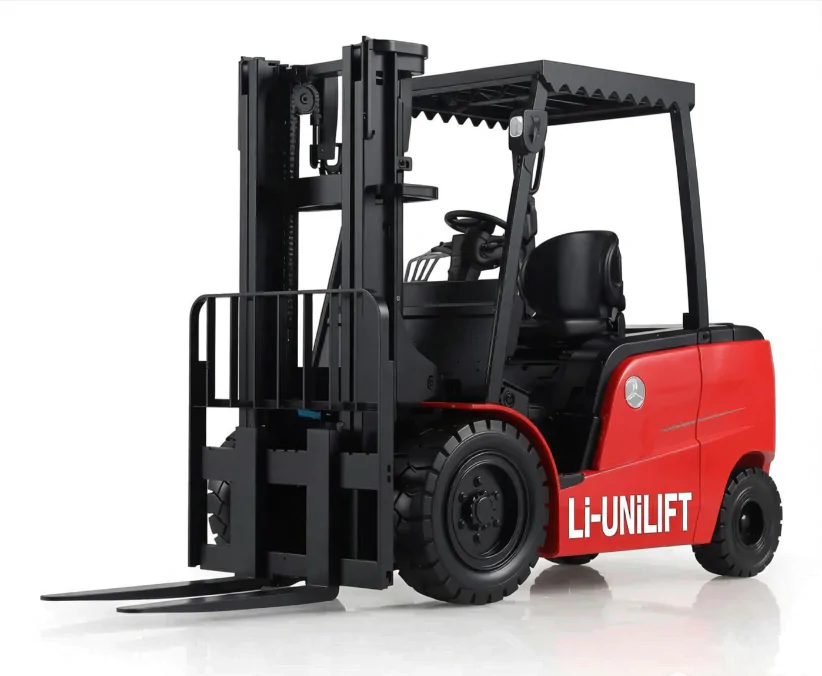
Electric Stacker Buying Guide content helps warehouse managers, distributors, and purchasing teams compare electric pallet stackers based on real operating requirements rather than price alone. The right machine should match your load capacity, lifting height, pallet dimensions, aisle width, operating frequency, battery system, safety requirements, and service expectations.
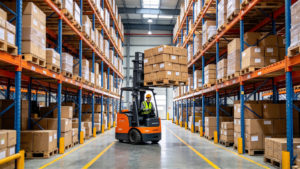
1. Electric Stacker Buying Guide: Define Your Warehouse Requirements
Before comparing models, identify what the machine will actually do. Common applications include pallet stacking, short-distance pallet transport, loading and unloading assistance, production-line supply, and inventory movement.
Daily Workload and Operating Frequency
Record pallets moved per hour or shift, average travel distance, lift cycles, working hours, and peak workload. A machine used occasionally for low-volume storage may have different requirements from one operating continuously in a distribution center.
2. Check Electric Stacker Load Capacity
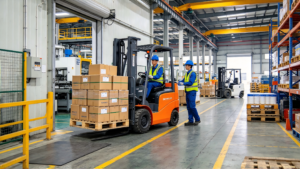
Load capacity is one of the most important factors in an Electric Stacker Buying Guide. Start with the heaviest pallet you need to handle, then check the manufacturer’s rated capacity for the actual load center, lift height, and mast configuration.
Maximum Load Conditions
Consider:
- Maximum pallet weight
- Load center distance
- Load distribution
- Pallet dimensions
- Fork length
- Required safety margin
Do not select a model only because its nominal capacity looks sufficient. A longer or deeper load can increase the effective load center, while residual capacity may vary with lift height and configuration.
3. Match Electric Stacker Lifting Height to Your Racking
The required lifting height should be based on the highest storage position and the actual clearance needed for safe pallet placement. Check rack beam height, pallet height, load height, and overhead clearance before choosing a mast.
Check Rated Capacity at the Required Lift Height
Rated or residual capacity can change according to lift height, load center, mast configuration, and load dimensions. Always request the manufacturer’s capacity chart for your intended working conditions instead of assuming the nominal capacity applies at every height.
4. Compare Electric Stacker Types
An Electric Stacker Buying Guide should also compare machine configurations because operator position, travel distance, aisle conditions, and workload can change which design is appropriate.
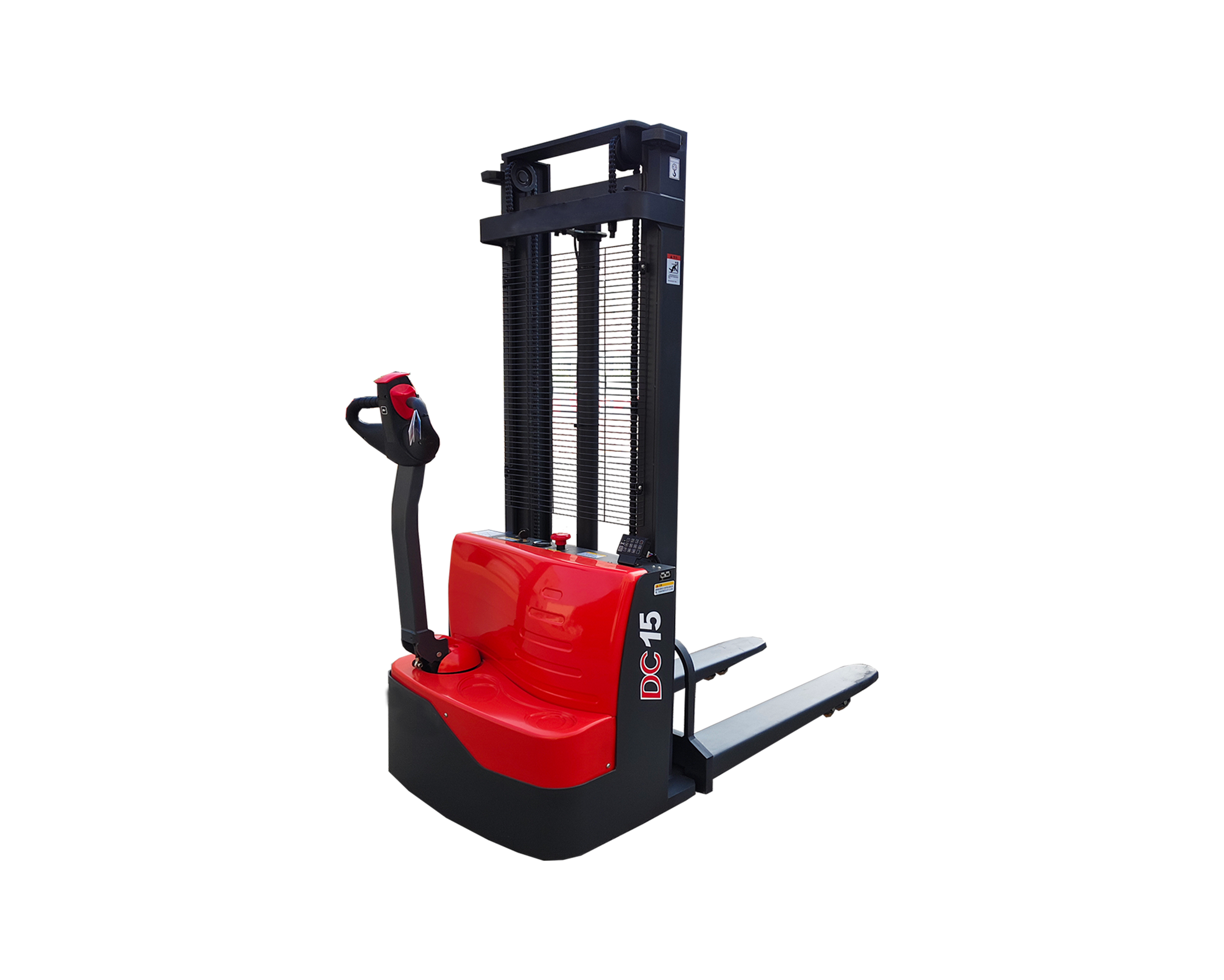
Walkie Electric Stacker
Walkie stackers are controlled by an operator walking behind the machine. They can suit short-distance pallet handling and operations where maneuverability and compact dimensions are priorities.
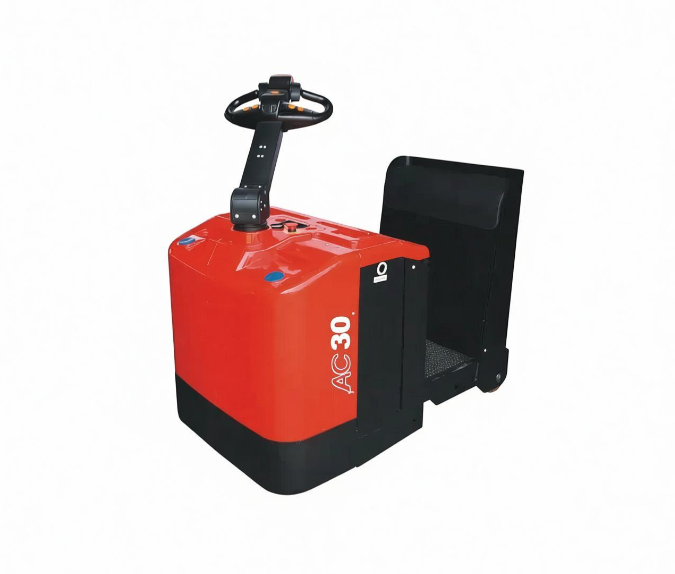
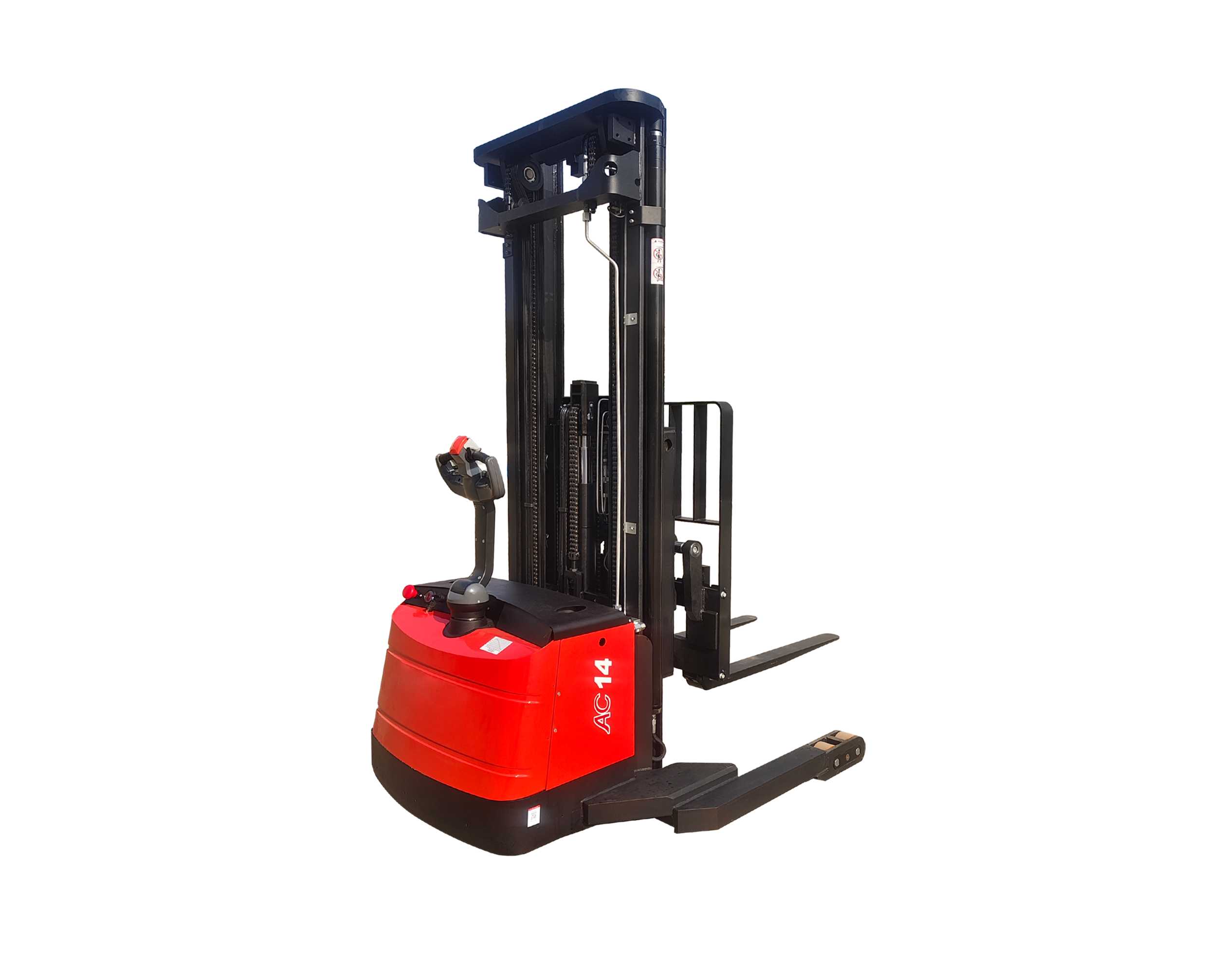
Stand-On Electric Stacker
Stand-on models can be useful when operators need to travel longer distances than typical walkie applications. The platform and protection arrangement should be evaluated against the site’s traffic and safety requirements.
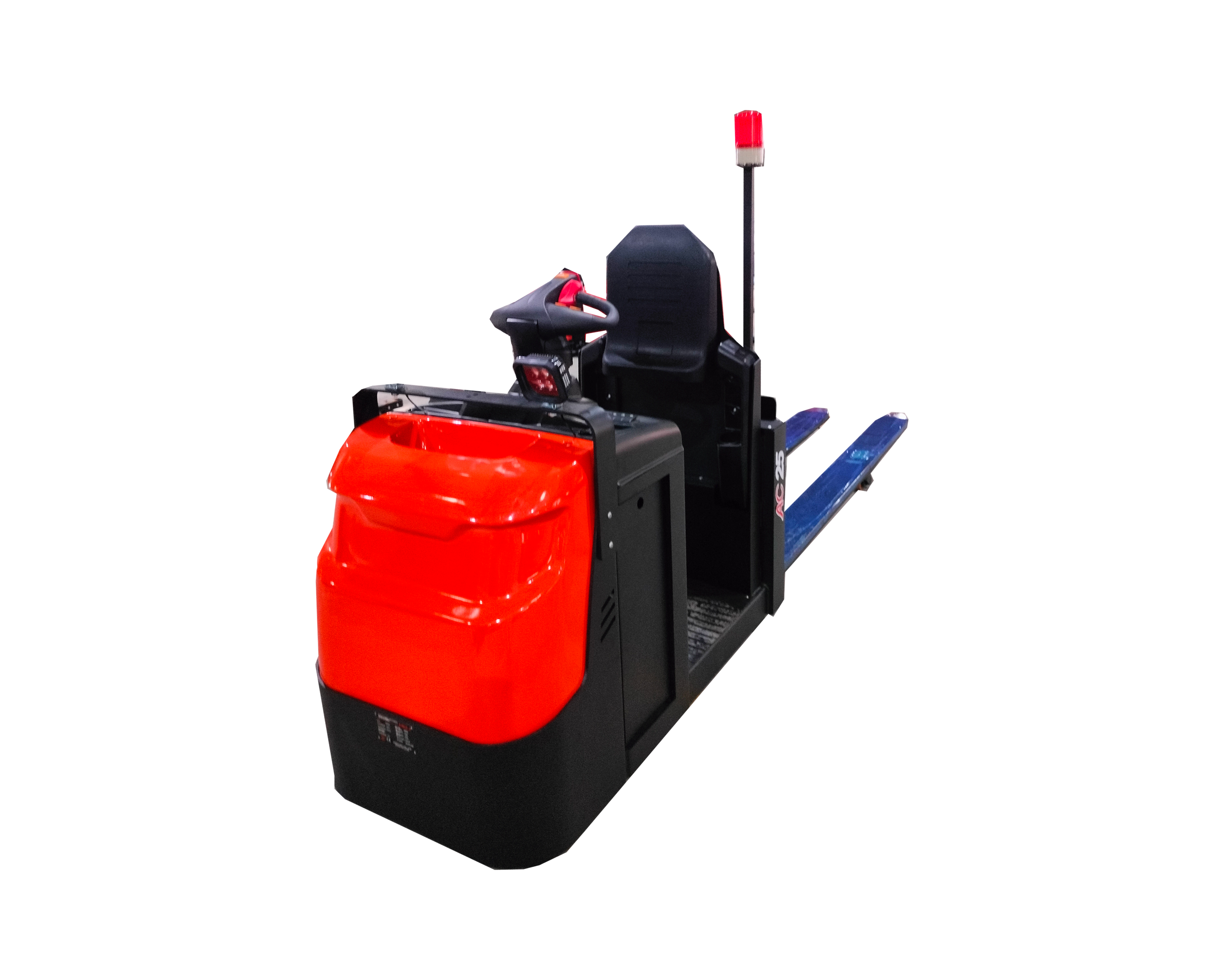
Ride-On Electric Stacker
Ride-on configurations are designed for higher-frequency travel and may be suitable for larger facilities where operator travel distance and productivity are important considerations.
Lithium Battery Electric Stacker
Lithium-ion battery systems may support opportunity charging and flexible charging schedules when the battery and charger are designed for that operating pattern. Compare battery voltage, capacity, charging time, duty cycle, charging infrastructure, and battery management requirements rather than choosing a battery type by name alone.
5. Evaluate Warehouse Aisle Width and Floor Conditions
Aisle width is not determined by truck width alone. Check turning radius, right-angle stacking dimensions, pallet size, fork length, load dimensions, rack clearance, and operator visibility.
Narrow-Aisle Operation
For narrow warehouse aisles, ask the supplier for the truck’s turning radius and right-angle stacking dimensions. Then compare those figures with your actual pallet and rack layout.
Floor Conditions
Uneven floors, ramps, expansion joints, dock plates, and damaged surfaces can affect stability, ride quality, traction, and component life. Confirm that the selected truck is suitable for the floor conditions at your facility.
6. Compare Battery Type and Charging Requirements
Battery choice should reflect daily operating hours and charging opportunities.
| Factor | Lead-Acid Battery | Lithium-Ion Battery |
|---|---|---|
| Charging pattern | Usually scheduled charging | May support opportunity charging when compatible |
| Routine maintenance | May require more battery-related maintenance | Often lower routine battery maintenance |
| Charging flexibility | More dependent on charging cycles | Can be suitable for frequent short charging |
| Initial investment | Often lower | Often higher |
| Best fit | Traditional duty cycles | High-utilization operations with suitable charging |
Actual battery performance depends on the specific battery, charger, truck, duty cycle, and operating environment.
7. Review Safety and Operator Protection
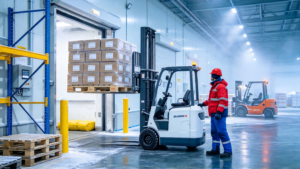
A practical Electric Stacker Buying Guide should include safety equipment, not just performance specifications.
Depending on the model, evaluate emergency stop controls, braking, travel-speed control, overload protection, visibility, load-handling controls, mast design, operator protection, and ergonomic controls.
Safety features should be evaluated against your workplace risk assessment and local requirements. Do not assume that every electric stacker includes the same safety equipment.
8. Check Maintenance and After-Sales Support
Maintenance requirements affect uptime and total operating cost. Before purchase, ask about preventive maintenance intervals, service access, spare-parts availability, battery service, diagnostics, warranty coverage, technician support, and expected parts lead times.
For distributors and fleet operators, supplier support can be as important as the machine specification. Confirm who will provide technical support and how warranty claims and replacement parts are handled.
9. Calculate Total Cost of Ownership
The purchase price is only one part of the investment. A useful Electric Stacker Buying Guide should consider the total cost of ownership over the expected service period.
| Cost Factor | Questions to Ask |
|---|---|
| Purchase price | What is included in the quoted configuration? |
| Battery and charger | Are they included, and what are their specifications? |
| Energy | What charging or electricity costs are expected? |
| Maintenance | What routine service is required? |
| Spare parts | What parts are commonly replaced? |
| Downtime | What support is available if the truck stops? |
| Operator productivity | Does the configuration match the workload? |
| Resale or replacement | What is the expected service life? |
A higher initial price may be reasonable in some applications if the configuration reduces downtime or better matches the duty cycle, but the decision should be based on actual operating data.
10. Avoid Common Electric Stacker Buying Mistakes
The final step in an Electric Stacker Buying Guide is checking what can go wrong during procurement.
Choosing Capacity from the Average Load
Use the heaviest realistic working load and verify the rated capacity at the required lift height and load center.
Choosing Lifting Height from Rack Height Alone
Allow for pallet height, load height, clearance, and the actual placement position.
Using Aisle Width as the Only Space Measurement
Turning radius, right-angle stacking dimensions, pallet size, and rack clearances can be equally important.
Selecting a Battery Without Considering the Duty Cycle
Compare daily operating hours, charging windows, opportunity-charging compatibility, and battery capacity.
Choosing the Lowest Purchase Price
A low upfront price does not automatically mean a lower total cost. Include energy, maintenance, spare parts, downtime, and service support in the comparison.
Electric Stacker Buying Guide: Procurement Checklist
Before requesting a quotation, prepare these specifications:
| Specification | Information to Provide |
|---|---|
| Application | Pallet stacking, transport, production supply, etc. |
| Rated load | Maximum working pallet weight |
| Load center | Actual load center distance |
| Lift height | Required maximum lift height |
| Pallet size | Length × width |
| Fork length | Required fork dimensions |
| Aisle width | Minimum available operating aisle |
| Floor | Smooth, uneven, ramps, dock areas, etc. |
| Working hours | Hours per shift and shifts per day |
| Battery | Lead-acid or lithium-ion preference |
| Charging | Available charging time and infrastructure |
| Operator | Walkie, stand-on, or ride-on preference |
| Environment | Indoor, cold storage, dusty, humid, etc. |
Frequently Asked Questions
What Is the Most Important Factor When Buying an Electric Stacker?
Load capacity, lifting height, load center, pallet dimensions, aisle space, duty cycle, and safety requirements should be evaluated together. There is no single specification that determines whether a model is suitable.
How Do I Choose the Right Electric Stacker for a Warehouse?
Start with the heaviest load, required lifting height, pallet dimensions, minimum aisle width, operating hours, floor conditions, and charging requirements. Then compare suitable truck configurations and supplier support.
Is a Lithium Battery Electric Stacker Better Than a Lead-Acid Model?
The appropriate battery depends on the duty cycle and charging pattern. Lithium-ion systems may be advantageous for operations that need frequent charging flexibility, while lead-acid systems can remain suitable for conventional scheduled charging.
Does Lifting Height Affect Electric Stacker Capacity?
It can. Rated or residual capacity may vary with lift height, load center, mast configuration, and load dimensions. Always check the manufacturer’s capacity chart for the required working height.
What Information Should I Give an Electric Stacker Supplier?
Provide load weight, load center, lift height, pallet dimensions, fork length, aisle width, operating hours, floor conditions, battery requirements, and working environment. These details help the supplier recommend a suitable configuration.
Conclusion
A reliable Electric Stacker Buying Guide should help you connect the machine specification with the real conditions of your warehouse. Instead of choosing a model by capacity or price alone, compare load capacity, lifting height, load center, pallet size, aisle requirements, truck type, battery system, safety features, maintenance, and total cost of ownership.
For distributors, warehouse operators, and industrial buyers, UNILIFT MHE can provide electric pallet stackers and related warehouse material handling solutions based on different operating requirements. Contact the team with your application details to discuss the appropriate configuration.
Follow UNILIFT MHE for More Material Handling Insights
Stay connected with UNILIFT MHE for the latest updates on electric pallet trucks, electric stackers, electric tuggers, warehouse equipment, material handling solutions, and industry insights. Follow our social media channels to discover new products, application scenarios, company updates, and practical information for modern warehouse and logistics operations.
Explore reliable electric pallet trucks, electric stackers, and material handling solutions at Unilift MHE.
If you would like to contact us, please click here.
If you would like to learn more about our news, please click here.
Facebook: Follow UNILIFT MHE on Facebook
TikTok: Follow UNILIFT MHE on TikTok
Instagram: Follow UNILIFT MHE on Instagram
X: Follow UNILIFT MHE on X
Pinterest: Explore UNILIFT MHE on Pinterest
LinkedIn: Connect with UNILIFT MHE on LinkedIn