Four Way Pallet Truck Capacity is one of the most important factors to consider when selecting material handling equipment for warehouses, manufacturing facilities, and distribution centers. Choosing the right capacity helps ensure stable load handling, reliable performance, and efficient daily operations. While a truck with a higher rated capacity may appear to offer greater flexibility, the best choice depends on the actual load weight, dimensions, weight distribution, pallet compatibility, and working environment. Understanding these factors allows businesses to select a four-way pallet truck that meets operational demands without unnecessary investment.
1. What Does Four Way Pallet Truck Capacity Mean?
Four Way Pallet Truck Capacity refers to the maximum load weight a specific model is designed to handle under the operating conditions defined by its manufacturer. This rating is a critical specification because it establishes the limits within which the equipment can be operated safely and effectively.
Unlike a simple comparison of maximum lifting weights, capacity selection should account for how the load interacts with the truck’s forks, wheels, hydraulic system, and directional mechanism. A load that falls within the rated capacity may still be unsuitable if its dimensions, center of gravity, or pallet configuration exceed the equipment’s specified limits.
For buyers evaluating a Four Way Pallet Truck, checking the manufacturer’s rated capacity and technical documentation is the first step toward making an informed purchasing decision. Capacity should always be verified for the exact model rather than assumed from the product category.
2. Why Choosing the Right Capacity Matters
Four Way Pallet Truck Capacity directly affects load stability, equipment suitability, and day-to-day handling efficiency. Selecting an appropriately rated model helps businesses match their equipment to real operating requirements and avoid preventable handling problems.
Supporting Safe Load Handling
Four Way Pallet Truck Capacity must be appropriate for the actual weight and configuration of the load being transported. Exceeding the manufacturer’s rated capacity can increase the risk of equipment damage, loss of control, load instability, and workplace accidents.
Operators should also consider uneven weight distribution, shifting materials, and the position of the load relative to the forks. Even when the total weight appears acceptable, an improperly positioned load can compromise stability and safe operation.
Improving Operational Reliability
Four Way Pallet Truck Capacity should match the demands of repeated handling rather than occasional best-case conditions. Selecting equipment with suitable specifications helps reduce the likelihood of operating beyond its intended limits during routine warehouse or factory work.
Reliable performance also depends on structural quality, hydraulic components, wheel design, and regular maintenance. A well-matched truck can support consistent material flow when it is used and maintained according to the manufacturer’s instructions.
Avoiding Unnecessary Investment
Four Way Pallet Truck Capacity should be selected according to actual and reasonably anticipated loads, not simply the highest available rating. An unnecessarily high-capacity model may increase purchase costs or introduce dimensions and handling characteristics that do not suit the workplace.
On the other hand, selecting a model with insufficient capacity can restrict daily operations and create safety risks. A careful assessment of load requirements helps balance equipment cost, operating flexibility, and long-term value.
3. Key Factors That Determine the Required Capacity
Four Way Pallet Truck Capacity should be evaluated using several factors together, because load weight alone does not fully determine whether a truck is suitable for a particular application.
Maximum Load Weight
Four Way Pallet Truck Capacity must meet or exceed the maximum load weight permitted by the equipment’s specifications. Businesses should identify the heaviest load that may be handled during normal operations, rather than relying only on the average load weight.
For example, if most loads are relatively light but occasional shipments are significantly heavier, selecting equipment based solely on the average may result in an unsuitable choice. The maximum intended load should be documented before comparing models.
Load Dimensions and Center of Gravity
Four Way Pallet Truck Capacity must be considered alongside load dimensions and center-of-gravity position. Long, wide, or irregularly shaped goods can affect balance and maneuverability, even when their total weight is within the rated limit.
A load positioned unevenly across the forks may create additional stress on certain components and reduce stability. Buyers should confirm the permitted load configuration and ensure that goods are properly secured and positioned before movement.
Pallet Design and Fork Compatibility
Four Way Pallet Truck Capacity is only useful when the truck can safely engage the pallet or load carrier being used. Pallet entry points, fork dimensions, fork spacing, ground clearance, and wheel arrangement can all affect compatibility.
Four-way pallet trucks are designed to support lateral movement in specified configurations, but not every pallet permits movement in every direction. Before ordering, confirm that the truck’s directional capabilities match the pallet design and intended handling procedure.
Floor Conditions and Operating Environment
Four Way Pallet Truck Capacity should be assessed in the context of the working environment, including floor condition, gradients, thresholds, and available clearance. Uneven surfaces or damaged flooring can affect rolling resistance and control, while confined areas may limit the ability to position loads safely.
For warehouses and production facilities with demanding operating conditions, buyers should review the manufacturer’s recommendations for suitable floor surfaces and operating limitations. The equipment must be used within its approved conditions, regardless of its rated load capacity.
Handling Frequency and Duty Requirements
Four Way Pallet Truck Capacity should be matched to both the weight of individual loads and the frequency of daily handling. A truck used repeatedly throughout a busy shift may require closer attention to component durability, serviceability, and maintenance planning than one used occasionally.
Businesses should consider the number of handling cycles, typical travel distances, operator workload, and expected service life. These factors help determine whether a particular model is appropriate for the demands of the application.
4. How to Match Four Way Pallet Truck Capacity to Your Loads
Four Way Pallet Truck Capacity can be matched more accurately by following a structured selection process that combines load data, pallet specifications, and workplace requirements.
Step 1: Identify the maximum intended load. Record the heaviest load the truck will handle, including the load carrier where relevant, and verify how the manufacturer defines the rated capacity.
Step 2: Measure load dimensions. Document the length, width, height, and weight distribution of the goods. Long or irregular loads may require additional checks beyond a simple weight comparison.
Step 3: Confirm pallet compatibility. Check the pallet’s entry directions, fork openings, overall dimensions, and ground clearance against the truck’s specifications.
Step 4: Review the working environment. Assess floor conditions, operating clearance, travel distances, and the space needed to position loads safely.
Step 5: Compare suitable models. Review rated capacity, fork dimensions, lifting range, wheel materials, construction quality, and maintenance requirements rather than comparing capacity alone.
Step 6: Verify the manufacturer’s specifications. Before purchasing, confirm the permitted load configuration and operating limits for the exact model. If loads vary significantly in size or shape, consult the supplier for technical guidance.
Following these steps helps businesses choose a Four Way Pallet Truck that supports safe handling and dependable performance without paying for specifications that do not contribute to their actual needs.
5. How Four-Way Movement Affects Load Handling
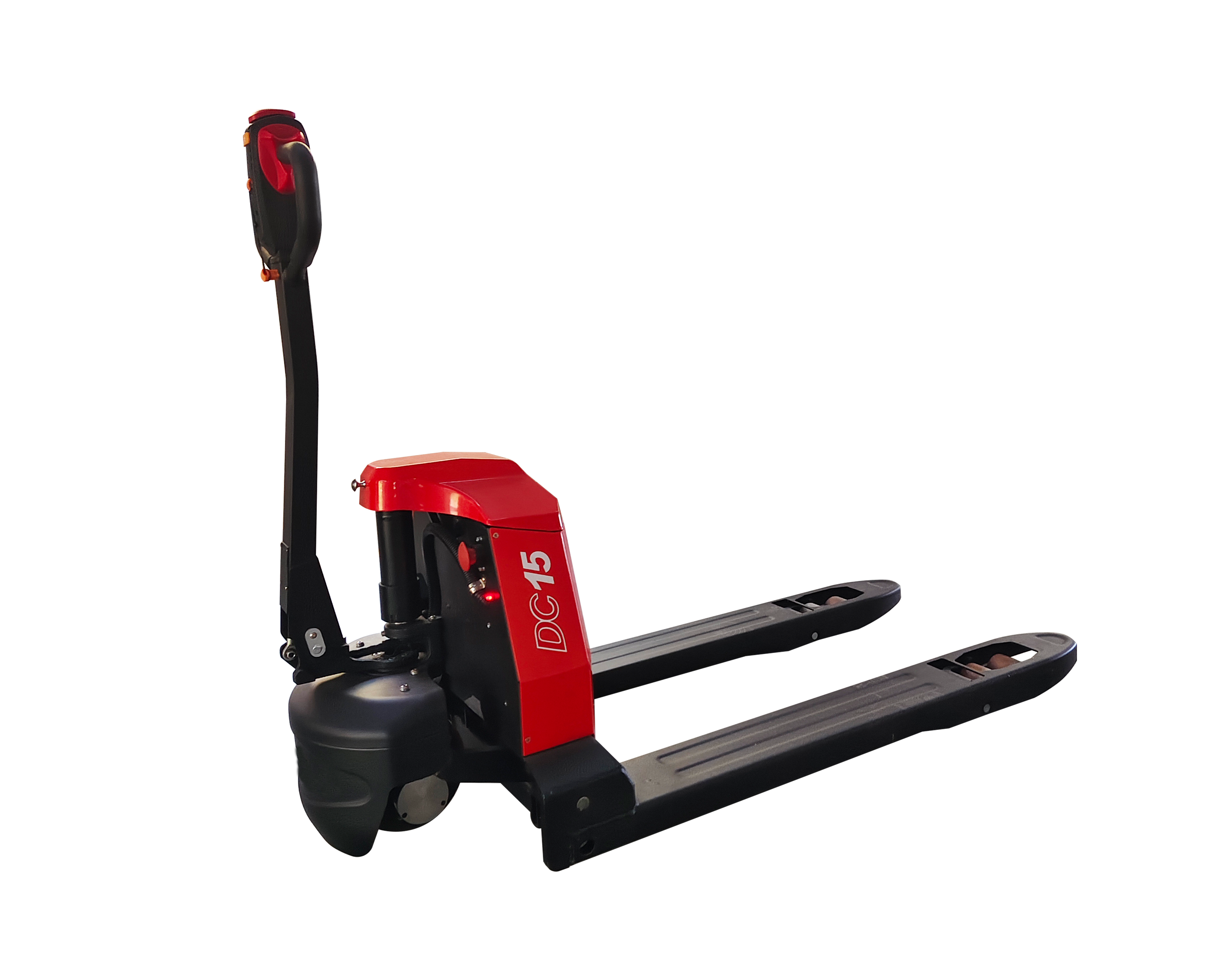
Four Way Pallet Truck Capacity should be evaluated alongside the truck’s directional capabilities, since the ability to move laterally can influence how loads are positioned within a facility. Four-way designs are especially relevant when operators need to maneuver compatible loads in restricted spaces or handle materials that are difficult to turn using conventional equipment.
A suitable Four Way Pallet Truck can help position long goods and compatible pallets more conveniently by reducing dependence on wide turning movements. This can be useful in selected manufacturing areas, storage zones, and material staging locations where available space is limited.
However, multi-directional movement does not automatically increase the truck’s rated capacity. Buyers must distinguish between directional flexibility and load-bearing capability, confirming that the selected model supports both the intended load and the required movement pattern.
6. Product Features to Consider Beyond Rated Capacity
Four Way Pallet Truck Capacity is only one part of the equipment specification, and a comprehensive product assessment should also consider the structural and mechanical features that support long-term reliability.
Strong Forks and Structural Components
Four Way Pallet Truck Capacity depends on a load-bearing structure designed for the manufacturer’s specified operating conditions. Fork strength, chassis construction, reinforcement at critical stress points, and component alignment all contribute to the truck’s ability to handle loads as intended.
Buyers should review material specifications and structural design details when comparing models. Appropriate engineering and manufacturing controls help support durability under repeated use, while the rated capacity remains the governing limit for safe operation.
Reliable Hydraulic Lifting Performance
Four Way Pallet Truck Capacity must be supported by a hydraulic lifting system that performs consistently within the equipment’s specified limits. Hydraulic components, seals, and lifting mechanisms should be inspected and maintained according to the manufacturer’s recommendations.
Smooth lifting and controlled lowering can help operators handle loads more predictably. Regular checks for leakage, abnormal movement, or damage are important for identifying maintenance needs before they affect daily operations.
Durable Wheels and Directional Mechanisms
Four Way Pallet Truck Capacity should be matched with wheel and directional components suited to the load and floor conditions. Wheel materials, bearing quality, component alignment, and the design of the directional mechanism can influence maneuverability and rolling resistance.
A model designed for the intended environment can help support consistent movement and manageable maintenance requirements. Buyers should also confirm the availability of replacement parts and the supplier’s recommendations for inspection intervals.
Practical Maintenance and Serviceability
Four Way Pallet Truck Capacity delivers lasting value when the equipment can be inspected, serviced, and maintained effectively throughout its working life. Accessible service points, clear documentation, suitable spare parts, and responsive technical support can all contribute to reliable operation.
When comparing suppliers, businesses should consider not only product specifications but also manufacturing consistency, quality inspection procedures, warranty terms, and after-sales support. These factors help build a more complete picture of long-term equipment value.
7. Common Capacity Selection Mistakes to Avoid
Four Way Pallet Truck Capacity is often misunderstood when buyers focus exclusively on the maximum weight shown in a product specification. Avoiding a few common mistakes can help businesses make safer and more cost-effective decisions.
- Choosing by average load weight: Base the selection on the maximum intended load and verify the exact model’s rated capacity.
- Ignoring load dimensions: Check the center of gravity, weight distribution, and overall load size as well as total weight.
- Assuming all pallets are compatible: Verify pallet entry points, fork dimensions, and the required direction of movement.
- Overlooking floor conditions: Consider the actual surface, clearance, and operating environment.
- Comparing capacity without comparing construction: Review structural design, hydraulic components, wheel configuration, and serviceability.
- Assuming a higher rating guarantees better performance: A larger capacity does not automatically mean better maneuverability or a better fit for a particular workplace.
Avoiding these mistakes helps businesses choose equipment based on real operational requirements instead of a single specification.
8. UNILIFT-mhe: Practical Material Handling Solutions for Industrial Applications
Four Way Pallet Truck Capacity selection requires more than choosing a number on a specification sheet; it requires an understanding of the loads, handling processes, and workplace conditions the equipment must support. UNILIFT-mhe focuses on practical material handling solutions designed around the requirements of warehouses, factories, and other industrial environments.
Product reliability depends on appropriate structural design, suitable materials, component quality, and consistent manufacturing processes. Attention to load-bearing components, hydraulic performance, directional mechanisms, and serviceability can help ensure that equipment is suitable for its intended application.
For businesses comparing four-way pallet truck options, UNILIFT-mhe recommends reviewing rated capacity, load dimensions, pallet compatibility, floor conditions, and daily handling frequency before making a purchasing decision. Matching these factors to the correct model helps support safe operation, dependable performance, and better long-term value.
Conclusion
Four Way Pallet Truck Capacity should always be matched to the maximum intended load, load dimensions, pallet design, and working environment. Selecting the right specifications helps businesses maintain safe handling practices, avoid unnecessary investment, and support reliable material movement.
Although capacity is a critical purchasing factor, it should never be considered in isolation. Structural strength, hydraulic performance, directional flexibility, maintenance requirements, and supplier support also influence the long-term value of the equipment.
By assessing actual operating needs and verifying the manufacturer’s specifications, businesses can select a Four Way Pallet Truck that delivers the right combination of capacity, maneuverability, and reliability for their material handling operations.
Follow UNILIFT MHE for More Material Handling Insights
Stay connected with UNILIFT MHE for the latest updates on electric pallet trucks, electric stackers, electric tuggers, warehouse equipment, material handling solutions, and industry insights. Follow our social media channels to discover new products, application scenarios, company updates, and practical information for modern warehouse and logistics operations.
Explore reliable electric pallet trucks, electric stackers, and material handling solutions at Unilift MHE.
If you would like to contact us, please click here.
If you would like to learn more about our news, please click here.
Facebook: Follow UNILIFT MHE on Facebook
TikTok: Follow UNILIFT MHE on TikTok
Instagram: Follow UNILIFT MHE on Instagram
X: Follow UNILIFT MHE on X
Pinterest: Explore UNILIFT MHE on Pinterest
LinkedIn: Connect with UNILIFT MHE on LinkedIn