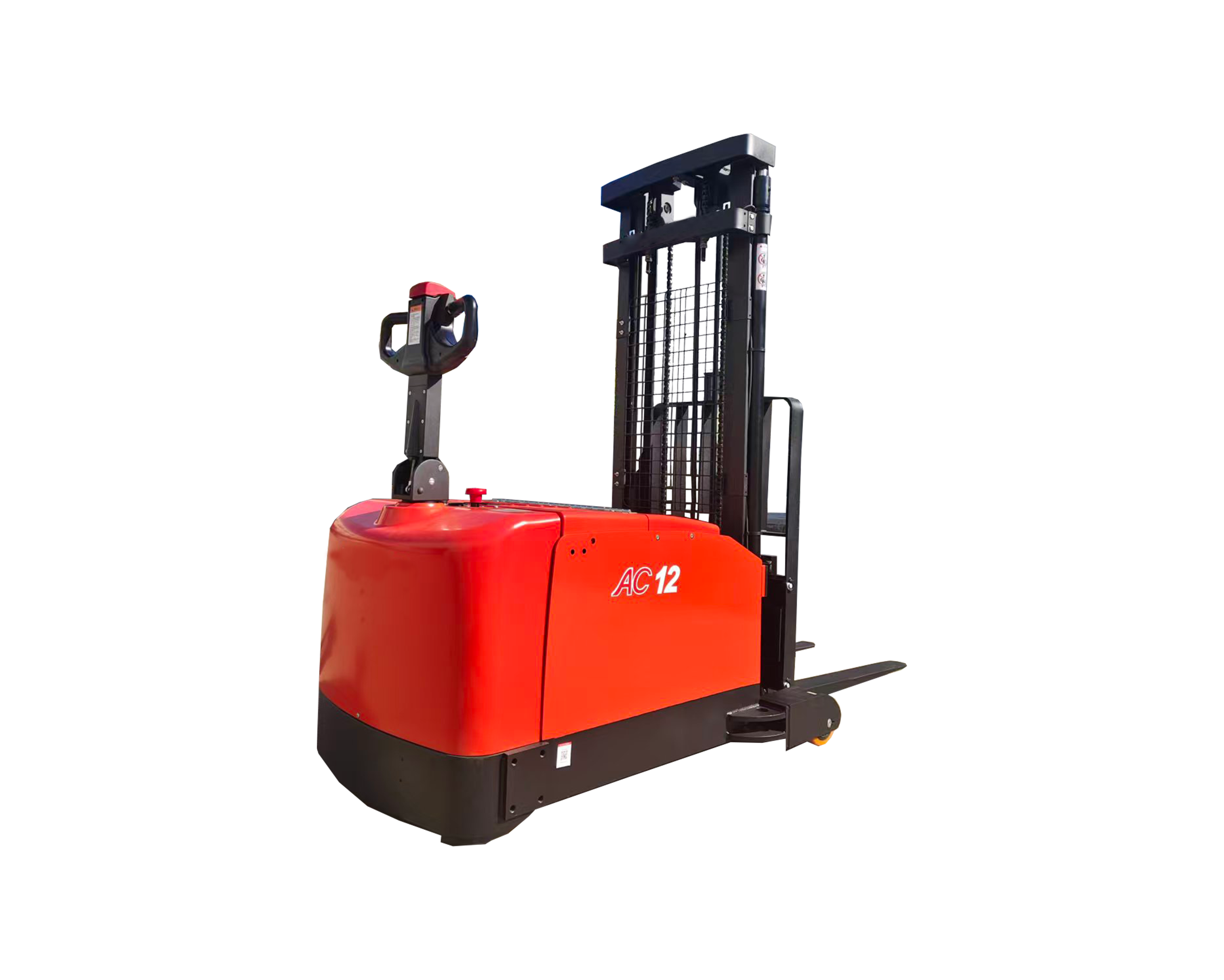
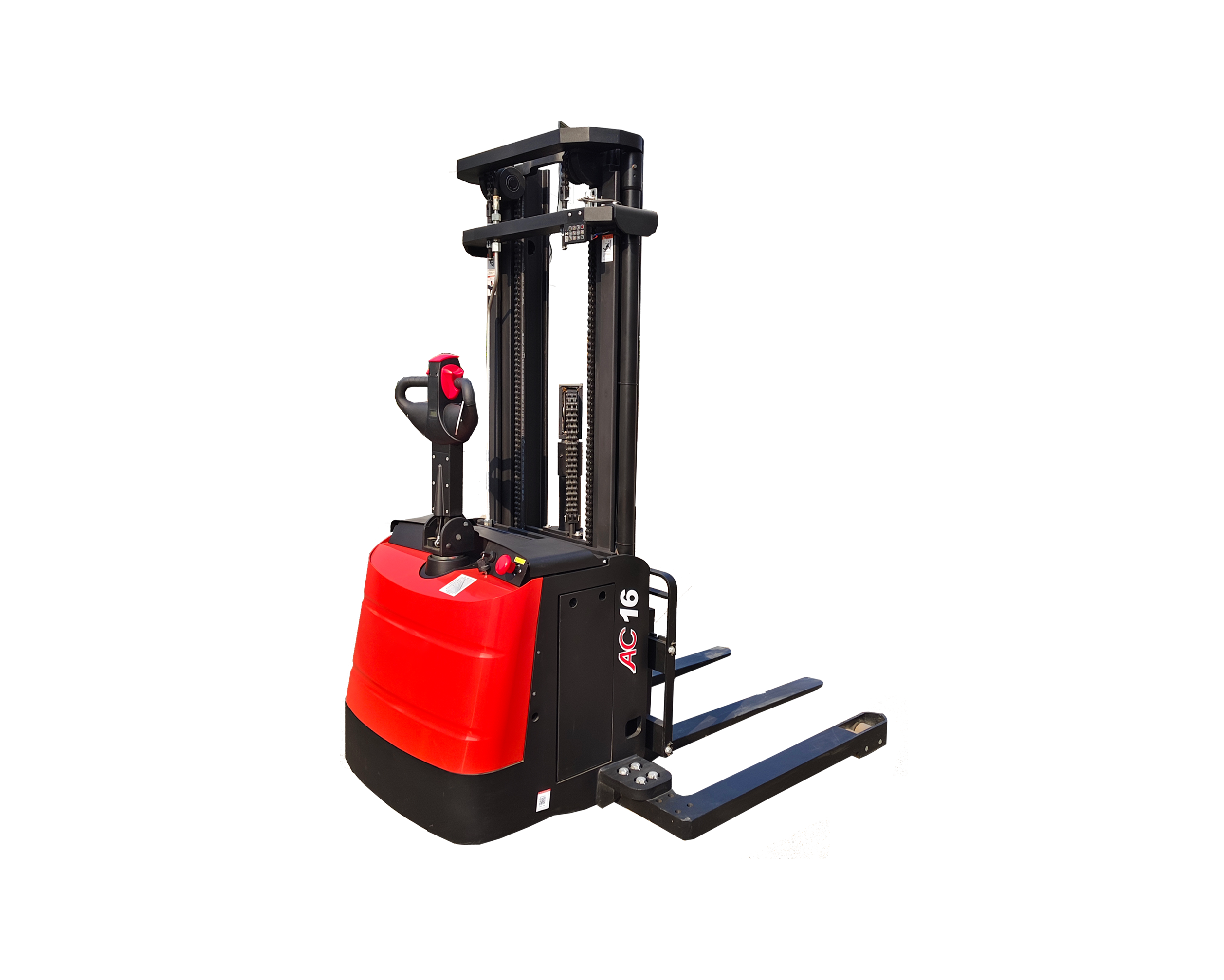
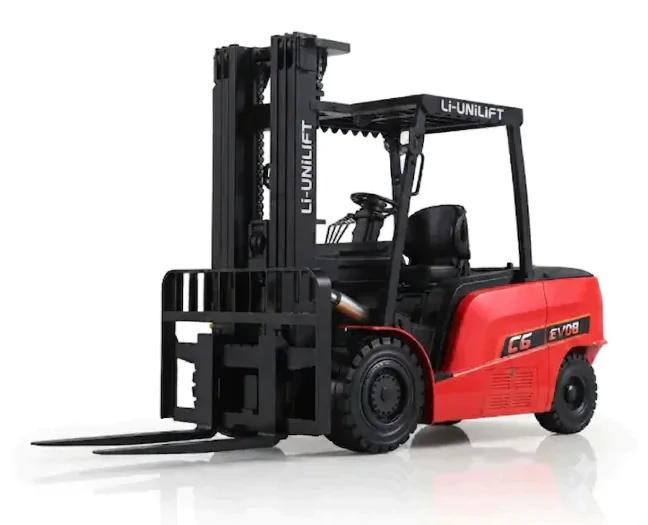
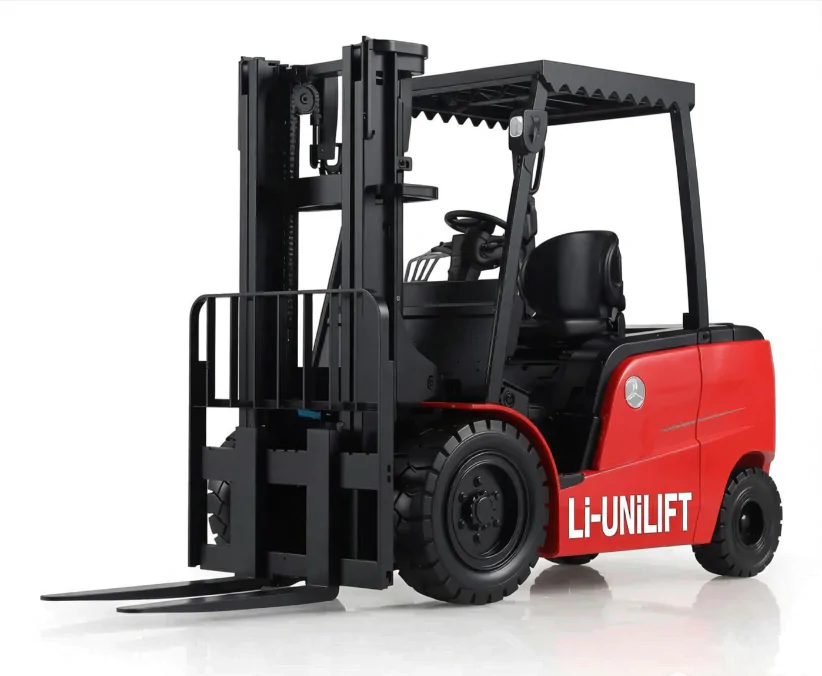
Introduction: Why Electric Motors Matter for Electric Stacker Efficiency
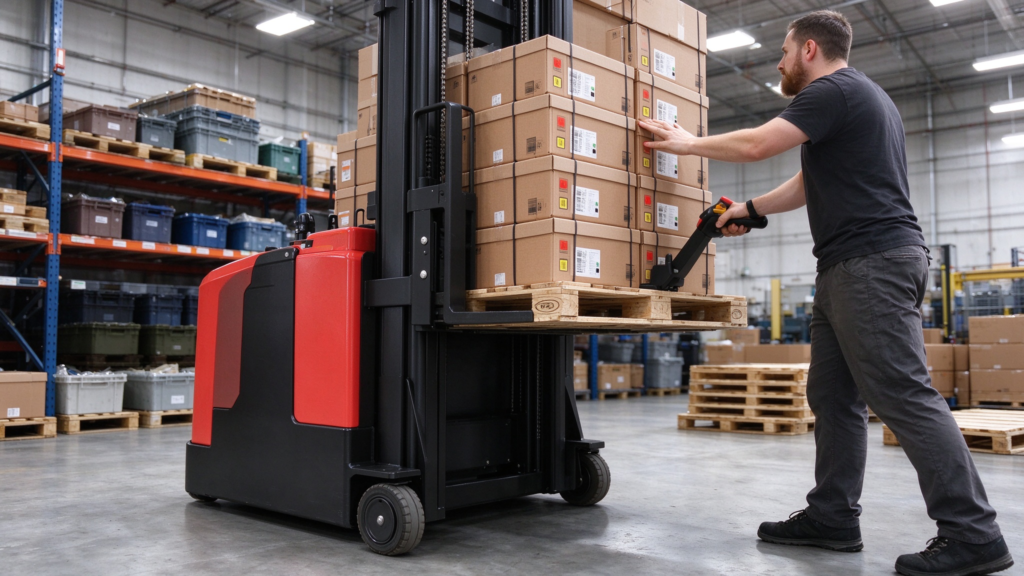
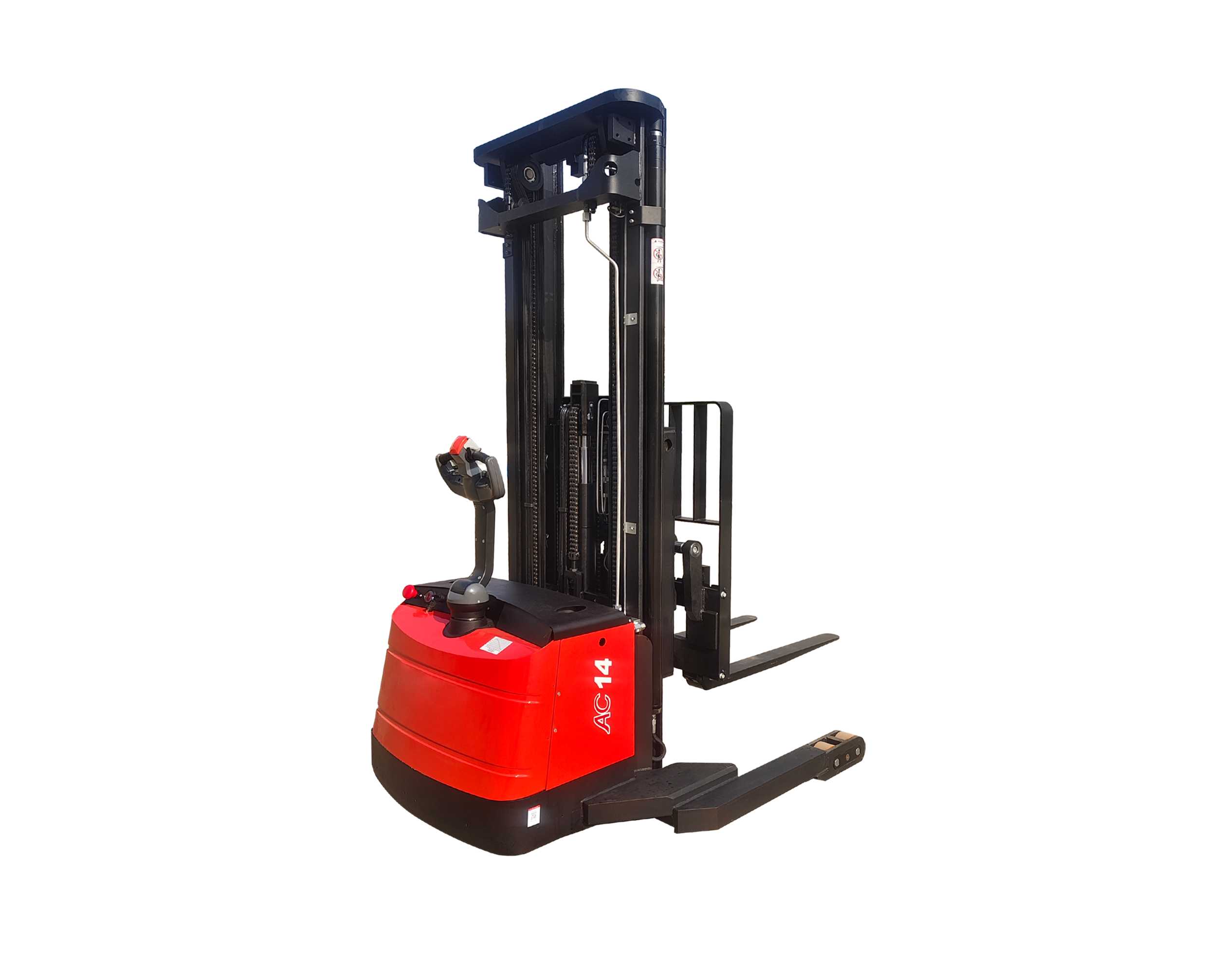
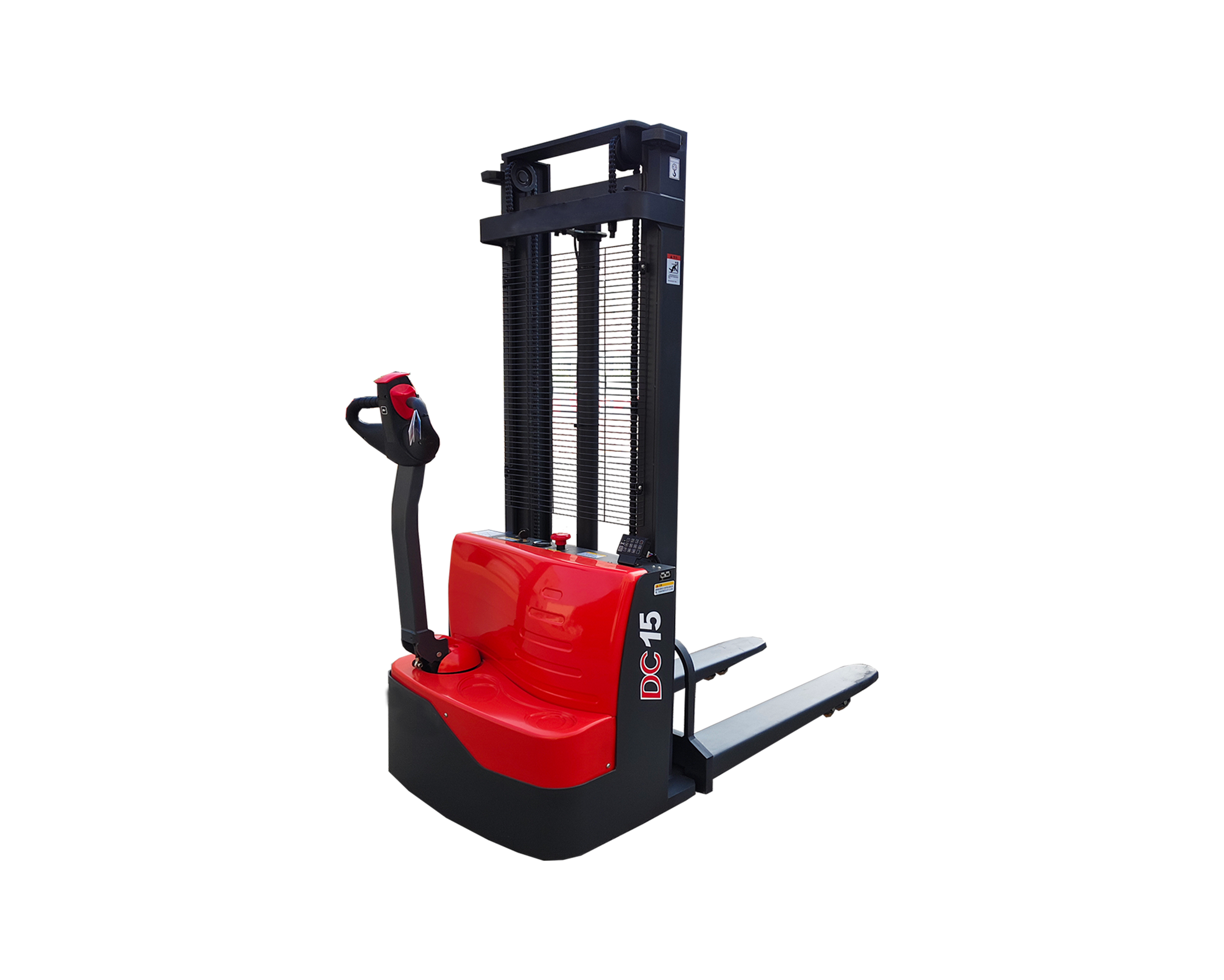
An electric stacker motor affects how efficiently a warehouse machine travels, lifts loads, and uses battery power. Along with the motor controller, battery, hydraulic system, and mechanical components, it helps determine operating performance, energy consumption, and maintenance requirements.
Unlike manual handling equipment, an electric stacker converts stored electrical energy into mechanical work to move pallets and raise or lower forks. The main energy flow can be summarized as:
Battery → Motor Controller → Electric Motor → Mechanical or Hydraulic System → Material Handling
The exact arrangement depends on the stacker design. A typical electric stacker may use a traction motor to drive its wheels and a separate electric motor to power the hydraulic pump used for lifting.
A well-matched motor and control system can help improve energy utilization, provide smoother operation, and reduce unnecessary energy losses. However, overall efficiency also depends on load weight, travel distance, lifting frequency, battery condition, floor conditions, and operator behavior.
Understanding these factors helps warehouse managers compare electric stackers more effectively and choose equipment that meets their operational needs.
1. What Is the Role of an Electric Motor in an Electric Stacker?
An electric stacker motor converts electrical energy into mechanical power. Depending on its function, the motor supports travel, lifting, or other powered operations.
Driving the Electric Stacker
The traction motor provides the power needed to move the stacker forward and backward. Working with the controller and drive system, it influences:
- Acceleration and deceleration.
- Travel speed and low-speed control.
- Torque available for moving loads.
- Energy consumption during repeated travel cycles.
For warehouse applications, predictable acceleration and controlled movement are important when positioning pallets in narrow aisles or approaching storage locations.
Powering the Hydraulic Lifting System
In many electric stackers, a separate electric motor drives a hydraulic pump. The pump supplies pressurized hydraulic fluid to the lifting system, allowing the forks to raise a load.
Lifting performance depends on more than motor power. Pump capacity, hydraulic pressure, valve design, lifting geometry, rated load, and the equipment’s control system also affect lifting speed and stability.
A motor and hydraulic system that are properly matched to the intended workload can help maintain consistent lifting performance without unnecessary energy use.
Supporting Reliable Daily Operations
Motor performance influences how consistently an electric stacker completes repeated handling tasks. Appropriate motor sizing, effective control, and suitable thermal management can reduce operating stress and support dependable performance.
However, a larger motor does not automatically make a stacker more efficient. The motor should match the machine’s rated capacity, operating cycle, and working environment.
2. How Does an Electric Stacker Motor Work?
The motor is part of an integrated electrical and mechanical system. Its operation generally follows four stages.
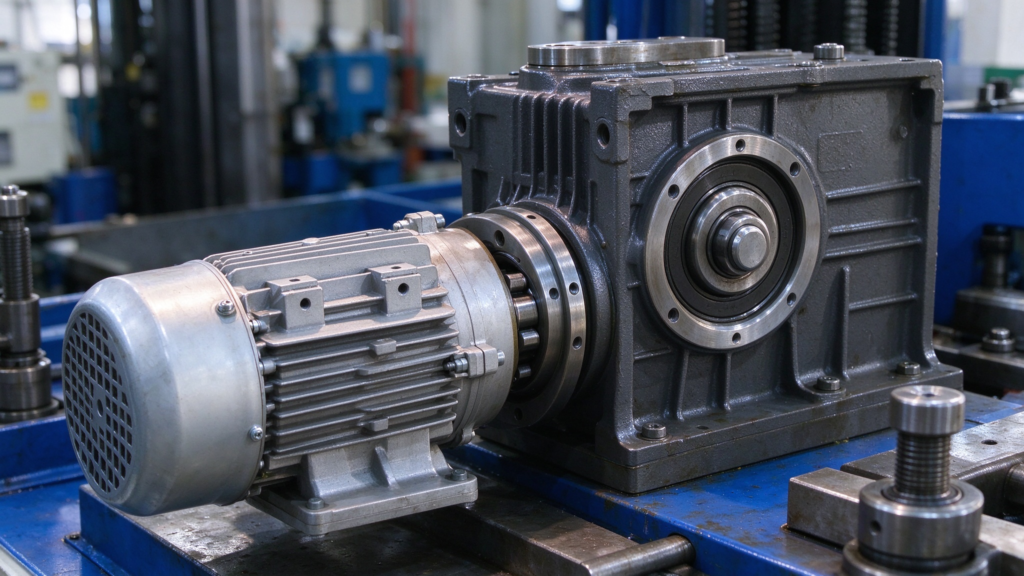
Step 1: The Battery Supplies Electrical Energy
The battery supplies electrical energy to the motor controller and powered systems. Electric stackers may use lead-acid or lithium-ion batteries, depending on the model and configuration.
Battery voltage, available current, state of charge, temperature, and condition influence how effectively the machine can deliver power during travel and lifting.
Step 2: The Controller Regulates Motor Operation
The motor controller responds to operator inputs and regulates the electrical power supplied to the motor.
Depending on the system, it manages functions such as motor speed, torque, acceleration, and regenerative braking. It also works with other electrical components to support controlled operation and equipment protection.
The controller and motor must be compatible. A high-quality motor cannot deliver its full potential if the controller, battery, or electrical connections restrict performance.
Step 3: The Motor Converts Electrical Energy into Mechanical Power
Electromagnetic forces produce rotation in the motor. The motor shaft then transfers mechanical power to the relevant system.
For a traction motor, that power moves through the drive mechanism to the wheels. For a lifting motor, it drives the hydraulic pump that supplies the lifting circuit.
Some electrical energy is inevitably lost through factors such as electrical resistance, magnetic losses, friction, and heat. Motor efficiency describes how much of the input electrical power is converted into useful mechanical output under specified operating conditions.
Step 4: The Stacker Performs Material Handling Tasks
The drive system moves the machine and its load, while the lifting system raises or lowers the forks. These operations consume energy at different rates.
For example, frequent acceleration and lifting may create a different energy demand from transporting pallets over a longer, level route. This is why motor efficiency should be evaluated in the context of the actual warehouse duty cycle.
3. Types of Electric Motors Used in Electric Stackers
Motor technologies differ in construction, control requirements, maintenance needs, and performance. The most appropriate choice depends on the complete drive system rather than the motor label alone.
3.1 DC Motors
Traditional electric stackers may use brushed DC motors. These motors operate on direct current and can provide useful torque and relatively straightforward speed control.
Potential advantages:
- Established technology with familiar maintenance procedures.
- Straightforward control in appropriately designed systems.
- Suitability for certain cost-sensitive applications.
Potential limitations:
- Carbon brushes and commutators wear during operation.
- Brush inspection and replacement may be required.
- Maintenance needs depend on motor design and working conditions.
Brushed DC motors may be suitable for standard warehouse operations where their performance, maintenance requirements, and total ownership cost meet the application needs.
Not every DC motor has the same efficiency or maintenance profile. Comparisons should use the specifications of the actual motors being considered.
3.2 AC Motors
AC motors are widely used in modern industrial drive systems, including electric material handling equipment. When paired with a compatible controller, they can provide precise speed regulation and responsive torque control.
Potential advantages:
- Smooth speed and acceleration control.
- Potentially lower routine maintenance for designs without brushes.
- Good integration with electronic drive controls.
- Suitability for frequent travel and demanding operating cycles.
Important considerations:
Actual efficiency depends on the motor design, controller, operating speed, load, and duty cycle. An AC motor is not automatically more efficient than every DC motor.
When comparing electric stackers, review the complete drive system’s performance, maintenance requirements, and expected energy use rather than selecting equipment based only on motor type.
3.3 Brushless Motor Technologies
Brushless describes a motor’s construction rather than one single electrical supply category. Brushless designs include permanent-magnet motors and other motor technologies, and some are used in modern electric material handling equipment.
Potential advantages:
- No conventional carbon brushes to replace.
- Reduced brush-related wear and maintenance.
- Potentially high efficiency when properly designed and controlled.
- Good controllability with a compatible electronic drive.
Brushless motors still contain components that may wear or fail, including bearings, insulation, sensors where fitted, and electronic control components. Actual service life depends on design, thermal conditions, load, and maintenance.
When a supplier describes a stacker motor as brushless, ask for the specific motor technology and relevant performance specifications.
4. How Electric Motors Improve Electric Stacker Efficiency
4.1 Better Energy Conversion
A motor with lower losses converts a greater proportion of its electrical input into useful mechanical output under comparable operating conditions.
This can reduce the energy required to complete a handling task. The practical benefit depends on the motor’s efficiency across the machine’s actual operating range, not just its peak efficiency rating.
For procurement teams, useful comparison data may include motor efficiency, rated power, operating conditions, and energy consumption over a representative duty cycle.
4.2 More Controlled Driving Performance
The traction motor and controller influence acceleration, deceleration, speed regulation, and available torque.
Good control helps operators move pallets smoothly and position the stacker accurately. It can also reduce unnecessary acceleration and braking during repetitive work.
Travel speed alone is not a complete measure of productivity. A stacker must also handle loads safely, maneuver within the available space, and maintain predictable control.
4.3 Consistent Lifting Performance
The lifting motor supplies power to the hydraulic pump in systems that use electric-hydraulic lifting. Its performance affects the power available to the pump, but lifting speed and capacity also depend on the hydraulic circuit and mechanical design.
When assessing a stacker, check its rated capacity, lift height, lifting speed under specified conditions, and performance with the intended load. Do not assume that a motor with a higher power rating automatically produces faster or more stable lifting.
4.4 Lower Operating Costs Over Time
Improved system efficiency may reduce electricity consumption for a given amount of work. Suitable motor technology can also reduce some maintenance tasks, depending on the design.
To evaluate the financial benefit, consider:
- Electricity consumed during representative work cycles.
- Charging frequency and charging losses.
- Routine motor and drive-system maintenance.
- Replacement parts and service requirements.
- Expected service life and workload.
A purchase price comparison alone may overlook the long-term costs of running and maintaining the equipment.
5. How Electric Motors Affect Battery Performance
Motor Efficiency and Operating Time
Battery runtime depends on the energy available from the battery and the power demanded by the machine over time.
For the same battery and comparable workload, a more efficient drive system may reduce energy consumption and extend operating time. However, runtime also depends on battery capacity and condition, travel distance, load weight, lifting frequency, temperature, and idle time.
Avoid using a single runtime estimate to compare machines unless the test conditions are comparable.
Matching Motor Performance to Battery Capacity
The motor, controller, and battery should be designed to work together. A battery must be capable of supplying the required power, while the electrical system must operate within the manufacturer’s specified limits.
An undersized or deteriorated battery can cause reduced performance even when the motor is functioning correctly. Similarly, poor electrical connections or controller faults may restrict power delivery.
Why Lithium-Ion and Motor Technology Should Be Evaluated Together
Lithium-ion batteries are used in many modern electric stackers. Depending on the battery and charger configuration, they may support opportunity charging and convenient charging routines.
When paired with a compatible motor and controller, a lithium-ion system may suit operations with frequent handling cycles or limited charging windows.
However, a lithium battery does not automatically guarantee higher overall efficiency. Compare usable battery energy, charging requirements, system compatibility, operating patterns, and total cost of ownership.
6. Factors That Affect Electric Stacker Motor Efficiency
6.1 Motor Design and Controller Matching
Motor technology, rated power, control strategy, cooling design, and operating range all affect efficiency.
The controller must match the motor and the machine’s electrical architecture. Poorly matched components can limit performance or increase losses.
When reviewing technical documentation, check whether efficiency figures apply to the motor alone or to the complete drive system.
6.2 Load Weight and Work Cycle
The weight being handled and the frequency of travel and lifting influence energy demand.
Relevant factors include:
- Pallet weight relative to rated capacity.
- Number of lifting and lowering cycles.
- Travel distance and acceleration frequency.
- Time spent operating under load.
- Waiting time and unnecessary movement.
Overloading can create excessive mechanical and electrical stress and may compromise safety. Operators should always follow the stacker’s rated capacity and load chart, where applicable.
6.3 Operating Environment
Temperature, dust, humidity, floor condition, and ventilation can affect motor performance and reliability.
For example, poor floor conditions may increase rolling resistance, while accumulated dust or restricted cooling may contribute to overheating in systems that rely on airflow.
Cold environments can also affect battery output and hydraulic behavior. Equipment intended for cold storage, dusty production areas, or other demanding conditions should be specified accordingly.
6.4 Maintenance and Mechanical Condition
A motor is only one part of the complete powertrain. Worn bearings, damaged cables, loose connections, drive-system friction, hydraulic faults, and battery deterioration can all contribute to poor performance.
Routine inspections should follow the manufacturer’s maintenance instructions. Investigate a change in operating behavior rather than assuming the motor is the cause.
7. Common Electric Stacker Motor Problems and Solutions
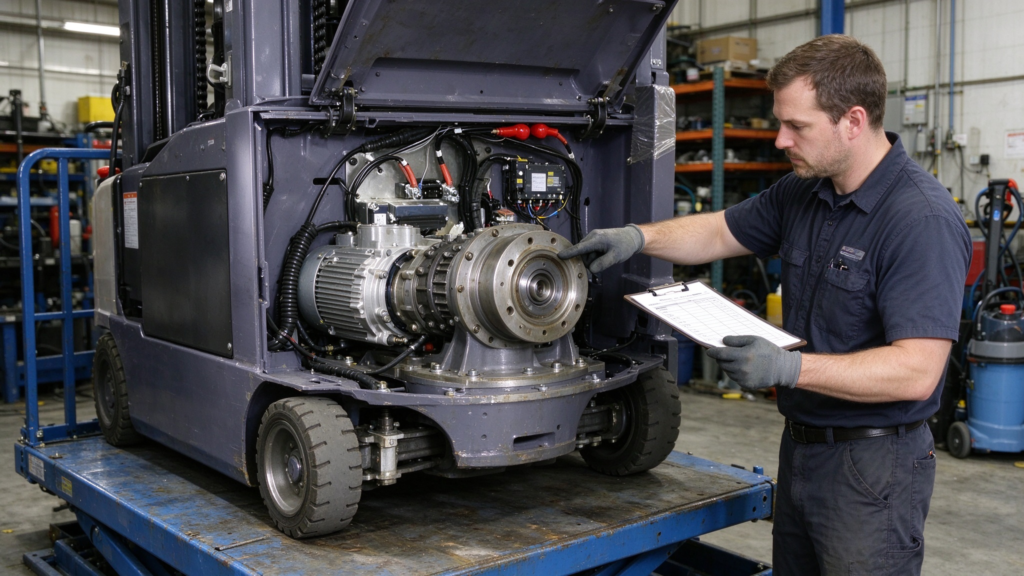
The following table provides initial troubleshooting guidance. It does not replace the manufacturer’s service manual or a qualified technician’s diagnosis.
| Symptom | Possible causes | Recommended action |
|---|---|---|
| Motor overheats | Excessive load, restricted cooling, electrical fault, prolonged heavy duty | Stop operation if overheating is abnormal; allow the equipment to cool and arrange an inspection |
| Stacker moves slowly | Low battery charge, battery deterioration, controller fault, drive-system resistance | Check battery status and fault indicators; have the drive system inspected if the issue persists |
| Unusual motor noise | Bearing wear, loose components, mechanical damage | Stop the equipment if the noise is sudden or severe; arrange a qualified inspection |
| Reduced operating time | Battery aging, increased workload, charging issues, system losses | Compare actual work conditions and battery status; inspect the battery and drive system |
| Motor stops unexpectedly | Low-voltage protection, controller fault, wiring problem, safety interlock | Secure the machine and check the displayed fault code according to the manual |
Before inspection, park the stacker safely, lower the forks, remove the load if it can be done safely, switch off the equipment, and isolate power according to the manufacturer’s procedure.
Do not open energized electrical components, bypass safety interlocks, or attempt internal motor or controller repairs unless you are qualified and authorized to do so.
8. How to Maintain Electric Stacker Motors
Preventive maintenance helps identify developing problems before they interrupt warehouse operations.
Inspect Motor Operation Regularly
Pay attention to unusual noise, vibration, temperature, changes in acceleration, and inconsistent lifting or travel performance.
Record recurring symptoms and any fault codes. Follow the inspection intervals specified by the equipment manufacturer.
Keep Cooling and External Components Clean
Keep accessible cooling areas and surrounding components clean according to the manufacturer’s instructions. Dust buildup and blocked airflow can affect thermal performance where ventilation is required.
Do not apply cleaning fluids or high-pressure water to electrical components unless the equipment documentation explicitly permits the method.
Operate Within the Rated Capacity
Use the stacker only within its rated capacity and operating limits. Avoid repeated unnecessary acceleration, abrupt control inputs, and operating practices that place excessive stress on the drive system.
Good operating practices help protect the complete machine, including the motor, transmission, hydraulic components, and battery.
Check Cables and Electrical Connections
During scheduled maintenance, qualified personnel should inspect accessible cables, connectors, and electrical connections for signs of damage, corrosion, overheating, or looseness.
Electrical inspection and repair must follow the manufacturer’s isolation procedures and applicable workplace safety requirements.
9. How to Select an Electric Stacker Motor for Your Application
Choosing a suitable electric stacker requires matching the equipment to the workload rather than selecting a motor type in isolation.
Start With the Warehouse Application
Identify the load weight, required lift height, aisle width, floor conditions, travel distance, and expected number of handling cycles.
A compact warehouse with occasional pallet movements may have different requirements from a distribution center running multiple shifts.
Evaluate Operating Frequency
For frequent travel and lifting, examine energy consumption, thermal performance, control quality, and maintenance requirements under representative working conditions.
Ask suppliers to explain the conditions behind any claimed efficiency or runtime figures.
Compare the Complete Electrical and Hydraulic Systems
Review the motor, controller, battery, charger, drive mechanism, and lifting system as an integrated package.
Useful information includes rated motor power, battery voltage and capacity, charging specifications, rated load, lift height, and relevant performance data. Confirm that the figures refer to the exact model and configuration being quoted.
Consider Total Cost of Ownership
A lower purchase price does not necessarily mean a lower long-term cost.
Compare equipment price, energy use, battery replacement assumptions, maintenance, spare parts, service support, and expected operating life. Where possible, use estimates based on your own shifts and handling requirements.
Before purchasing, ask the supplier for a model-specific datasheet and confirmation that the proposed configuration suits your application.
10. Future Trends in Electric Stacker Motor Technology
Higher Efficiency Across Real Operating Conditions
Motor development continues to focus on reducing losses, improving thermal performance, and delivering useful torque across practical operating ranges.
For buyers, efficiency under the intended workload is generally more informative than an isolated peak-efficiency figure.
Smarter Motor Control and Diagnostics
Electronic control systems can support more precise power delivery and, depending on the equipment, provide fault codes or operating data that help technicians diagnose problems.
Available monitoring features vary by model. Confirm which functions are included rather than assuming every electric stacker supports remote diagnostics or real-time energy monitoring.
Integration With Smart Warehousing
Electric material handling equipment may increasingly be integrated with fleet management, charging management, and warehouse automation systems.
The practical value depends on compatibility, available data interfaces, and the needs of the warehouse. Buyers should evaluate these features alongside core requirements such as load capacity, maneuverability, safety, and service support.
Frequently Asked Questions
Q1: What does the motor do in an electric stacker?
An electric stacker motor converts electrical energy into mechanical power. A traction motor drives the machine, while a separate lifting motor may power the hydraulic pump that raises and lowers the forks.
Q2: How does an electric motor affect electric stacker efficiency?
Motor efficiency affects how much battery energy becomes useful mechanical output. Motor control, battery condition, workload, hydraulic performance, and mechanical resistance also influence total energy consumption.
Q3: Are AC motors better than DC motors for electric stackers?
AC motors can offer responsive electronic control and low routine maintenance in brushless configurations. However, the better choice depends on the specific motor design, controller, operating cycle, maintenance requirements, and total cost of ownership.
Q4: Why is my electric stacker motor losing power?
Possible causes include a low or deteriorated battery, electrical connection problems, controller faults, motor damage, excessive load, or mechanical resistance. Check the operator’s manual and displayed fault codes, and arrange qualified service if the problem persists.
Q5: How can I extend the service life of an electric stacker motor?
Follow the manufacturer’s maintenance schedule, avoid overloading, keep permitted cooling areas clean, inspect electrical connections through qualified personnel, and investigate abnormal noise, vibration, heat, or performance changes promptly.
Q6: Does a higher-power motor always make an electric stacker more efficient?
No. A higher power rating indicates greater available power under specified conditions, not necessarily higher efficiency. Motor selection should match the rated load, lifting requirements, duty cycle, and overall system design.
Q7: How can I compare electric stacker energy consumption?
Compare machines under similar load weights, travel distances, lifting heights, work cycles, battery conditions, and environmental conditions. Ask suppliers for documented test conditions and energy-consumption data where available.
Follow LI-UNILIFT for More Material Handling Insights
LI-UNILIFT shares information about electric pallet trucks, electric stackers, electric tuggers, warehouse equipment, and material handling solutions for industrial applications.
Explore our LI-UNILIFT website to learn more about our equipment and material handling solutions.
For model information, configuration questions, or application-specific support, contact LI-UNILIFT.
You can also explore our news and blog section for additional material handling insights.
Follow LI-UNILIFT on Facebook, TikTok, Instagram, X, Pinterest, and LinkedIn.
For equipment purchasing, confirm the rated capacity, lift height, battery configuration, motor specifications, and available options against the relevant product datasheet.