1. Introduction: The Evolution from Manual Cart Handling to Electric Tuggers
Introduce manual cart handling as a traditional material transportation method.
Explain the challenges of manual pushing and pulling:
High labor intensity
Limited transportation distance
Reduced efficiency for heavy loads
Introduce electric tuggers as a modern solution for improving internal logistics.
Highlight that electric tuggers can enhance productivity, safety, and workflow efficiency.
2. What Is Manual Cart Handling?
2.1 Definition of Manual Cart Handling
Explain that manual cart handling relies on workers pushing or pulling carts using physical force.
Commonly used in:
Small warehouses
Workshops
Retail environments
Light-duty material movement
2.2 Advantages of Manual Cart Handling
Low initial investment
Simple operation
No charging or maintenance requirements
Suitable for occasional light loads
2.3 Limitations of Manual Cart Handling
Requires significant physical effort
Difficult to move heavy loads
Slower transportation speed
Higher risk of worker fatigue and injury
3. What Is an Electric Tugger?
3.1 Definition of an Electric Tugger
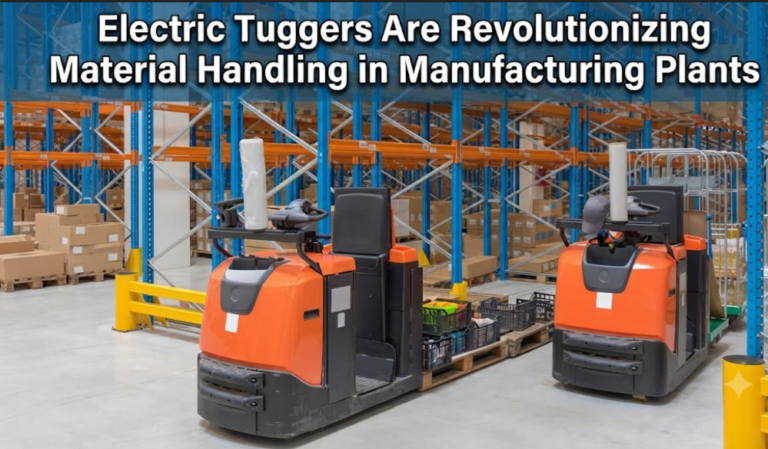
Explain that an electric tugger is a battery-powered towing device designed to move carts and trailers efficiently.
Introduce key components:
Electric motor
Battery system
Tow coupling
Control handle or riding platform
3.2 Common Applications of Electric Tuggers
Warehouse material transportation
Production line supply
Automotive manufacturing logistics
Hospital and airport cart movement
3.3 Benefits of Electric Tuggers
Reduces manual labor requirements
Moves heavier loads with less effort
Improves transportation consistency
Supports continuous material flow
4. Electric Tugger vs Manual Cart Handling: Key Differences
| Feature | Electric Tugger | Manual Cart Handling |
|---|---|---|
| Driving Method | Electric motor powered | Human pushing/pulling |
| Labor Requirement | Low physical effort | High physical effort |
| Load Capacity | Higher towing capacity | Limited by worker strength |
| Transportation Speed | Faster and consistent | Slower |
| Working Distance | Suitable for longer routes | Better for short distances |
| Worker Fatigue | Reduced | Increased |
| Productivity | Higher efficiency | Lower efficiency |
| Operating Cost | Battery charging and maintenance | Low equipment cost but higher labor cost |
5. How Do Electric Tuggers Improve Material Handling Efficiency?
5.1 Faster Transportation Speed
Explain how electric drive systems maintain consistent movement speed.
Reduce time spent moving materials between workstations.
5.2 Higher Load Handling Capability
Move multiple carts or heavier loads in one trip.
Improve transportation efficiency compared with manual handling.
5.3 Reduced Labor Requirements
Minimize repetitive pushing and pulling tasks.
Allow employees to focus on higher-value activities.
5.4 Better Workflow Consistency
Support scheduled material delivery.
Improve production line reliability.
6. Safety Comparison: Electric Tugger vs Manual Cart Handling
6.1 Safety Challenges of Manual Cart Handling
Muscle strain from repeated pushing and pulling.
Risk of overloading carts.
Reduced control when moving heavy loads.
6.2 Safety Advantages of Electric Tuggers
Controlled acceleration and braking.
Reduced physical workload.
Better load control during transportation.
7. Cost Efficiency: Is an Electric Tugger Worth the Investment?
7.1 Initial Investment
Manual carts have lower upfront costs.
Electric tuggers require higher initial investment.
7.2 Long-Term Operating Costs
Compare:
Labor costs
Productivity improvements
Maintenance expenses
Equipment lifespan
7.3 Return on Investment (ROI)
Explain how electric tuggers can create value through:
Reduced labor dependency
Faster material movement
Lower workplace injury risks
8. When Should You Choose an Electric Tugger?
Suitable Situations:
Frequent material transportation
Heavy or multiple cart movement
Long-distance internal logistics
Large warehouses and factories
Production line supply operations
9. When Is Manual Cart Handling Still a Better Choice?
Suitable Situations:
Small loads
Short transportation distances
Low-frequency movement
Limited budgets
Small workshops
10. How to Decide Between an Electric Tugger and Manual Cart Handling?
Consider:
10.1 Load Requirements
Average towing weight
Number of carts moved
10.2 Transportation Frequency
Occasional movement vs continuous operation
10.3 Workplace Conditions
Floor quality
Space limitations
Route distance
10.4 Labor Efficiency Goals
Reducing physical workload
Improving productivity targets
Explore reliable electric pallet trucks, electric stackers, and material handling solutions at Unilift MHE.
If you would like to contact us, please click here.
If you would like to learn more about our news, please click here.