1. Introduction: Choosing the Right Material Handling Equipment Matters
Explain the importance of selecting suitable equipment for warehouse and industrial operations.
Introduce electric tuggers and forklifts as two common material handling solutions.
Mention that the right choice depends on load requirements, working environment, and workflow needs.
Briefly highlight that electric tuggers are designed for towing, while forklifts focus on lifting and stacking.
2. What Is an Electric Tugger?
2.1 Basic Definition of an Electric Tugger
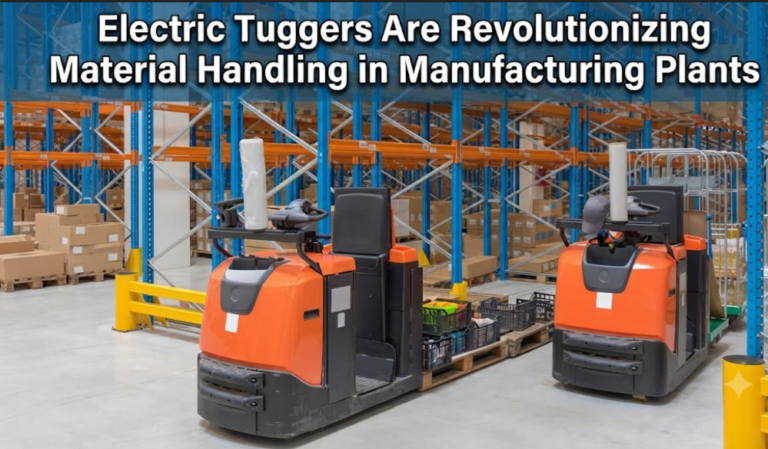
Explain what an electric tugger is and how it works.
Introduce its main components:
Electric drive motor
Battery system
Tow hitch/coupling systemControl handle or riding platform
2.2 Common Applications of Electric Tuggers
Warehouse cart transportation
Production line material supply
Automotive manufacturing logistics
Airport and hospital transportation
Heavy-duty trolley movement
2.3 Key Advantages of Electric Tuggers
Reduces manual pushing and pulling labor
Improves material flow efficiency
Provides quieter and cleaner operation
Suitable for repetitive towing tasks
3. What Is a Forklift?
3.1 Basic Definition of a Forklift
Explain the working principle of forklifts.Introduce lifting, stacking, and pallet handling functions.
3.2 Common Forklift Applications
Pallet loading and unloading
Warehouse rack storage
Container handling
Heavy load transportation
3.3 Key Advantages of Forklifts
High lifting capacity
Ability to stack materials vertically
Suitable for heavy-duty operations
Flexible for different warehouse tasks
4. Electric Tugger vs Forklift: Key Differences
| Feature | Electric Tugger | Forklift |
|---|---|---|
| Main Function | Towing carts and trailers | Lifting and moving loads |
| Load Handling | Pulls multiple carts | Lifts individual pallets |
| Lifting Ability | Limited or unavailable | Excellent lifting capability |
| Best Application | Long-distance material transport | Storage and stacking operations |
| Operation Cost | Lower energy and maintenance cost | Higher maintenance requirements |
| Space Requirement | Works well in narrow aisles | Requires more operating space |
| Worker Efficiency | Reduces repetitive pushing | Improves heavy load handling |
5. When Should You Choose an Electric Tugger?
5.1 For Repetitive Material Transportation
Moving components between production areas.
Transporting multiple carts in one trip.
5.2 For Assembly Line Logistics
Supporting just-in-time (JIT) manufacturing.
Improving continuous material supply.
5.3 For Low-Level Horizontal Movement
Ideal when lifting is not required.
Suitable for flat factory floors and warehouses.
5.4 For Improving Workplace Ergonomics
Reduces physical strain on employees.
Helps prevent injuries caused by manual handling.
6. When Should You Choose a Forklift?
6.1 For Pallet Handling and Stacking
Moving palletized goods.
Placing products on warehouse racks.
6.2 For Heavy-Duty Material Handling
Handling loads from several tons.
Suitable for demanding industrial applications.
6.3 For Loading and Unloading Operations
Trucks, containers, and distribution centers.
7. Electric Tugger or Forklift: Which One Is More Cost-Effective?
7.1 Initial Investment Comparison
Electric tuggers usually require lower purchase costs.
Forklifts may require higher investment due to lifting systems.
7.2 Operating and Maintenance Costs
Electric tuggers:
Lower maintenance requirements
Simple structure
Lower energy consumption
Forklifts:
More complex components
Higher maintenance needs
7.3 Productivity Considerations
Choose equipment based on workflow efficiency rather than price alone.
8. Safety Considerations: Electric Tugger vs Forklift
Electric Tugger Safety Benefits
Lower center of gravity
Reduced risk of falling loads
Easier operation in crowded areas
Forklift Safety Considerations
Requires trained operators
Needs attention to load stability
Requires proper aisle management
9. How to Choose Between an Electric Tugger and a Forklift?
Consider the following factors:
9.1 Material Handling Requirements
Do you need towing or lifting?
What type of loads are being moved?
9.2 Working Environment
Warehouse size
Floor conditions
Aisle width
Indoor or outdoor use
9.3 Load Capacity
Total towing weight
Maximum lifting weight
9.4 Operation Frequency
Occasional movement
Continuous production line transportation
10. Can Electric Tuggers and Forklifts Work Together?
Explain that many modern warehouses use both solutions.
Example workflow:
Forklift unloads pallets.
Electric tugger moves carts/components internally.
Show how combined usage improves overall logistics efficiency.