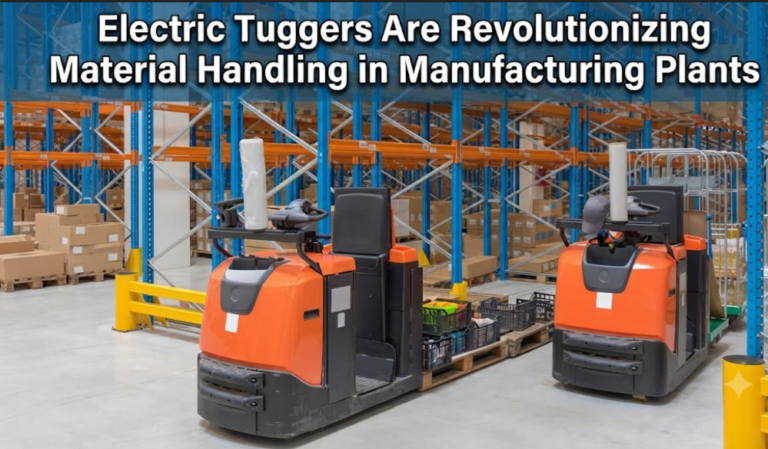
Electric Reach forklifts have become an increasingly popular material handling solution for warehouses, manufacturing facilities, distribution centers, and other industrial environments. Compared with traditional internal combustion forklifts, electric models offer quiet operation, zero tailpipe emissions, and efficient performance, making them particularly suitable for indoor applications.
But what industries use electric forklifts, and what are they commonly used for?
From warehouse pallet handling to production-line material transport, electric forklift applications cover a wide range of industries. This guide explains the most common industries, applications, and use cases for electric forklifts and provides practical advice for choosing the right model.
What Are Electric Reach Forklifts Used For?
Electric forklifts are primarily designed for moving, lifting, stacking, and transporting palletized or packaged materials. They are commonly used when businesses need to move materials efficiently over short and medium distances.
Typical electric forklift use cases include:
- Moving pallets between storage locations
- Loading and unloading trucks
- Stacking products on warehouse racks
- Supplying materials to production lines
- Moving finished goods
- Supporting order fulfillment operations
- Transporting raw materials
- Replenishing inventory
- Handling goods inside distribution centers
Because electric forklifts produce no tailpipe exhaust during operation, they are particularly useful in enclosed working environments.
What Industries Use Electric Reach Forklifts?
The industries that use electric forklifts range from warehousing and manufacturing to food processing, retail, pharmaceuticals, and logistics.
The most common applications are described below.
1. Warehousing and Storage
Warehousing is one of the largest areas for electric forklift applications.
Modern warehouses often require forklifts to move pallets between receiving areas, storage racks, picking zones, and shipping docks. Electric forklifts are well suited to these environments because they operate quietly and do not produce exhaust emissions.
Common applications include:
- Pallet transportation
- Rack storage and retrieval
- Truck loading and unloading
- Inventory movement
- Warehouse replenishment
- Finished goods handling
For companies looking for electric forklifts for warehouses, important factors include lift height, load capacity, turning radius, aisle width, and battery capacity.
2. Manufacturing
Manufacturing facilities are another major application area for electric forklifts.
Electric forklifts for manufacturing can transport raw materials, components, work-in-process materials, and finished products throughout a production facility.
Typical applications include:
- Delivering raw materials to production lines
- Moving components between workstations
- Transporting finished products
- Loading and unloading inbound materials
- Moving pallets to temporary storage areas
Electric forklifts can be especially useful in indoor manufacturing environments where low noise and clean operation are important.
For example, an electric counterbalance forklift may transport pallets of components from a warehouse to a production line, while a compact electric forklift can handle materials in areas with limited operating space.
3. Logistics and Distribution Centers
Logistics companies and distribution centers handle large volumes of goods every day, making efficient material handling essential.
Electric forklifts for logistics are commonly used for:
- Receiving operations
- Pallet movement
- Cross-docking
- Truck loading and unloading
- Order fulfillment
- Shipping operations
- Short-distance material transportation
Distribution centers may use several types of material handling equipment depending on the workflow. Electric counterbalance forklifts, electric pallet trucks, reach trucks, and electric stackers can work together to improve warehouse productivity.
For high-volume operations, battery capacity and charging infrastructure are particularly important considerations.
4. Food and Beverage Industry
The food and beverage industry has strict requirements for cleanliness, hygiene, and indoor air quality.
This makes electric forklifts attractive for many food processing plants, beverage warehouses, and distribution facilities.
Common applications include:
- Moving packaged food
- Handling beverage pallets
- Transporting ingredients
- Loading and unloading delivery trucks
- Moving products inside cold rooms
- Warehouse storage and retrieval
Because electric forklifts do not generate engine exhaust during operation, they can be a better choice than combustion-powered equipment for many enclosed food-handling environments.
However, the specific forklift configuration should be selected according to hygiene requirements, operating temperatures, floor conditions, and battery requirements.
5. Retail and Wholesale
Large retailers and wholesalers often operate distribution centers and warehouses where pallet handling is required.
Electric forklifts for retail can be used for:
- Receiving merchandise
- Moving pallets
- Replenishing inventory
- Loading delivery vehicles
- Organizing warehouse stock
- Handling products in backroom areas
Compact electric forklifts can be particularly useful when operating space is limited.
Retail distribution facilities may also combine forklifts with electric pallet trucks and order pickers to support different stages of the material handling process.
6. Cold Storage and Refrigerated Warehouses
Cold storage is another important area for electric forklift warehouse applications.
Refrigerated warehouses require equipment that can operate reliably in low-temperature conditions. Reach forklifts can be used for moving frozen foods, refrigerated products, pharmaceuticals, and other temperature-sensitive goods.
Common applications include:
- Pallet movement inside cold rooms
- Frozen food handling
- Refrigerated product storage
- Loading and unloading
- Rack storage and retrieval
Related Article: Reach Truck Forklift vs Counterbalance Forklift: Which One Is Better for Your Warehouse?
When selecting electric forklifts for cold storage, businesses should pay particular attention to battery performance, charging requirements, condensation, corrosion protection, and operating temperature.
Lithium-ion battery technology can also provide advantages for applications requiring frequent operation and opportunity charging, although the appropriate battery system depends on the specific working environment.
7. Pharmaceutical Industry
The pharmaceutical industry requires careful material handling because products and materials may need to be handled in clean and controlled environments.
Electric forklift industrial applications in pharmaceutical facilities can include:
- Moving raw materials
- Transporting packaged products
- Warehouse pallet handling
- Loading and unloading
- Moving products between storage and production areas
The low-noise and zero tailpipe emission characteristics of electric forklifts can make them suitable for many indoor pharmaceutical operations.
However, specialized environments may require additional equipment specifications or certifications depending on the facility.
8. Chemical Industry
Chemical manufacturers and distributors also use forklifts to move raw materials, containers, pallets, and finished products.
Potential applications include:
- Pallet transportation
- Container handling
- Warehouse storage
- Loading and unloading
- Production material supply
In chemical environments, forklift selection should be based on the specific materials being handled and the facility’s safety requirements.
For hazardous environments, businesses should verify whether specialized explosion-protected equipment or other safety-certified solutions are required.
What Are the Most Common Electric Reach Forklift Applications?
Beyond specific industries, there are several common electric forklift use cases that appear across different facilities.
Pallet Handling
Pallet handling is one of the most common applications. Forklifts can move pallets between storage locations, production areas, loading docks, and shipping zones.
Truck Loading and Unloading
Electric forklifts can efficiently load and unload palletized goods from trucks and trailers.
Warehouse Stacking
Counterbalance forklifts and reach trucks can place pallets into storage racks at different heights.
Production Line Supply
In manufacturing facilities, forklifts can deliver raw materials and components to production lines according to production schedules.
Finished Goods Transportation
After production is completed, forklifts can transport finished products to warehouses, staging areas, or shipping docks.
Order Fulfillment
Distribution centers may use electric forklifts together with pallet trucks and order pickers to support high-volume order fulfillment.
Why Do These Industries Choose Electric Reach Forklifts?
The popularity of electric forklifts is driven by several operational advantages.
Zero Tailpipe Emissions
Electric forklifts do not produce engine exhaust during normal operation. This makes them particularly suitable for many indoor facilities.
Low Operating Noise
Electric drive systems generally operate more quietly than internal combustion engines, which can improve the working environment.
Energy Efficiency
Electric powertrains can convert electrical energy into motion efficiently, helping reduce energy consumption in suitable applications.
Lower Maintenance Requirements
Electric forklifts have fewer engine-related components than combustion-powered forklifts. They do not require routine engine oil changes, spark plug replacement, or exhaust-system maintenance.
Precise Operation
Electric drive systems can provide smooth acceleration, braking, and directional control, which can be beneficial when handling loads in narrow warehouse aisles.
How to Choose an Electric Reach Forklift for Different Applications?
Not every electric forklift is suitable for every application. Before purchasing equipment, businesses should evaluate the actual operating conditions.
1. Load Capacity
Determine the maximum and typical load weights.Common capacity ranges may vary from compact warehouse models to heavy-duty electric forklifts designed for substantially larger loads.The rated capacity should always match the actual load and lift height requirements.
2. Lift Height
If the forklift will operate with high storage racks, lifting height becomes an important consideration.A warehouse using high-density rack storage may require a reach truck or high-lift electric forklift rather than a standard counterbalance model.
3. Operating Environment
Consider whether the forklift will operate:
- Indoors
- Outdoors
- In cold storage
- In food processing areas
- In narrow aisles
- On uneven surfaces
- In high-dust environments
The environment can influence the choice of tires, battery, protection level, and forklift configuration.
4. Battery Type
Battery technology has a significant impact on forklift productivity.Lead-acid batteries may be suitable for certain traditional operations, while lithium-ion batteries can offer advantages such as opportunity charging, reduced maintenance, and consistent performance.The best option depends on operating hours, charging infrastructure, budget, and duty cycle.
5. Aisle Width
Warehouse layout should be considered before selecting a forklift.If aisles are narrow, a compact model, reach truck, or specialized narrow-aisle solution may provide better maneuverability than a large counterbalance forklift.
6. Duty Cycle
Consider how many hours the forklift will operate each day.A forklift used for occasional material handling has different requirements from one operating continuously across multiple shifts.Battery capacity, charging time, operator comfort, and overall durability become increasingly important as operating hours increase.
Electric Reach Truck Forklift Applications by Working Environment
Different environments require different forklift configurations.
| Working Environment | Typical Applications | Suitable Considerations |
|---|---|---|
| Warehouses | Pallet handling, stacking, loading | Capacity, lift height, aisle width |
| Manufacturing | Production supply, raw material handling | Load capacity, durability, maneuverability |
| Distribution Centers | Shipping, receiving, pallet movement | Battery capacity, productivity |
| Cold Storage | Frozen food and refrigerated goods | Low-temperature battery performance |
| Retail Warehouses | Inventory movement, replenishment | Compact size, maneuverability |
| Food Processing | Packaged goods and ingredient handling | Clean operation, hygiene requirements |
| Pharmaceutical Facilities | Controlled material handling | Clean indoor operation, safety requirements |
FAQ
Q1.What industries use electric forklifts?
The main industries using electric forklifts include warehousing, manufacturing, logistics, distribution, food and beverage, retail, pharmaceutical, chemical, and cold storage operations.
Q2.What are electric forklifts commonly used for?
Common applications include pallet handling, loading and unloading, warehouse stacking, production-line material supply, inventory movement, and finished goods transportation.
Q3.Are electric forklifts suitable for warehouses?
Yes. Electric forklifts for warehouses are widely used because they provide quiet operation, zero tailpipe emissions, and good maneuverability for indoor material handling.
Q4.Can electric forklifts be used in cold storage?
Yes. Electric forklifts can be used in refrigerated and frozen warehouses when they are properly configured for low-temperature conditions. Battery performance and charging requirements should be evaluated carefully.
Q5.Are electric forklifts suitable for E-Commerce Warehouses?
Yes, electric forklifts are an ideal choice for e-commerce warehouses. They provide zero emissions and low noise, making them perfect for large indoor facilities. Their efficiency in narrow aisles and with high-rack shelving helps to significantly improve picking efficiency and reduce operational costs.
Q6.What is the most important factor when choosing an electric forklift?
Load capacity, lift height, operating environment, duty cycle, aisle width, and battery requirements should all be considered. The correct forklift should be selected based on the complete application rather than purchase price alone.
Conclusion
Electric reach forklifts are used across a wide range of industries, from warehouses and manufacturing plants to logistics centers, food and beverage facilities, retail warehouses, pharmaceutical operations, and cold storage facilities.
The most common electric forklift applications involve pallet handling, stacking, loading and unloading, production-line supply, inventory movement, and warehouse transportation.
For businesses evaluating electric forklift industrial applications, the right equipment depends on load capacity, lifting height, operating environment, aisle width, battery technology, and daily workload.
By matching the forklift configuration to the actual application, companies can improve material handling efficiency, reduce unnecessary operating costs, and create a cleaner and quieter working environment.