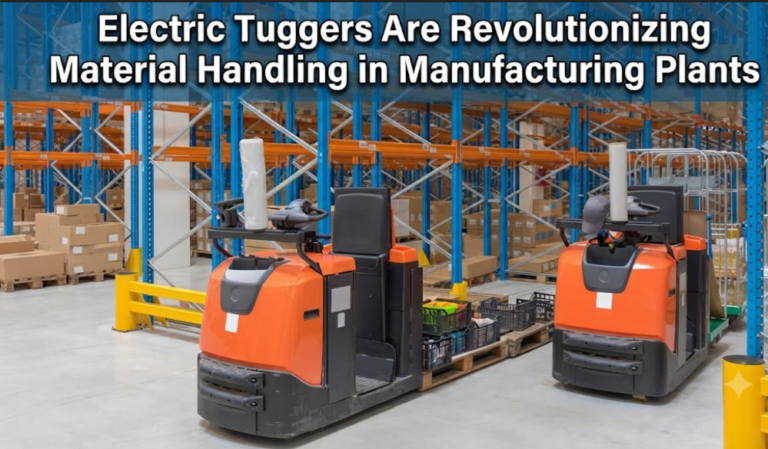
1. Introduction: Choosing the Right Electric Tugger for Small Warehouses
- Explain that small warehouses often face challenges such as:
- Limited storage space
- Smaller operating teams
- Frequent internal material movement
- Budget constraints
- Introduce electric tuggers as a practical solution for improving warehouse transportation efficiency.
- Highlight that the best electric tugger depends on:
- Load requirements
- Warehouse layout
- Operation frequency
- Working environment
2. Why Do Small Warehouses Need Electric Tuggers?
2.1 Challenges of Manual Material Handling
- Explain common problems:
- Workers spend too much time pushing and pulling carts.
- Heavy loads increase physical workload.
- Transportation efficiency decreases during busy periods.
2.2 Benefits of Using Electric Tuggers in Small Warehouses
- Reduce manual handling effort.
- Improve transportation speed.
- Move multiple carts in one trip.
- Optimize warehouse workflow.
- Improve workplace safety.
3. What Is an Electric Tugger for Small Warehouses?
3.1 Definition of an Electric Tugger
- Explain that an electric tugger is a compact battery-powered towing device used to move carts, racks, and trailers.
- Unlike forklifts, electric tuggers focus on horizontal transportation rather than lifting.
3.2 Key Features Suitable for Small Warehouses
- Compact structure
- Easy maneuverability
- Low operating noise
- Simple controls
- Flexible operation in narrow spaces
4. Key Factors to Consider When Choosing an Electric Tugger
4.1 Towing Capacity
Explain that towing capacity is the first selection factor.
Consider:
- Total weight of carts
- Maximum load per trip
- Number of carts transported together
Example:
- Light-duty warehouse → lower capacity electric tugger
- Heavy material movement → higher capacity model
4.2 Warehouse Space and Maneuverability
Evaluate:
- Aisle width
- Turning radius
- Storage layout
- Transportation routes
Recommended features:
- Compact chassis
- Small turning radius
- Easy steering control
4.3 Operation Type: Walkie or Ride-On Electric Tugger
Walkie Electric Tugger
Suitable for:
- Small warehouses
- Short-distance transportation
- Narrow working areas
Advantages:
- Lower investment cost
- Flexible operation
- Easy training
Ride-On Electric Tugger
Suitable for:
- Larger small warehouses
- Longer transportation routes
- Frequent daily operation
Advantages:
- Less operator fatigue
- Higher productivity
- Better for continuous use
4.4 Battery Type and Working Hours
Compare:
Lead-Acid Battery
Advantages:
- Lower initial cost
- Reliable technology
Limitations:
- Longer charging time
- Requires maintenance
Lithium Battery
Advantages:
- Faster charging
- Longer service life
- Maintenance-free operation
- Suitable for frequent warehouse use
5. Types of Electric Tuggers Suitable for Small Warehouses
5.1 Compact Walk-Behind Electric Tugger
Best for:
- Small storage facilities
- Light-duty cart transportation
- Short-distance movement
Features:
- Small footprint
- Easy operation
- Affordable solution
5.2 Small Ride-On Electric Tugger
Best for:
- Warehouses with higher transportation frequency
- Longer internal routes
Features:
- Higher operator comfort
- Improved productivity
- Suitable for multi-shift operations
5.3 Multi-Cart Electric Tugger
Best for:
- Moving several carts simultaneously
- Warehouse replenishment tasks
Benefits:
- Reduces transportation cycles
- Improves logistics efficiency
6. Electric Tugger vs Manual Cart Handling in Small Warehouses
| Feature | Electric Tugger | Manual Cart Handling |
|---|---|---|
| Power Source | Battery-powered | Human force |
| Labor Requirement | Low | High |
| Load Capacity | Higher | Limited |
| Transportation Speed | Faster | Slower |
| Worker Fatigue | Reduced | Increased |
| Best For | Frequent movement | Occasional handling |
| Long-Term Efficiency | Higher | Lower |
7. Electric Tugger vs Forklift for Small Warehouse Operations
| Feature | Electric Tugger | Forklift |
|---|---|---|
| Main Function | Cart towing | Lifting and stacking |
| Space Requirement | Small | Larger |
| Cost | Lower | Higher |
| Operation Complexity | Simple | Requires more training |
| Best Use | Horizontal movement | Pallet handling |
Explain:
- Choose an electric tugger if the warehouse mainly moves carts.
- Choose a forklift if lifting pallets and rack storage are required.
8. How to Select the Best Electric Tugger for Your Small Warehouse?
Follow these steps:
Step 1: Identify Your Transportation Needs
- What materials are moved?
- How often are they transported?
Step 2: Calculate Required Towing Capacity
- Add cart weight + maximum load weight.
Step 3: Check Warehouse Conditions
- Floor type
- Aisle width
- Distance between areas
Step 4: Choose Battery and Operation Type
- Walkie vs ride-on
- Lithium vs lead-acid
Step 5: Consider Future Growth
- Current needs
- Expected warehouse expansion
9. Common Applications of Electric Tuggers in Small Warehouses
9.1 Inventory Replenishment
- Moving goods from storage areas to picking zones.
9.2 Order Fulfillment Support
- Transporting picking carts efficiently.
9.3 Internal Material Transfer
- Moving items between warehouse sections.
9.4 Production Supply
- Delivering components from warehouse to production lines.
10. Maintenance Tips for Small Warehouse Electric Tuggers
Daily Checks:
- Battery condition
- Wheels and tires
- Steering system
- Tow connection
Regular Maintenance:
- Battery charging management
- Brake inspection
- Electrical system checks
Benefits:
- Longer equipment lifespan
- Reduced downtime