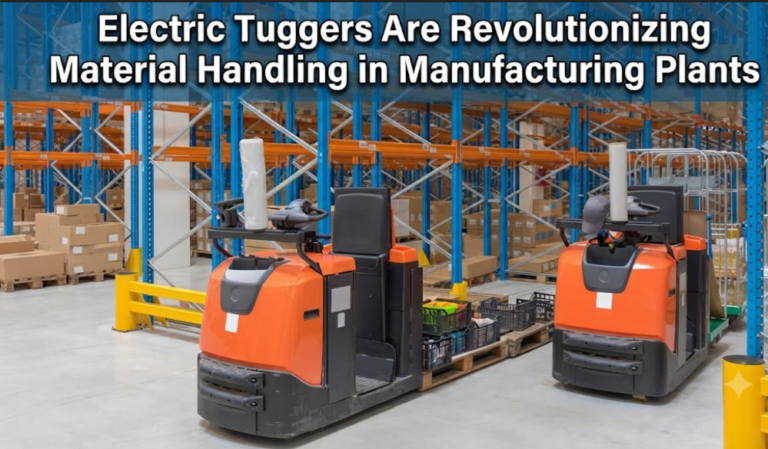
1. Introduction: The Shift from Manual Towing to Electric Material Handling
- Introduce manual towing as a traditional method used in factories and warehouses.
- Explain the challenges manufacturers face:
- Increasing labor costs
- Higher production demands
- Need for safer material movement
- Pressure to improve operational efficiency
- Introduce electric tuggers as a modern alternative for internal logistics.
- Highlight that many manufacturers are adopting electric tuggers to improve productivity, safety, and workflow stability.
2. What Is Manual Towing in Manufacturing?
2.1 Definition of Manual Towing
- Explain that manual towing relies on workers pushing or pulling carts, racks, and material carriers.
- Commonly used for:
- Production line supply
- Workshop material movement
- Warehouse transportation
2.2 Advantages of Manual Towing
- Low initial investment
- Simple operation
- No charging requirements
- Suitable for light-duty and occasional transportation
2.3 Limitations of Manual Towing
- Requires significant physical effort
- Limited towing capacity
- Slower transportation speed
- Causes worker fatigue
- Difficult to support high-volume manufacturing operations
3. What Is an Electric Tugger?
3.1 Definition of an Electric Tugger
- Explain that an electric tugger is a battery-powered towing machine designed to move carts, trailers, and material handling equipment.
- Introduce key components:
- Electric drive motor
- Battery system
- Control handle
- Tow hitch mechanism
3.2 Applications in Manufacturing
- Assembly line material delivery
- Automotive parts transportation
- Factory-to-warehouse movement
- Production workstation replenishment
- Heavy cart transportation
3.3 Key Benefits of Electric Tuggers
- Reduces manual labor requirements
- Improves transportation efficiency
- Supports continuous material flow
- Provides safer operation
4. Why Are Manufacturers Switching to Electric Tuggers?
4.1 Reduce Labor Intensity and Improve Worker Productivity
- Manual towing requires workers to repeatedly push and pull heavy loads.
- Electric tuggers allow operators to move larger loads with minimal effort.
- Employees can focus on more valuable production tasks.
4.2 Increase Material Flow Efficiency
- Electric tuggers provide:
- Faster transportation speed
- Consistent movement
- Reduced waiting time between processes
- Help maintain smooth production line supply.
4.3 Improve Workplace Safety
- Reduce risks caused by:
- Muscle strain
- Overexertion
- Manual handling injuries
- Provide better control of heavy loads.
4.4 Handle Heavier Loads More Easily
- Manual towing is limited by human strength.
- Electric tuggers can tow:
- Multiple carts
- Heavy material racks
- Large production containers
4.5 Support Lean Manufacturing and Just-In-Time (JIT) Production
- Explain how electric tuggers support:
- Scheduled material delivery
- Reduced inventory movement delays
- More efficient production workflows
5. Electric Tugger vs Manual Towing: Key Differences
| Feature | Electric Tugger | Manual Towing |
|---|---|---|
| Power Source | Battery-powered motor | Human force |
| Labor Requirement | Low | High |
| Load Capacity | Higher towing ability | Limited by worker strength |
| Transportation Speed | Faster and stable | Slower |
| Worker Fatigue | Reduced | Increased |
| Safety Level | Higher | More physical risks |
| Suitable Applications | Continuous industrial logistics | Light and occasional tasks |
6. How Electric Tuggers Improve Manufacturing Operations
6.1 Production Line Material Supply
- Deliver components to workstations on time.
- Reduce production interruptions caused by material shortages.
6.2 Internal Logistics Optimization
- Create fixed transportation routes.
- Improve movement efficiency between departments.
6.3 Multi-Cart Transportation
- Move several carts in one trip.
- Reduce the number of transportation cycles.
6.4 Better Space Utilization
- Operate effectively in narrow factory areas.
- Improve traffic flow compared with larger equipment.
7. Cost Benefits of Replacing Manual Towing with Electric Tuggers
7.1 Lower Labor Costs
- Reduce dependence on physical transportation work.
- Improve employee productivity.
7.2 Reduced Workplace Injury Costs
- Minimize injuries related to repetitive pulling and pushing.
- Improve workplace ergonomics.
7.3 Higher Long-Term Efficiency
- Compare:
- Equipment investment
- Maintenance costs
- Productivity improvements
- Operational savings
8. Are Electric Tuggers Suitable for Every Manufacturer?
Suitable Applications:
- Automotive manufacturing
- Electronics factories
- Machinery production
- Warehousing operations
- Assembly lines
- Large-scale factories
Situations Where Manual Towing May Still Work:
- Very small workshops
- Lightweight materials
- Infrequent transportation needs
- Limited budgets
9. How to Choose the Right Electric Tugger for Manufacturing?
Consider:
9.1 Towing Capacity
- Determine total cart and load weight.
- Select suitable pulling force.
9.2 Working Environment
Evaluate:
- Indoor/outdoor use
- Floor conditions
- Space limitations
- Route distance
9.3 Operation Frequency
- Occasional movement
- Multi-shift continuous operation
9.4 Battery Type
Compare:
- Lead-acid battery
- Lithium battery
Consider:
- Charging time
- Operating hours
- Maintenance requirements
10. The Future of Manufacturing Material Handling: From Manual to Electric
- Discuss the trend toward:
- Automation
- Ergonomic workplaces
- Smart factory logistics
- Explain how electric tuggers provide a practical step toward warehouse and factory automation.
- Mention their compatibility with future systems such as AGVs and AMRs.
11. Conclusion: Electric Tuggers Are Becoming Essential for Modern Manufacturing
- Summarize why manufacturers are replacing manual towing:
- Higher efficiency
- Lower labor intensity
- Improved safety
- Better production flow
- Emphasize that electric tuggers provide a cost-effective solution for modern material handling challenges.