Target Keywords:
- Electric tugger for logistics
- Electric tugger for distribution center
- Warehouse electric tugger
- Best electric tugger for warehouse operations
- Material handling tugger for logistics
Introduction: The Role of Electric Tuggers in Modern Logistics Operations
- Explain the increasing demand for efficient material movement in logistics and distribution centers.
- Introduce common challenges in warehouse transportation:
- Frequent movement of carts and containers
- Long-distance internal transport
- High labor costs
- Safety concerns caused by manual handling
- Explain how electric tuggers help improve logistics efficiency:
- Faster horizontal transportation
- Reduced operator fatigue
- Better workflow organization
- Lower operating costs
- Mention that choosing the right electric tugger depends on:
- Load capacity
- Travel distance
- Warehouse layout
- Operating frequency
- Battery performance
1. Why Are Electric Tuggers Becoming Popular in Distribution Centers?
1.1 Improving Internal Material Flow
Explain how electric tuggers support:
- Moving carts between storage areas and picking zones
- Transporting goods between production and shipping areas
- Connecting different warehouse processes
Benefits:
- Reduced waiting time
- Faster material circulation
- Improved warehouse productivity
1.2 Reducing Manual Handling Workload
Highlight problems with manual cart movement:
- Physical strain
- Lower efficiency for heavy loads
- Higher risk of workplace injuries
Electric tuggers provide:
- Powered towing assistance
- Easier movement of multiple carts
- Consistent transportation performance
2. What Type of Electric Tugger Is Best for Logistics Applications?
2.1 Walk-Behind Electric Tugger
Best for:
- Small and medium warehouses
- Narrow aisles
- Short-distance transportation
Advantages:
- Compact structure
- Easy maneuverability
- Flexible operation
- Suitable for frequent stop-and-go tasks
Typical applications:
- Moving picking carts
- Transporting warehouse containers
- Replenishment operations
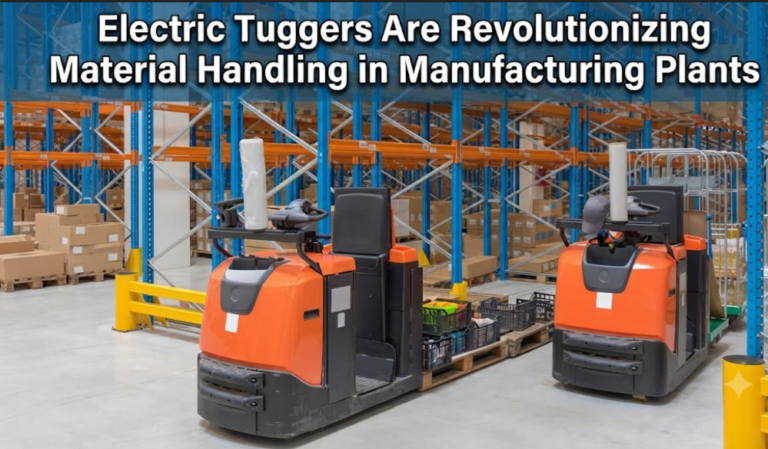
2.2 Ride-On Electric Tugger
Best for:
- Large distribution centers
- Long-distance transportation
- High-frequency operations
Advantages:
- Lower operator fatigue
- Higher productivity
- Better performance for continuous towing
Typical applications:
- Moving multiple trailers
- Cross-warehouse transportation
- Large-scale logistics operations
3. Key Features to Look for in a Logistics Electric Tugger
3.1 Suitable Towing Capacity
Explain that logistics operations require matching tugger capacity with actual loads.
Common applications:
| Warehouse Application | Recommended Capacity |
|---|---|
| Small picking carts | 1–3 Ton |
| Multiple material carts | 3–5 Ton |
| Heavy logistics trailers | 5 Ton+ |
Important considerations:
- Maximum cart weight
- Number of carts connected
- Floor conditions
- Transportation distance
3.2 High-Efficiency Drive System
Discuss important motor features:
- High torque output
- Smooth acceleration
- Stable operation during repeated cycles
Benefits:
- Faster transportation
- Lower energy consumption
- Reduced maintenance requirements
3.3 Long-Lasting Battery Performance
Distribution centers often require long operating hours.
Recommended battery features:
Lithium Battery Advantages:
- Fast charging
- Longer lifespan
- Low maintenance
- Suitable for multi-shift operations
Consider:
- Daily working hours
- Charging opportunities
- Peak operation periods
3.4 Compact Design and Maneuverability
Important for warehouse environments:
- Small turning radius
- Easy control
- Ability to operate in narrow spaces
Especially useful for:
- High-density storage areas
- Picking aisles
- Loading zones
4. Electric Tugger Applications in Logistics and Distribution Centers
4.1 Warehouse Replenishment
Electric tuggers help move:
- Storage carts
- Pallet containers
- Picking equipment
Benefits:
- Faster restocking
- Reduced walking distance
- Improved inventory flow
4.2 Order Fulfillment Operations
Applications:
- Moving picking carts
- Supporting e-commerce fulfillment
- Transporting packed orders
Advantages:
- Improves picking efficiency
- Reduces manual transportation time
4.3 Dock and Shipping Area Transportation
Electric tuggers are suitable for:
- Moving loaded carts to shipping areas
- Internal transportation between zones
- Trailer preparation
Benefits:
- Smoother loading processes
- Reduced congestion
5. Electric Tugger vs Forklift in Distribution Centers
| Feature | Electric Tugger | Forklift |
|---|---|---|
| Main Function | Horizontal towing | Lifting and stacking |
| Best For | Moving carts and trailers | Moving pallets |
| Floor Space | Smaller turning area | Requires more space |
| Labor Efficiency | High for repeated transport | High for lifting tasks |
| Operating Cost | Lower | Higher |
| Noise Level | Lower | Higher |
Explain:
- Electric tuggers are ideal when goods are already placed on wheels.
- Forklifts are better when lifting pallets from the floor or racks is required.
6. How to Select the Best Electric Tugger for a Distribution Center
Step 1: Analyze Transportation Routes
Evaluate:
- Distance between work areas
- Aisle width
- Floor conditions
- Traffic conditions
Step 2: Calculate Load Requirements
Check:
- Average load
- Maximum load
- Number of carts per trip
Choose a tugger with enough capacity for peak demand.
Step 3: Determine Operating Frequency
For:
Occasional Use:
- Standard battery capacity
- Walk-behind models
Continuous Operations:
- High-capacity lithium battery
- Ride-on models
- Heavy-duty designs
Step 4: Consider Safety and Operator Comfort
Recommended features:
- Emergency stop button
- Warning alarm
- Automatic braking
- Speed adjustment
- Ergonomic controls
7. How Electric Tuggers Improve Distribution Center Efficiency
Explain operational benefits:
Higher Productivity
- Move more goods per trip
- Reduce transportation time
Lower Labor Costs
- Reduce physical handling requirements
- Allow employees to focus on higher-value tasks
Improved Safety
- Reduce manual pushing and pulling injuries
- Provide better load control
Better Workflow Management
- Create more organized material flow routes
8. Future Trends of Electric Tuggers in Logistics
Discuss emerging developments:
8.1 Lithium Battery Technology
- Longer operating time
- Faster charging
- Lower maintenance
8.2 Smart Control Systems
Features:
- Digital monitoring
- Battery management
- Fault diagnostics
8.3 Integration with Automated Logistics
Future applications:
- AGV-compatible tugging systems
- Automated material transportation
- Smart warehouse operations
9. Electric Tugger Buying Checklist for Distribution Centers
| Feature | What to Evaluate |
|---|---|
| Capacity | Matches cart and trailer weight |
| Battery | Supports daily operating hours |
| Motor | Provides sufficient towing power |
| Size | Fits warehouse space |
| Safety | Includes protection systems |
| Maintenance | Easy servicing |
| Durability | Designed for industrial use |
Conclusion: Choosing the Right Electric Tugger for Logistics Operations
Summarize:
The best electric tugger for logistics and distribution centers depends on:
- Transportation distance
- Load requirements
- Warehouse layout
- Working frequency
- Safety expectations
For small warehouses, compact walk-behind models provide flexibility. For large distribution centers, ride-on heavy-duty electric tuggers offer higher productivity and efficiency.
CTA Example:
“Improve your warehouse material flow with reliable electric tugger solutions designed for logistics, distribution centers, and industrial transportation applications.”
FAQ: Electric Tuggers for Logistics and Distribution Centers
1. What is the best electric tugger for a distribution center?
The best electric tugger depends on warehouse size, load requirements, and transportation frequency. Walk-behind models are suitable for smaller operations, while ride-on electric tuggers are better for large distribution centers with continuous material movement.
2. How much weight can a warehouse electric tugger pull?
Electric tugger capacity varies by model. Light-duty models may handle a few tons, while heavy-duty industrial electric tuggers can tow much higher loads for manufacturing and logistics applications.
3. Are electric tuggers suitable for warehouses?
Yes. Electric tuggers are widely used in warehouses for moving carts, containers, and trailers, especially where horizontal transportation is required.
4. What is the difference between an electric tugger and a pallet truck?
An electric tugger is designed for towing wheeled loads, while an electric pallet truck is designed for lifting and transporting pallets.
5. Can electric tuggers improve warehouse efficiency?
Yes. They reduce manual transportation time, allow operators to move multiple carts at once, and improve overall material flow efficiency.
6. Should I choose a walk-behind or ride-on electric tugger?
Choose a walk-behind tugger for short distances, smaller spaces, and flexible operation. Choose a ride-on tugger for large warehouses, long travel distances, and frequent heavy-duty towing.
7. Are lithium batteries better for warehouse electric tuggers?
Lithium batteries are usually preferred for intensive warehouse operations because they offer faster charging, longer service life, and lower maintenance requirements.