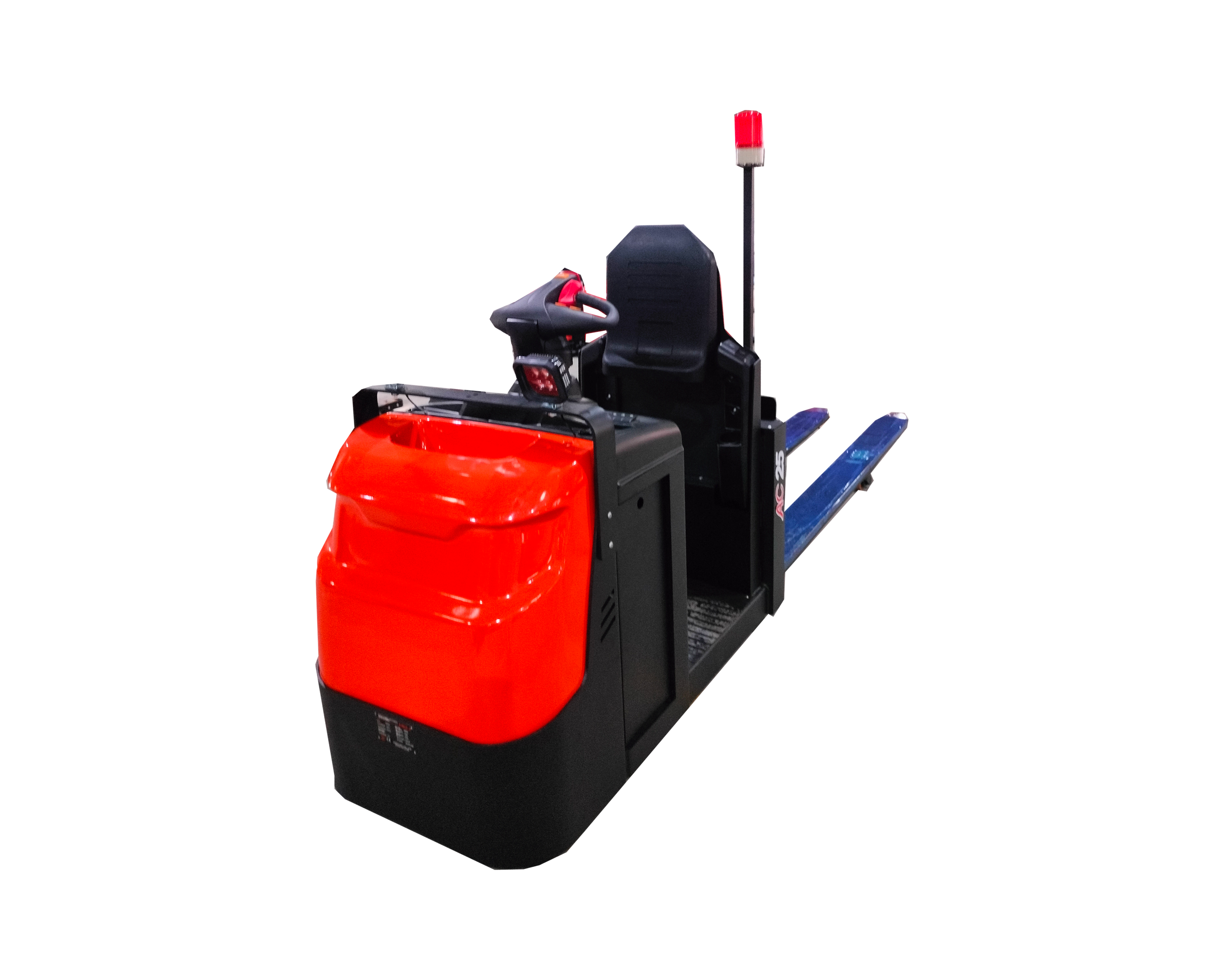
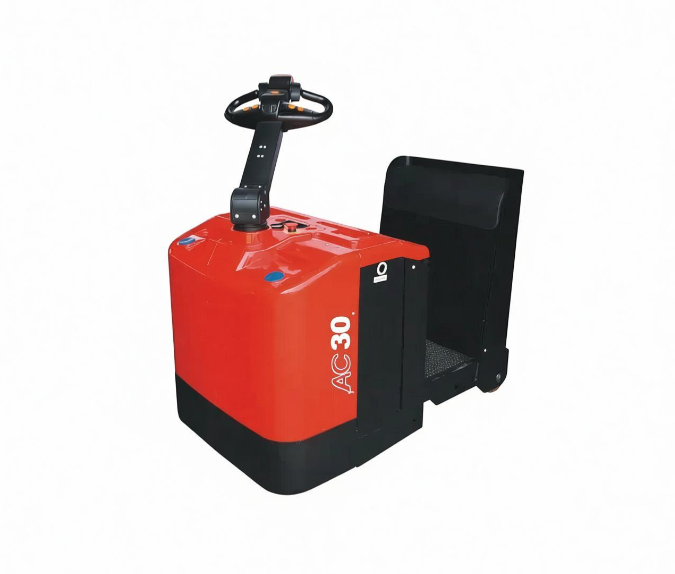
1.Introduction: The Impact of Lithium Battery Technology on Electric Tuggers
Introduce the increasing adoption of electric tuggers in:
Warehouses
Manufacturing facilities
Airports
Logistics centers
Distribution operations
Explain that battery technology is a key factor affecting electric tugger performance.
Highlight how modern lithium battery systems help improve:
Operating efficiency
Productivity
Equipment availability
Long-term operating costs
2. Why Battery Technology Is Important for Electric Tugger Productivity
2.1 Battery Systems Determine Operating Performance
The battery provides power for:
Electric drive motors
Controllers
Safety systems
Electronic components
Battery performance directly affects:
Towing capability
Travel distance
Working hours per charge
2.2 Traditional Battery Limitations
Discuss common challenges of lead-acid batteries:
Long charging time
Regular maintenance requirements
Lower energy density
Reduced performance during intensive operation
2.3 Lithium Battery Technology Provides a Better Solution
Explain how lithium batteries overcome many limitations by offering:
Higher energy efficiency
Faster charging capability
Longer service life
More consistent power output
3. Understanding Lithium Battery Technology in Electric Tuggers
3.1 How Lithium Batteries Work
Working process:
- Lithium battery stores electrical energy.
- Battery management system monitors battery status.
- Electrical power is delivered to the motor controller.
- Motor converts energy into towing power.
3.2 Main Components of a Lithium Battery System
| Component | Function |
|---|---|
| Battery Cells | Store electrical energy |
| Battery Pack | Provides required voltage and capacity |
| BMS (Battery Management System) | Monitors and protects battery performance |
| Charger | Controls charging process |
| Communication System | Provides battery status information |
4. Key Advantages of Lithium Batteries for Electric Tuggers
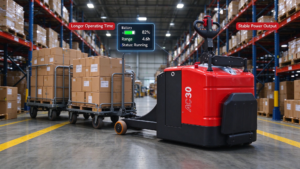
4.1 Longer Operating Time
Benefits:
Higher energy density allows more energy storage.
Electric tuggers can operate longer between charges.
Impact:
More transportation cycles per shift.
Reduced charging interruptions.
4.2 Faster Charging Capability
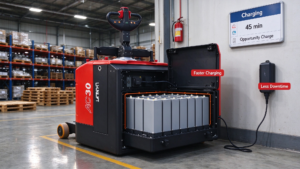
Advantages:
Shorter charging downtime.
Supports opportunity charging during breaks.
Suitable for:
Multi-shift warehouses
Continuous production environments
4.3 Lower Maintenance Requirements
Compared with lead-acid batteries:
No electrolyte maintenance.
Less frequent inspections.
Reduced cleaning requirements.
Results:
Lower labor costs.
Improved equipment availability.
4.4 More Stable Power Output
Lithium batteries provide:
Consistent voltage delivery.
Stable motor performance.
Reliable towing power.
Benefits:
Smooth acceleration.
Better handling of heavy loads.
4.5 Longer Battery Service Life
Advantages:
More charging cycles.
Slower capacity degradation.
Reduced replacement frequency.
Result:
Lower total cost of ownership (TCO).
5. How Lithium Batteries Improve Electric Tugger Productivity
5.1 Increase Equipment Availability
Lithium battery technology reduces:
Charging downtime
Battery-related failures
Maintenance interruptions
Result:
Electric tuggers spend more time performing transportation tasks.
5.2 Improve Workflow Efficiency
Applications:
Production line material delivery
Warehouse cart movement
Internal logistics transportation
Benefits:
Faster material flow.
Reduced waiting time.
Improved operational continuity.
5.3 Support Heavy-Duty Applications
Lithium battery systems provide:
Stable power under high loads.
Reliable performance during frequent towing.
Suitable for:
Automotive manufacturing
Large distribution centers
Industrial facilities
6. Lithium Battery vs Lead-Acid Battery for Electric Tuggers
| Feature | Lithium Battery | Lead-Acid Battery |
|---|---|---|
| Charging Speed | Faster | Slower |
| Maintenance | Low maintenance | Requires regular maintenance |
| Energy Density | Higher | Lower |
| Service Life | Longer | Shorter |
| Power Output | More stable | Gradually decreases |
| Initial Cost | Higher | Lower |
| Total Ownership Cost | Lower over time | Higher over long-term use |
7. The Role of Battery Management Systems (BMS)
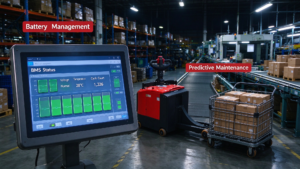
7.1 Battery Monitoring Functions
BMS tracks:
Voltage
Current
Temperature
Charging status
Remaining capacity
7.2 Safety Protection Features
BMS helps prevent:
Overcharging
Over-discharging
Short circuits
Excessive temperature
7.3 Performance Optimization
Benefits:
Extends battery lifespan.
Maintains reliable operation.
Improves energy efficiency.
8. Best Practices for Maintaining Lithium Batteries in Electric Tuggers
8.1 Use the Correct Charger
Match charger specifications with battery requirements.
Avoid incompatible charging equipment.
8.2 Avoid Extreme Temperatures
Protect batteries from:
Excessive heat
Extremely cold environments
8.3 Monitor Battery Health
Regularly check:
Charging performance
Operating time
Warning indicators
8.4 Follow Recommended Charging Procedures
Best practices:
Avoid unnecessary deep discharge.
Maintain proper charging schedules.
Store equipment correctly when not in use.
9. Applications Where Lithium-Powered Electric Tuggers Provide the Most Benefits
9.1 Warehouses and Distribution Centers
Benefits:
Faster internal transportation.
Reduced downtime.
Higher daily productivity.
9.2 Manufacturing Plants
Applications:
Assembly line supply
Component transportation
Production logistics
9.3 Airports and Ground Handling
Advantages:
Quiet operation
Zero direct emissions
Reliable performance
9.4 Multi-Shift Industrial Operations
Lithium batteries support:
Frequent use
Short charging intervals
Continuous workflow
10. Future Trends of Lithium Battery Technology in Electric Tuggers
10.1 Smarter Battery Management
Future developments:
Remote monitoring
Predictive maintenance
Real-time battery analytics
10.2 Improved Energy Density
Expected benefits:
Longer operating time
Smaller battery size
Higher efficiency
10.3 Integration with Smart Material Handling Systems
Future electric tuggers may connect with:
Fleet management platforms
Automated charging stations
AGV/AMR logistics systems
11. How to Choose a Lithium Battery Electric Tugger
11.1 Operating Requirements
Evaluate:
Load capacity
Daily operating hours
Travel distance
11.2 Battery Capacity
Choose based on:
Required working time
Charging opportunities
Application intensity
11.3 Battery Management Features
Look for:
Intelligent BMS
Safety protection
Battery monitoring functions
11.4 Manufacturer Reliability
Consider:
Battery quality
Technical support
Warranty service
12. Conclusion: Lithium Battery Technology Drives Electric Tugger Productivity
Lithium battery technology is transforming electric tugger performance.
Faster charging, longer operating time, lower maintenance, and stable power output help businesses improve material handling efficiency.
As industrial operations become more demanding, lithium-powered electric tuggers will continue to play an important role in modern logistics and manufacturing.
FAQ
Q1: Why are lithium batteries used in electric tuggers?
Answer:
Lithium batteries are used in electric tuggers because they provide longer operating time, faster charging, higher energy efficiency, lower maintenance requirements, and more stable power output.
Q2: Are lithium battery electric tuggers more efficient than lead-acid models?
Answer:
Yes. Lithium battery electric tuggers generally offer faster charging, longer service life, better energy efficiency, and lower maintenance costs compared with lead-acid battery models.
Q3: How does a lithium battery improve electric tugger productivity?
Answer:
Lithium batteries reduce charging downtime, provide consistent power, support longer working cycles, and improve equipment availability, allowing electric tuggers to complete more tasks efficiently.
Q4: How long does a lithium battery last in an electric tugger?
Answer:
Battery lifespan depends on usage, charging habits, operating conditions, and maintenance. Properly managed lithium batteries typically provide significantly longer cycle life than traditional batteries.
Q5: What maintenance does a lithium battery electric tugger require?
Answer:
Lithium battery electric tuggers require regular inspections, proper charging practices, temperature management, and monitoring of battery system performance.
Follow UNILIFT MHE for More Material Handling Insights
Stay connected with UNILIFT MHE for the latest updates on electric pallet trucks, electric stackers, electric tuggers, warehouse equipment, material handling solutions, and industry insights. Follow our social media channels to discover new products, application scenarios, company updates, and practical information for modern warehouse and logistics operations.
Explore reliable electric pallet trucks, electric stackers, and material handling solutions at Unilift MHE.
If you would like to contact us, please click here.
If you would like to learn more about our news, please click here.
Facebook: Follow UNILIFT MHE on Facebook
TikTok: Follow UNILIFT MHE on TikTok
Instagram: Follow UNILIFT MHE on Instagram
X: Follow UNILIFT MHE on X
Pinterest: Explore UNILIFT MHE on Pinterest
LinkedIn: Connect with UNILIFT MHE on LinkedIn