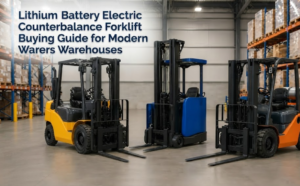
What Is an Electric Counterbalance Forklift Truck?&How to choose?
It’s a type of forklift powered by an electric battery (typically lead‑acid or lithium‑ion), with forks at the front and a heavy counterweight at the rear to maintain stability when lifting and transporting loads. The battery itself often serves as part of the counterweight.
Choosing the wrong forklift can lead to higher operating costs, reduced efficiency, and increased safety risks. An under powered forklift may slow down operations, while an oversized model can cause space limitations, equipment damage, and unnecessary energy consumption. Different working environments also require different forklift solutions, such as low-emission equipment for food-grade facilities and reliable power solutions for continuous operations.
The right forklift should be selected based on load requirements, working environment, storage layout, operation frequency, and application needs rather than only price or rated capacity. This guide covers key forklift selection factors, including load capacity, lifting height, mast configuration, power type, tires, attachments, and purchase or rental options, helping businesses choose the best forklift for their operations.
Related Reading: Why Electric Counterbalance Forklifts Are Ideal for Indoor Material Handling Operations
What Is a Lithium Battery Electric Counterbalance Forklift?
A Lithium Battery Electric Counterbalance Forklift is an electric-powered forklift that uses lithium-ion battery technology as its energy source.Unlike traditional forklifts that rely on internal combustion engines or lead-acid batteries, lithium-powered models provide higher energy efficiency and improved operational flexibility.
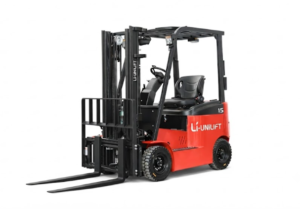
A modern Electric Counterbalance Forklift Truck is designed to handle pallet transportation, loading, unloading, and warehouse material movement.
Key Factors When Buying a Lithium Battery Electric Counterbalance Forklift
Before deciding which forklift to purchase, users should first understand the key specifications of the forklift. The specifications determine whether the equipment is suitable for their actual working requirements. Without a clear understanding of these specifications, choosing a forklift based only on price, appearance, or brand may result in purchasing equipment that does not match their operational needs.
Key forklift specifications include load capacity, lifting height, mast type, battery system, fork dimensions, overall dimensions, turning radius, driving speed, and gradeability, which determine the forklift’s performance and suitability for different applications. Browse this article to learn more about detailed forklift specifications.
Forklift Selection Process: Seven Key Decisions
Choosing a lithium battery electric counterbalance forklift requires considering key factors such as capacity, battery performance, operating environment, and specifications to ensure efficient and reliable operation.
1.Load Capacity Requirements
Load capacity is the first factor to consider when selecting a forklift. Before evaluating any forklift model, you need to understand the following information:
Maximum Load Weight
Determine the heaviest load the forklift needs to handle to ensure the selected model has sufficient capacity for safe operation.
Load Size
Consider the dimensions and shape of the load to ensure the forks and forklift configuration can handle it properly.
Load Type
Identify the type of materials being handled, as different loads may require specific forklift configurations or attachments.
2.Determine your required height
Lifting Height Requirements
When evaluating lifting height requirements, consider the following key factors:
Maximum Lifting Height
Determine the highest level where goods need to be stored to ensure the forklift can reach the required height safely.
Rack Height
Consider the height and layout of warehouse racks to select the appropriate mast configuration and lifting capability.
Clearance Height
Check the available ceiling and doorway clearance to ensure the forklift can move safely through the working area.
3.Choose the appropriate fuel type
Fuel Type Selection
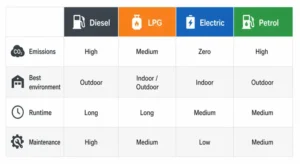
Forklifts are available in different power types, including diesel, LPG, electric, and gasoline models. Each type has different performance characteristics and application advantages.
Diesel Forklift
Diesel forklifts provide strong power and high load capacity, making them suitable for heavy-duty outdoor applications and rough working environments.
LPG Forklift
LPG forklifts offer flexible operation with lower emissions than diesel models, making them suitable for both indoor and outdoor applications with good ventilation.
Electric Forklift
Electric forklifts feature zero emissions, low noise operation, and lower maintenance costs, making them ideal for indoor warehouses, factories, and clean working environments.
Gasoline Forklift
Gasoline forklifts provide reliable performance and quick refueling, but they are less commonly used in modern material handling applications due to higher emissions and operating costs.
Battery selection plays an important role in electric forklift productivity. Considering voltage, capacity, charging time, and working hours helps businesses choose the right lithium battery forklift for their operations.
4.Tire Type Selection
Cushion Tires
Cushion tires are made from solid rubber and provide excellent maneuverability with a small turning radius. They are ideal for indoor warehouses and smooth surfaces where space is limited.
Pneumatic Tires
Pneumatic tires offer better shock absorption and traction on uneven surfaces, making them suitable for outdoor applications, rough terrain, and environments with variable ground conditions.
6.Consider Operator Requirements and Safety
Operator Training and Certification
Ensure operators receive proper forklift training and certification to understand safe operating procedures, equipment controls, and workplace safety requirements.
Ergonomic Design
Consider features such as a comfortable seat, easy-to-use controls, and reduced vibration to improve operator comfort and reduce fatigue during long working hours.
Visibility and Safety Features
Evaluate forklift visibility, including mast design, overhead guard, lighting systems, and safety alarms, to improve operator awareness and reduce accident risks.
How to Choose a Reliable Lithium Forklift Supplier?
Manufacturing Experience
A manufacturer with extensive industry experience usually has stronger technical expertise, production capabilities, and quality control processes. Experienced manufacturers understand different application requirements and can provide reliable forklift solutions for various industries.
Product Quality
Product quality directly affects forklift safety, performance, and service life. A reliable manufacturer should use high-quality components, advanced manufacturing processes, and strict inspection procedures to ensure stable operation and durability.
Certifications
Certifications demonstrate that the manufacturer’s products meet international safety, quality, and environmental standards. Common certifications include CE, ISO quality management systems, and other industry-related approvals.
Spare Parts Supply
A stable spare parts supply system helps reduce equipment downtime and ensures quick maintenance when replacement parts are required. Manufacturers with sufficient spare parts inventory and global supply capabilities can provide better long-term support.
Warranty
A comprehensive warranty policy reflects the manufacturer’s confidence in product quality. Buyers should check warranty coverage, warranty period, and included components before making a purchase.
After-Sales Support
Reliable after-sales service helps customers solve technical issues, receive maintenance guidance, and improve equipment utilization. Professional technical support and responsive service teams are important for long-term forklift operation.
OEM Capability
Manufacturers with OEM capability can customize forklifts according to specific customer requirements, including capacity, battery configuration, mast options, attachments, and appearance design, providing more flexible solutions for different applications.
Lithium battery logistics equipment manufacturers
We UNILIFT-mhe provide flexible OEM solutions, including customized forklist’s colors, branding, specifications, lithium battery configurations, and control systems to meet different market requirements.If you have interest,please contact with us directly!
Calculate Total Cost of Ownership (TCO)
When choosing an electric counterbalance forklift truck, consider not only the purchase price but also the long-term operating costs.
Energy Cost
The cost of electricity consumption and charging during daily operations.
Maintenance Cost
The expenses for regular inspections, repairs, and component replacement.
Battery Replacement
The future cost of replacing the forklift battery based on its lifespan and usage.
Downtime Cost
The potential productivity loss caused by equipment failures or maintenance downtime.
Service Cost
The cost of technical support, repairs, and after-sales maintenance services.