What is a Counterbalance Forklift?
Electric forklifts have become one of the most popular ways to handle materials in warehouses, factories, and logistics centers. Compared to traditional forklifts, a counterbalance forklift is a type of industrial handling vehicle that uses a heavy counterweight at the rear to balance the load on the front forks, enabling it to lift and transport materials without external support. It has become a very popular practical type of forklift.
The name “counterbalance” comes from the counterweight installed at the rear, which balances the vehicle’s weight when carrying loads. If your employees are new to counterbalance forklifts, be sure to have them read our guide to learn all about counterbalance forklifts. However, choosing the right forklift requires careful consideration of factors such as load capacity, battery type, work environment, and supplier reliability.
This “Electric Counterbalance Forklift Buying Guide” will cover all the information you need to know before purchasing an electric counterbalance forklift, making it easier for you to choose the most suitable forklift for your business.
What Is an Electric Counterbalance Forklift?
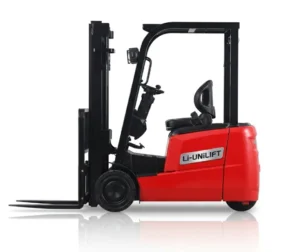
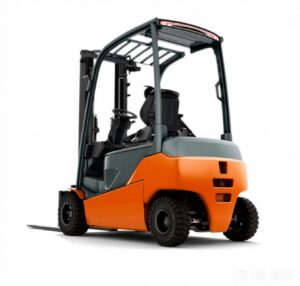
An electric counterbalance forklift is a battery – powered industrial vehicle, and its name comes from the counterweight installed at the rear, which can counteract the load on the forks. Without this counterweight, the forklift would lose balance and may tip over due to the additional weight on the forks.
This design allows operators to safely handle heavy pallets without the need for additional supports and legs. In other words, when transporting goods, you can drive it precisely to the location of the goods or shelves. As for forklifts with stabilizing arms like reach trucks, the forks must pass over the stabilizing bar to load and unload goods.
Additionally, professional electric counterbalance forklift manufacturers usually design advanced control systems, powerful drive motors, and durable structures and models for these forklifts to meet various industrial needs.
Learn in advance: Guide to Electric Counterbalance Forklift Capacity and Specifications
What Are The Advantages of Electric Counterbalance Forklifts Truck?
Why Electric Counterbalance Forklifts Are Ideal for Indoor Material Handling Operations?Beacuse they have the following advantages, which can improve material handling:
Lower Operating Costs
Electric forklifts have one of the biggest advantages of reduced operating costs. They require less maintenance because they do not need engine oil changes, fuel filters, or complex combustion engine servicing. For companies operating warehouses or factories daily, an electric forklift can significantly reduce long – term operating expenses.
Versatility
Electric forklifts come in various sizes to handle a wide range of tasks. From compact forklifts designed for operation in narrow spaces to large forklifts used for heavy – duty lifting, there is always one that can meet your operational needs.
Environmentally Friendly Operation
A Lithium Battery Electric Counterbalance Forklift produces zero exhaust emissions during operation, which makes it ideal for indoor warehouses, food processing facilities, pharmaceutical factories, and clean manufacturing environments.
Better Working Efficiency
Modern electric forklifts provide smooth acceleration, low noise operation, precise control, and excellent maneuverability.
Quiet operation
Their quiet operation not only reduces noise pollution but also allows workers to clearly hear alarms, reverse signals, and other important sounds, thereby improving safety.
Types of Electric Counterbalance Forklifts
Electric Counterbalance Forklifts Types are vary by design, capacity, battery technology, and application requirements, including 3-wheel, 4-wheel, and lithium battery models to meet different warehouse and industrial handling needs.
Three Wheel Electric Counterbalance Forklift
Three-wheel electric counterbalance forklifts are designed for applications requiring excellent maneuverability. They are perfectly suited for working in tight spaces, making them particularly efficient in retail and high-density environments. Their compact turning radius makes them suitable for narrow warehouse aisles, small storage areas, and retail distribution centers. For example, the turning radius of a three-wheel forklift is 4 feet 10 inches, while that of a four-wheel forklift requires 5 feet 5 inches.
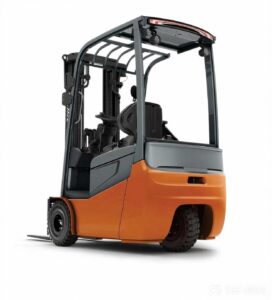
Four Wheel Electric Counterbalance Forklift
Four-wheel electric forklifts offer better stability, making them the ideal choice for handling heavy loads and outdoor operations. Their robust design ensures smooth operation even on uneven surfaces, providing superior traction and maneuverability. Therefore, they are particularly well-suited for demanding environments such as construction sites or large manufacturing plants.
Important Factors Before Buying an Electric Counterbalance Forklift
Check Load Capacity
Selecting the correct capacity is one of the most important steps.
Common capacities include:
- 1.5 ton electric forklift
- 2 ton electric forklift
- 2.5 ton electric forklift
- 3 ton electric forklift
- 5 ton electric forklift
A proper Electric Forklift Load Capacity Guide helps buyers avoid selecting equipment that cannot safely handle their workload.
Choose the Right Battery Technology
Battery choice directly affects operating efficiency.
Lead-acid batteries provide lower initial investment, while lithium batteries offer:
- Longer service life
- Faster charging
- Higher efficiency
- Less maintenance
What Is The Working Principle of a Counterbalance Forklift?
Lifting Mechanism: The lifting process of a counterbalance forklift primarily relies on its hydraulic system. The operator uses a lever to introduce hydraulic oil into the forklift cylinders, pushing pistons to lift the mast and forks. The rear counterweight maintains the machine’s balance, ensuring safe lifting.For a detailed explanation of the internal structure and operation process, you can read our guide on how does a counterbalance forklift work?
The Role of the Counterweight: The rear counterweight plays a crucial role in stabilizing the lifting machinery. It prevents tipping by offsetting the weight of the load, thus improving operational safety. This balance ensures that forklifts and similar equipment can safely move goods without additional support.
Safety Features: Counterbalance forklifts prioritize safety, equipped with a rear counterweight for stability and an emergency braking system for emergencies. An overload alarm sounds when the load is too heavy, and a reversing buzzer signals when the vehicle is moving. Anti-slip platforms and mast tilting functions further enhance operational safety, protecting the operator and surrounding personnel.
Electric Counterbalance Forklift vs Propane Forklift
For workers, the most important thing to note is that propane forklifts and electric counterbalanced forklifts look similar, but there are many differences between the two. Here is a simple comparison table of the attributes of the two types of vehicles.
| Attribute | Propane Forklift | Electric Counterbalance Forklift |
|---|---|---|
| Fuel Type | Propane gas | Electricity (battery) |
| Emissions | Produces exhaust emissions | Zero emissions |
| Power Characteristics | Consistent power output that doesn’t weaken over time | Power may decrease as battery charge diminishes |
| Fuel Storage | Requires on-site storage of propane tanks | No on-site fuel storage needed |
| Maintenance | Requires regular engine and fuel system maintenance | Primarily battery and motor system maintenance |
| Operating Costs | Relatively low fuel costs but higher maintenance costs | Lower electricity costs and lower maintenance costs |
| Noise Level | Higher noise levels | Lower noise, operates quietly |
| Suitable Environment | Outdoor, well-ventilated areas | Indoor, warehouse, enclosed spaces |
| Initial Investment | Relatively lower | Relatively higher |
| Range/Endurance | Depends on tank capacity, generally longer | Depends on battery capacity, requires regular charging |
In addition, electric counterbalanced forklifts do not emit exhaust gases and do not require on – site fuel storage. Browse this article to get more information about these two types of counterbalanced forklifts.
AC Motor vs DC Motor Electric Forklift
Modern electric forklifts increasingly use AC brushless motors instead of traditional DC motors.
Compared with DC systems, AC motors provide:
- Higher efficiency
- Better acceleration
- Longer service life
- Lower maintenance requirements
Understanding AC Motor vs DC Motor Electric Forklift technology helps buyers select more reliable equipment.
Applications of Electric Counterbalance Forklifts
Electric counterbalance forklifts are widely used in below:
Warehouses
Warehouses are used for pallet transportation, rack storage, and loading and unloading operations.
Manufacturing Plants
Manufacturing plants are used for raw material movement, production line supply, and finished product transportation.
Logistics Centers
Logistics centers are used for distribution operations, high-frequency handling, and container loading.
Electric Counterbalance Forklift Maintenance Guide
Properly maintaining your electric forklift is key to ensuring its smooth operation. It mainly consists of two parts: battery maintenance and regular inspections.
Battery Maintenance
Proper maintenance of the electric forklift’s battery is crucial, directly affecting its service life and efficiency. Lead – acid batteries require regular checks of the electrolyte level and adding distilled water to prevent sulfation. Although lithium – ion batteries have lower maintenance costs, they still need to be used correctly—following a proper charging cycle and avoiding overcharging helps extend their lifespan and maintain stable performance.
Regular inspection
Regular inspections are key to ensuring the forklift operates smoothly. Inspect key components such as motor cables, brakes, tires, and the hydraulic system to detect any potential issues early. In addition, be sure to fully charge the battery on time and pay attention to signs of low battery power, such as dim headlights or reduced power, to prevent operational interruptions.
Related Reading: “Operate an Electric Counterbalance Forklift Truck Safely” helps reduce the frequency of maintenance.
FAQ
1. Can Electric Forklifts Be Used Outdoors?
Yes. Electric forklifts can operate outdoors on paved and relatively smooth surfaces. Weather conditions and terrain should be considered when selecting a model.
2. What Is the Difference Between Counterbalance Forklift and Electric Counterbalance Forklift?
The primary difference is the power source, where a standard counterbalance forklift typically uses an internal combustion engine, while an electric counterbalance forklift is powered by batteries and an electric motor.
3. How Long Does It Take to Charge an Electric Counterbalance Forklift?
Lithium-ion batteries typically require 1–3 hours for fast charging, while lead-acid batteries usually need 6–8 hours for a full charge.
4. What Is the Typical Lifespan of an Electric Forklift Battery?
Lithium batteries generally last 5–10 years or 3,000–5,000 charge cycles, depending on usage and maintenance.
5. How Much Does a Electric Counterbalance Forklift Weigh?
The weight of an Electric Counterbalance Forklift varies significantly depending on load capacity, battery type, body dimensions, and configuration. Common models typically have capacities between 1.5 and 5 tons. For example, a 2.5-ton Electric Counterbalance Forklift typically weighs approximately 4,300 to 4,800 kg.
6. Is the Performance of an Electric Forklift Comparable to Gas or Diesel Forklifts?
Modern electric forklifts deliver strong torque, smooth acceleration, and reliable performance, making them suitable for most material handling tasks.
7. Are Electric Forklifts More Expensive to Purchase Than Gas or Diesel Forklifts?
The initial purchase price may be higher, but electric forklifts usually offer lower operating and maintenance costs over time.
8. Can Electric Forklifts Operate in Cold Environments?
Yes. Models equipped with battery heating systems can operate efficiently in cold storage facilities and low-temperature environments.
9. What Maintenance Does an Electric Forklift Require?
Routine maintenance includes inspecting the battery, motor, tires, hydraulic system, and braking system. Maintenance requirements are generally lower than those of internal combustion forklifts.
10. Are There Government Incentives for Using Electric Forklifts?
Many countries and regions offer incentives such as tax benefits, grants, or environmental subsidies for adopting electric material handling equipment.