Warehouses are under constant pressure to move more pallets with fewer delays, lower physical effort, and better use of available labor. The main electric pallet stacker benefits include powered pallet lifting, reduced operator effort, faster handling, and improved workflow efficiency compared with many manual handling methods. For warehouses that regularly move and stack pallets, an electric pallet stacker can provide a practical material handling solution that supports productivity and more consistent daily operations.
As labor costs increase and warehouse processes become more demanding, companies are gradually moving from purely manual equipment toward powered material handling equipment. However, the right choice depends on load capacity, lifting height, operating frequency, battery technology, aisle conditions, and the specific requirements of the facility.
1. What Is an Electric Pallet Stacker?
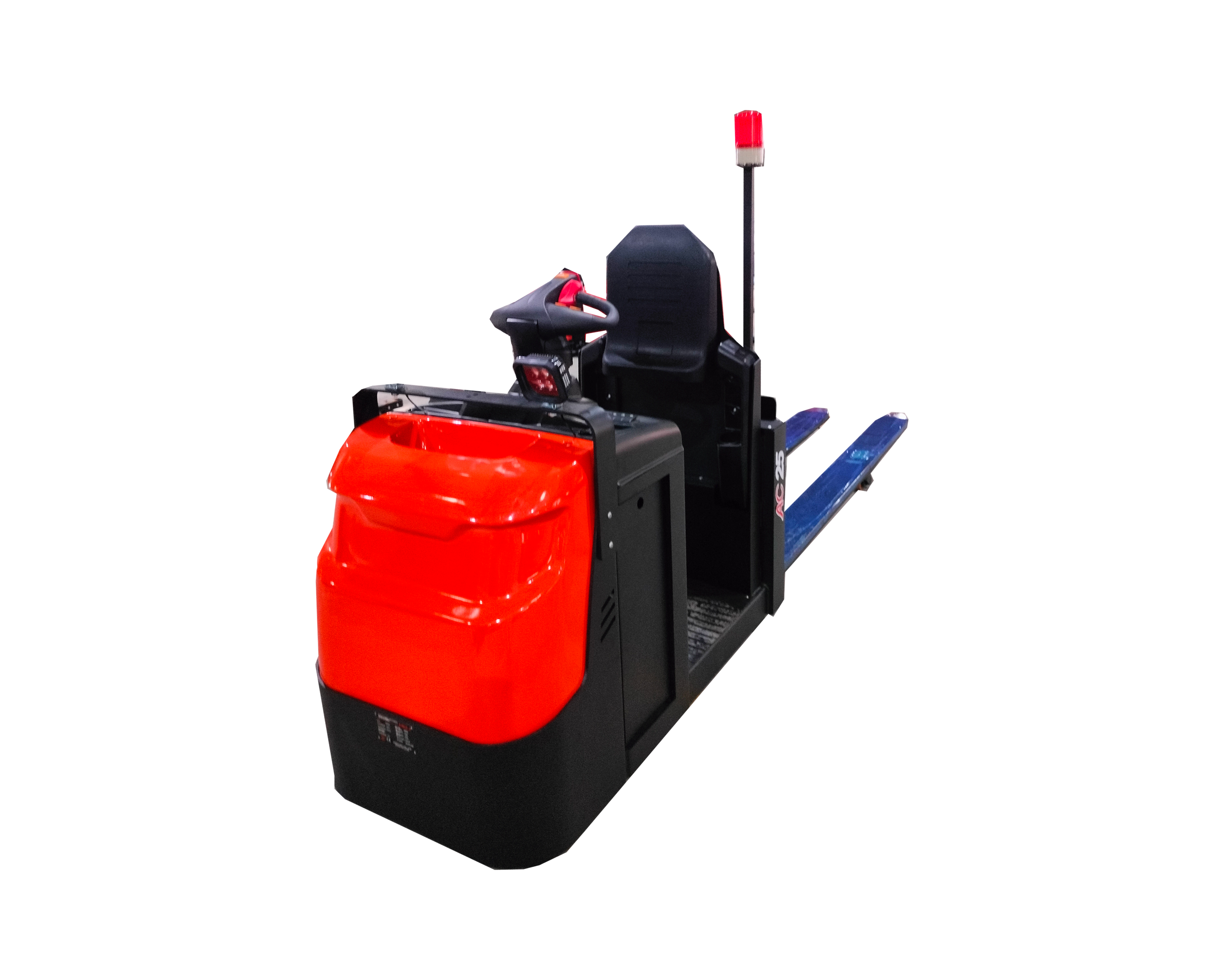
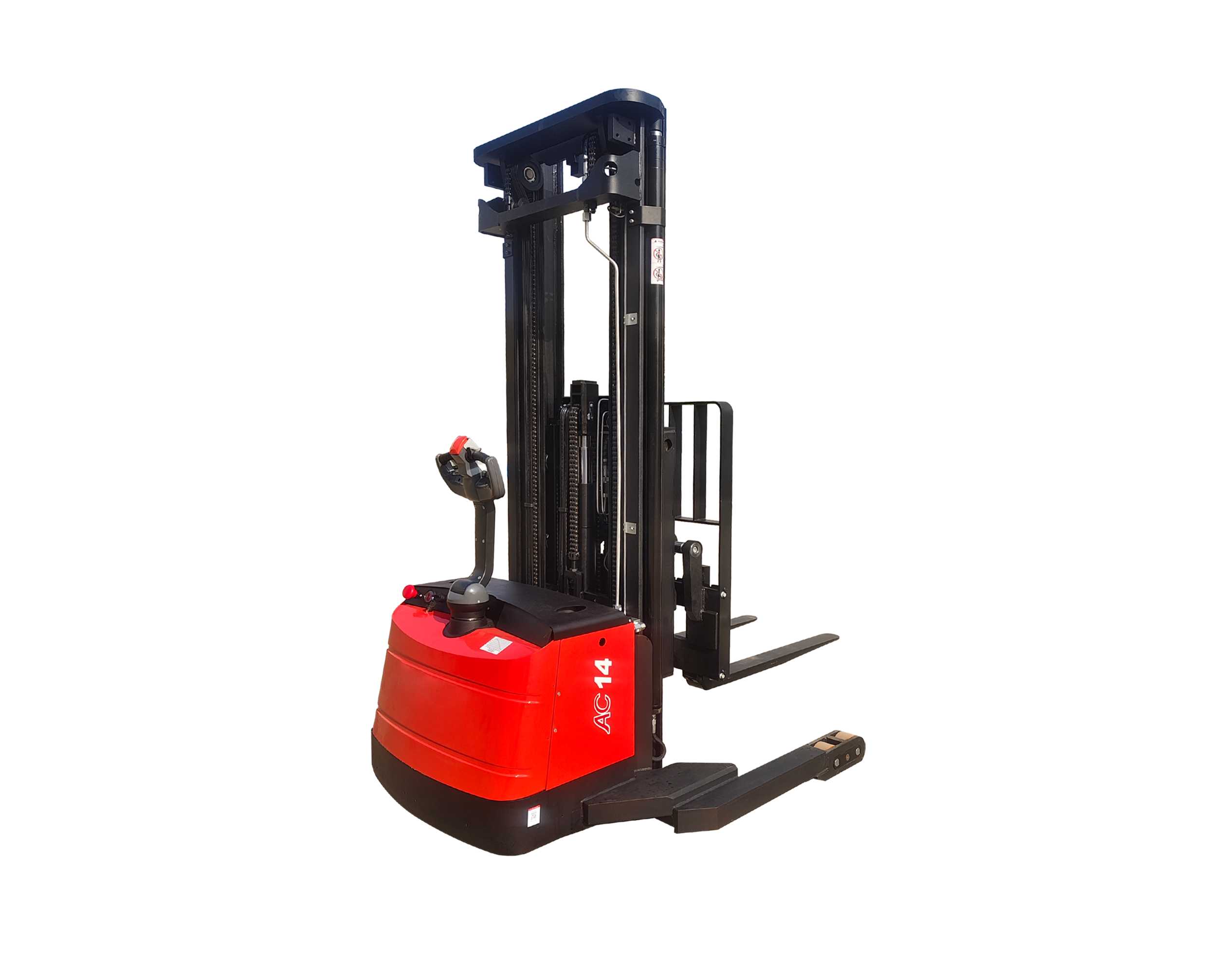
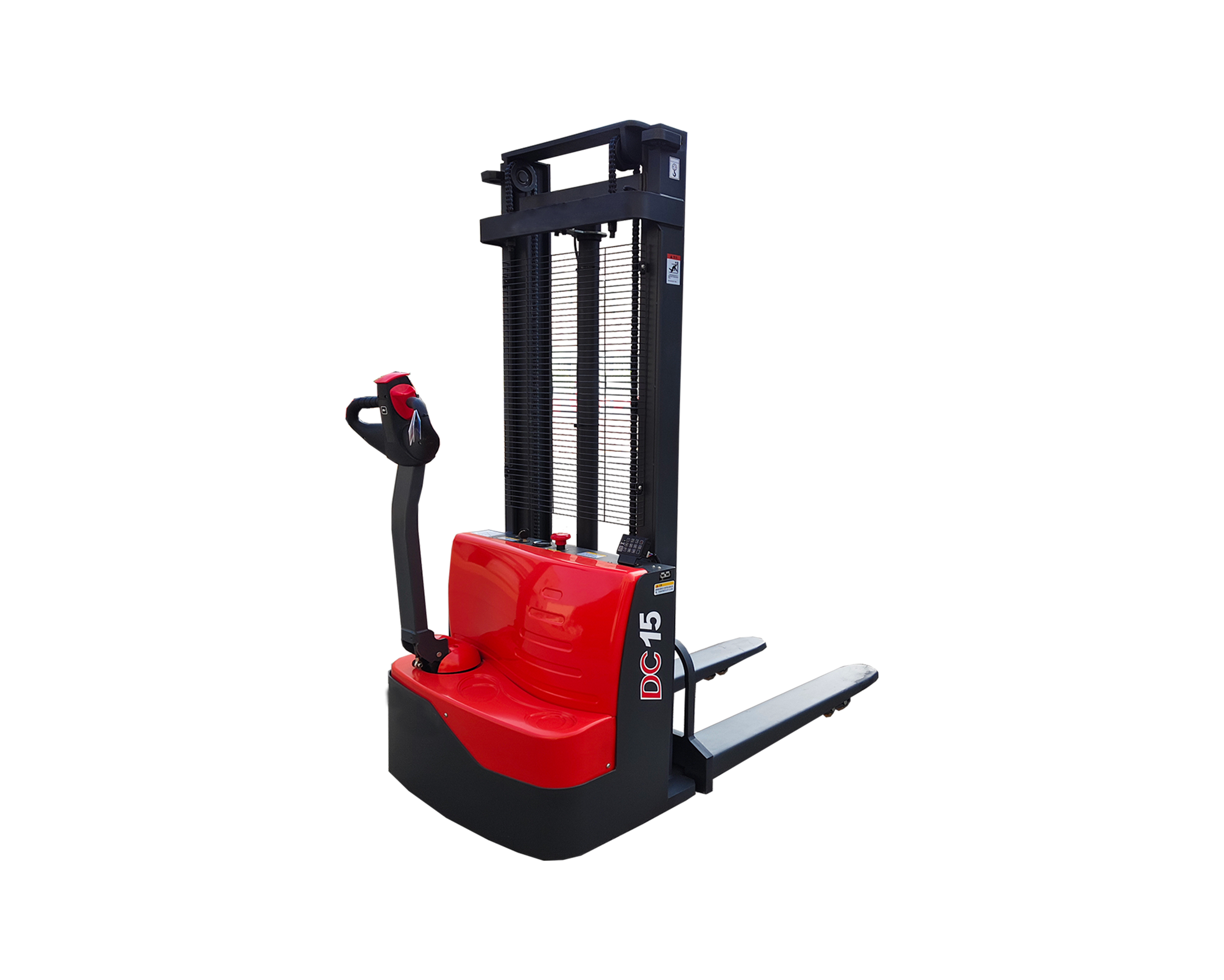
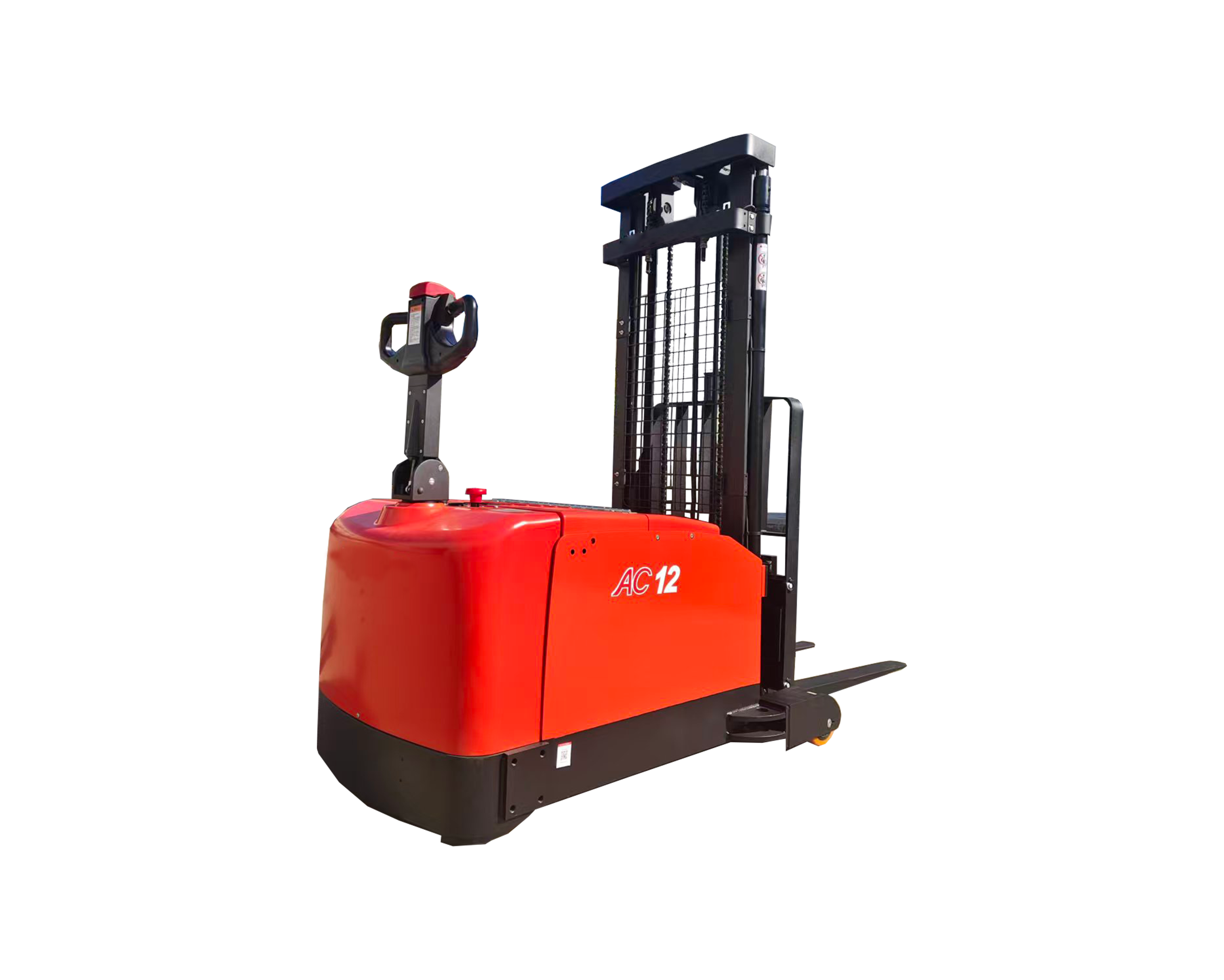
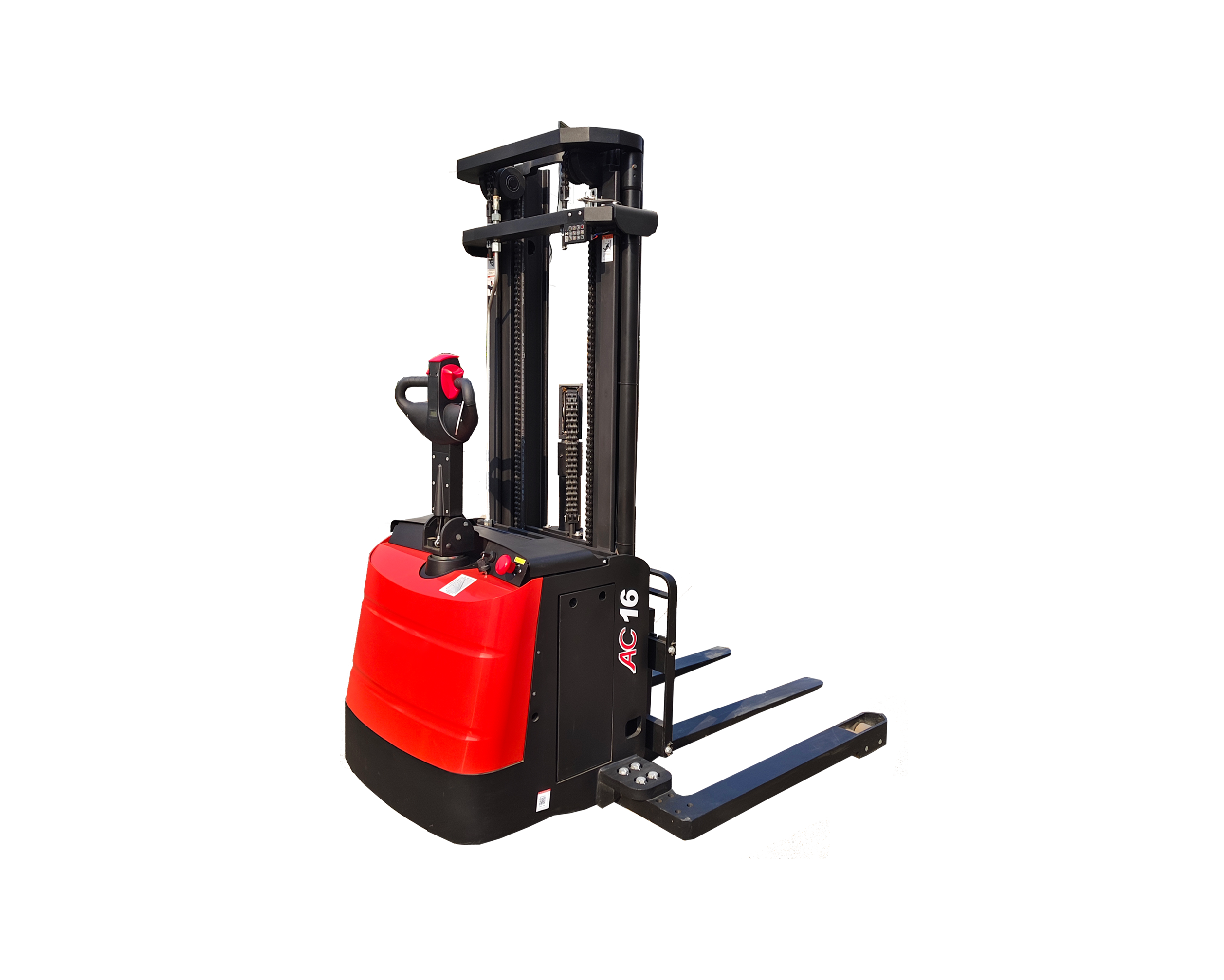
An electric pallet stacker is a battery-powered material handling machine designed to lift, transport, position, and stack palletized loads. Unlike a manual pallet stacker, which depends heavily on operator force, an electric model uses an electric drive system and powered lifting mechanism.
Electric pallet stackers are commonly used for short-distance pallet transportation, vertical stacking, warehouse replenishment, production-line supply, and internal material movement.
1.1 Main Functions of an Electric Pallet Stacker
Depending on the model and configuration, an electric pallet stacker can perform several common warehouse tasks:
- Pallet lifting
- Pallet stacking
- Short-distance pallet transportation
- Internal material movement
- Rack and storage-area replenishment
- Production-line material supply
- Loading and unloading support
The main advantage is that the machine performs the driving and lifting work electrically, allowing the operator to focus more on steering, load positioning, and safe handling.
1.2 How Does an Electric Pallet Stacker Work?
An electric pallet stacker combines several systems to perform powered handling and lifting operations.
Electric Drive System
The electric drive system provides powered movement and reduces the need for manual pushing or pulling. This is particularly useful when pallets must be moved repeatedly throughout a working shift.
Electric Lifting System
The electric lifting mechanism raises the forks and pallet to the required height. Powered lifting makes repetitive stacking and positioning tasks easier than relying on manual hydraulic pumping or physical lifting effort.
Battery System
The battery supplies power to the drive and lifting systems. Lead-acid and lithium-ion configurations are both used in the market, with the appropriate choice depending on operating hours, charging practices, budget, and maintenance requirements.
Control System
The control system allows the operator to control travel, lifting, lowering, braking, and other machine functions. Ergonomic controls can make repetitive handling operations easier and more consistent.
2. Problems of Using Manual Handling Equipment in Warehouses
Manual handling equipment still has an important role in warehouses, particularly for low-frequency operations and short-distance movement. However, relying exclusively on manual equipment can create limitations as handling volume and operating frequency increase.
2.1 High Labor Intensity
Manual pallet handling requires operators to provide much of the force needed to push, pull, position, or lift loads.
When these activities are repeated throughout a working day, physical workload can become a significant operational consideration.
Common problems include:
- Increased operator fatigue
- Greater physical effort
- Reduced consistency during repetitive tasks
- Higher dependence on operator strength
- More difficult handling of heavier loads
The problem becomes more noticeable when warehouses have high pallet turnover or require frequent movement between storage and production areas.
2.2 Limited Handling Efficiency
Manual equipment depends primarily on human power. As handling frequency increases, the difference between manual and powered equipment can become more apparent.
Typical limitations include:
- Slower pallet movement
- Lower handling capacity during long shifts
- Greater operator effort
- More time spent on repetitive tasks
- Reduced efficiency during frequent stacking operations
For warehouses handling only a small number of pallets each day, manual equipment may remain practical. For higher-frequency operations, powered equipment can provide a more consistent handling process.
2.3 Workplace Ergonomic and Safety Considerations
Repeated manual material handling can involve pushing, pulling, lifting, bending, twisting, and other physically demanding movements. These factors should be considered when designing warehouse handling processes.
A powered pallet stacker does not eliminate all workplace risks, but it can reduce the amount of physical force required from the operator for appropriate applications.
Safety also depends on correct machine selection, operator training, load stability, traffic management, floor conditions, and compliance with applicable workplace requirements.
3. Electric Pallet Stacker Benefits for Warehouse Operations
The main electric pallet stacker benefits come from replacing a significant amount of manual driving and lifting effort with controlled electric power.
3.1 Improve Warehouse Productivity
One of the most important electric pallet stacker benefits is the ability to perform repetitive transportation and lifting tasks with less physical effort.
An operator can use powered travel to move pallets and powered lifting to position loads at the required height. This can make repetitive workflows more consistent, particularly in warehouses with frequent pallet movement.
Potential operational benefits include:
- Faster pallet transportation
- More consistent lifting operations
- Higher handling capacity
- Reduced time spent on repetitive manual tasks
- Smoother internal material flow
The actual productivity improvement depends on travel distance, load weight, aisle conditions, operator experience, and the specifications of the equipment.
3.2 Reduce Labor Effort and Operator Fatigue
Electric drive and lifting systems reduce the amount of physical force required from operators.
Instead of manually pushing a loaded pallet or repeatedly pumping a manual hydraulic system, the operator controls powered functions through the machine’s control system.
This can help:
- Reduce repetitive physical effort
- Improve operator comfort
- Support longer periods of consistent operation
- Reduce dependence on operator strength
- Improve workforce utilization
The objective is not necessarily to eliminate labor, but to allow workers to spend less effort on physically demanding transportation and lifting tasks.
3.3 Increase Lifting and Stacking Efficiency
Vertical storage is an important part of warehouse capacity. Manual equipment can become less practical when pallets need to be lifted and stacked frequently.
Electric pallet stackers provide powered lifting, making repetitive vertical handling easier and more controlled.
Key benefits can include:
- Faster pallet stacking
- More consistent lifting
- Easier load positioning
- Better use of vertical storage areas
- Reduced physical effort during lifting
The required lifting height should always be matched to the warehouse rack system and the actual application.
3.4 Support Safer Material Handling Practices
Another important electric pallet stacker benefit is the reduction of manual physical effort during appropriate handling tasks.
Depending on the model, electric pallet stackers may include safety-related features such as:
- Emergency stop function
- Electromagnetic or automatic braking
- Overload protection
- Safety switches
- Controlled lowering
- Stable mast and lifting systems
- Operator protection features
However, equipment features alone do not guarantee safe operation. Safe material handling also requires appropriate training, load limits, inspection procedures, traffic controls, and proper use of the machine.
3.5 Make Better Use of Warehouse Space
Electric pallet stackers can help warehouses take advantage of vertical storage space without requiring the same footprint as some larger warehouse vehicles.
They can be useful in applications where pallets need to be lifted above floor level for:
- Rack storage
- Stacking
- Inventory organization
- Production-area storage
- Warehouse replenishment
For smaller facilities, a compact electric stacker may provide a practical balance between lifting capability and maneuverability.
3.6 Reduce Long-Term Operating Costs
The initial purchase price of an electric pallet stacker is normally higher than that of basic manual equipment. However, purchase price alone does not represent the total operating cost.
A proper cost evaluation should consider:
- Labor requirements
- Handling volume
- Energy consumption
- Battery charging
- Routine maintenance
- Equipment downtime
- Product damage
- Expected service life
For operations with frequent pallet movement, the productivity and labor-efficiency benefits of powered equipment may offset part of the initial investment over time.
4. Electric Pallet Stacker vs Manual Handling Equipment
The difference between powered and manual equipment becomes clearer when comparing the main operating characteristics.
| Feature | Electric Pallet Stacker | Manual Handling Equipment |
|---|---|---|
| Power Source | Battery-powered | Human power |
| Travel | Powered movement | Manual pushing or pulling |
| Lifting | Electric lifting system | Manual or hydraulic lifting |
| Operator Effort | Lower | Higher |
| Repetitive Handling | Well suited | More physically demanding |
| Stacking Operations | Powered lifting | More operator-dependent |
| Handling Consistency | More consistent | Depends more on operator effort |
| Initial Investment | Higher | Lower |
| Suitable Workload | Medium to frequent handling | Low to moderate handling |
| Battery Requirement | Yes | No |
| Maintenance | Requires battery and machine maintenance | Generally simpler |
| Productivity Potential | Higher for frequent handling | Suitable for lower-volume tasks |
Neither solution is appropriate for every warehouse. Manual equipment can remain economical for occasional handling, while powered equipment becomes more attractive when pallet movement and stacking are frequent.
5. Applications Where Electric Pallet Stackers Provide the Most Benefits
The value of an electric stacker depends heavily on the application. The following environments can benefit from powered pallet handling when the equipment specifications match the operating requirements.
5.1 Manufacturing Plants
Manufacturing facilities often need to move materials between storage areas and production lines.
Typical applications include:
- Raw material transportation
- Production-line supply
- Work-in-process movement
- Finished goods handling
- Pallet stacking
An electric stacker can reduce the physical effort involved in repeated internal material movement.
5.2 Warehouses and Distribution Centers
Warehouses and distribution centers often handle pallets throughout the day.
Typical applications include:
- Pallet storage
- Inventory replenishment
- Internal transportation
- Order preparation
- Staging-area movement
- Finished goods handling
For operations with frequent pallet movement, powered equipment can help create a more consistent material flow.
5.3 Small and Medium-Sized Warehouses
Compact electric stackers can be useful in facilities where floor space is limited.
Potential advantages include:
- Compact dimensions
- Flexible maneuverability
- Powered lifting
- Reduced manual effort
- Suitability for short-distance handling
Before purchasing, operators should verify aisle width, turning radius, floor conditions, lifting height, and pallet dimensions.
5.4 Retail and Logistics Facilities
Retail backrooms, logistics facilities, and distribution operations can use electric stackers for:
- Inventory replenishment
- Stock movement
- Pallet positioning
- Storage-area organization
- Loading and unloading support
The right configuration depends on the available space, pallet type, handling frequency, and required lift height.
6. How to Choose the Right Electric Pallet Stacker
Understanding the electric pallet stacker benefits is only the first step. Selecting the correct machine requires matching the equipment specifications to the actual application.
6.1 Consider Load Capacity
Common capacity ranges include:
- 1-ton electric pallet stacker
- 1.5-ton electric pallet stacker
- 2-ton electric pallet stacker
The rated capacity should not be selected simply according to the average pallet weight.
Buyers should also consider:
- Maximum load weight
- Load center
- Working frequency
- Load dimensions
- Lift height
- Operating environment
A suitable safety margin should be maintained according to the manufacturer’s specifications and applicable operating requirements.
6.2 Evaluate Lifting Height
Lifting height should match the actual storage system.
Consider:
- Rack height
- Maximum stacking height
- Pallet dimensions
- Clearances
- Ceiling height
- Required free lift
A stacker designed for floor-level movement may not be appropriate for high-level pallet storage.
6.3 Choose the Right Battery System
Battery selection affects operating time, charging requirements, maintenance, and total ownership cost.
Lead-Acid Battery
Lead-acid batteries generally offer:
- Lower initial equipment cost
- Established technology
- Suitable performance for conventional applications
They require appropriate charging, maintenance, and battery-handling procedures.
Lithium-Ion Battery
Lithium-ion batteries can provide:
- Faster opportunity charging
- High energy efficiency
- Reduced routine battery maintenance
- Flexible charging during operational breaks
- Good suitability for frequent-use applications
Battery life depends on charging practices, operating conditions, temperature, discharge depth, and battery quality. Therefore, buyers should evaluate the complete battery system rather than focusing only on the nominal capacity.
6.4 Consider Operating Environment
The working environment can significantly affect equipment selection.
Consider whether the stacker will operate in:
- Standard warehouses
- Cold storage facilities
- Manufacturing plants
- Retail backrooms
- Dusty environments
- Narrow aisles
- High-traffic areas
Floor conditions, temperature, humidity, aisle width, and operating frequency should all be considered before selecting a model.
7. Future Trends in Electric Pallet Stackers
The development of warehouse operations is increasing demand for more efficient and connected material handling equipment.
Several trends are particularly relevant to electric stackers.
7.1 Wider Adoption of Lithium Battery Technology
Lithium-ion batteries are increasingly used in warehouse equipment because they support flexible charging and can reduce routine battery maintenance compared with conventional lead-acid systems.
For multi-shift operations, opportunity charging can also help improve equipment availability when supported by the battery and charging system.
7.2 Smarter Control Systems
Modern electric stackers increasingly use electronic control systems to improve travel control, lifting performance, diagnostics, and operator interaction.
Depending on the model, these systems may support:
- Electronic speed control
- Battery monitoring
- Fault diagnostics
- Controlled acceleration
- Safety-related monitoring
7.3 More Energy-Efficient Electric Drives
Energy efficiency is becoming increasingly important as warehouses attempt to control operating costs.
Efficient motors, regenerative braking technologies, improved controllers, and optimized hydraulic systems can contribute to lower energy consumption depending on the machine design and application.
7.4 Integration With Modern Warehouse Operations
Electric stackers are also becoming part of broader warehouse material handling solutions.
In larger operations, powered equipment may work alongside:
- Warehouse management systems
- Automated storage systems
- Conveyor systems
- Autonomous mobile robots
- Digital inventory systems
The level of integration depends on the equipment architecture and warehouse automation strategy.
8. Frequently Asked Questions About Electric Pallet Stacker Benefits
Q1: What are the main electric pallet stacker benefits compared with manual equipment?
The main benefits include powered travel and lifting, reduced operator effort, improved handling consistency, easier pallet stacking, and greater productivity potential for frequent handling operations.
Q2: Can an electric pallet stacker replace a manual pallet stacker?
It can be a suitable replacement when a warehouse has frequent pallet movement, repeated lifting, or higher productivity requirements. Manual equipment may still be practical for occasional, low-volume handling.
Q3: Are electric pallet stackers suitable for small warehouses?
Yes. Compact models can be suitable for small warehouses when their dimensions, turning radius, load capacity, and lifting height match the available operating space.
Q4: Can electric pallet stackers reduce warehouse operating costs?
They can reduce certain operating costs by lowering physical labor requirements and improving handling productivity. However, the actual return on investment depends on utilization, labor costs, energy costs, maintenance, and equipment service life.
Q5: What industries use electric pallet stackers?
Electric pallet stackers are commonly used in manufacturing, warehousing, logistics, distribution, retail, and other facilities that require pallet lifting and internal material movement.
Conclusion
The key electric pallet stacker benefits are closely connected to the way a warehouse handles pallets every day. Powered travel and lifting can reduce operator effort, improve repetitive handling efficiency, support vertical storage, and create a more consistent material flow.
For companies deciding between an electric pallet stacker and manual handling equipment, the best approach is to evaluate the complete application rather than focusing only on purchase price. Load capacity, lifting height, operating frequency, battery technology, aisle conditions, maintenance requirements, and total operating cost should all be considered.
For warehouses that regularly perform pallet transportation and stacking, an appropriately specified electric pallet stacker can be an effective part of a modern warehouse material handling solution.
For electric pallet trucks, electric stackers, and customized warehouse material handling solutions, contact UNILIFT MHE to discuss your application and equipment requirements.
Follow UNILIFT MHE for More Material Handling Insights
Stay connected with UNILIFT MHE for the latest updates on electric pallet trucks, electric stackers, electric tuggers, warehouse equipment, material handling solutions, and industry insights. Follow our social media channels to discover new products, application scenarios, company updates, and practical information for modern warehouse and logistics operations.
Explore reliable electric pallet trucks, electric stackers, and material handling solutions at Unilift MHE.
If you would like to contact us, please click here.
If you would like to learn more about our news, please click here.
Facebook: Follow UNILIFT MHE on Facebook
TikTok: Follow UNILIFT MHE on TikTok
Instagram: Follow UNILIFT MHE on Instagram
X: Follow UNILIFT MHE on X
Pinterest: Explore UNILIFT MHE on Pinterest
LinkedIn: Connect with UNILIFT MHE on LinkedIn