Introduction: Why Electric Pallet Stackers Matter
Modern warehouses need material handling equipment that can move and lift pallets efficiently while reducing unnecessary manual labor. An electric pallet stacker is designed to help operators lift, transport, and stack palletized loads with less physical effort and greater operational control.
Compared with manual pallet handling equipment, an electric pallet stacker can improve handling efficiency, support vertical storage, and reduce the physical workload associated with repetitive pallet movement. These advantages make electric stackers increasingly useful in warehouses, manufacturing facilities, distribution centers, and other indoor material handling environments.
For businesses evaluating warehouse material handling equipment, understanding how an electric pallet stacker works, what types are available, and how to select the appropriate model is essential for making an informed equipment decision.
What Is an Electric Pallet Stacker?
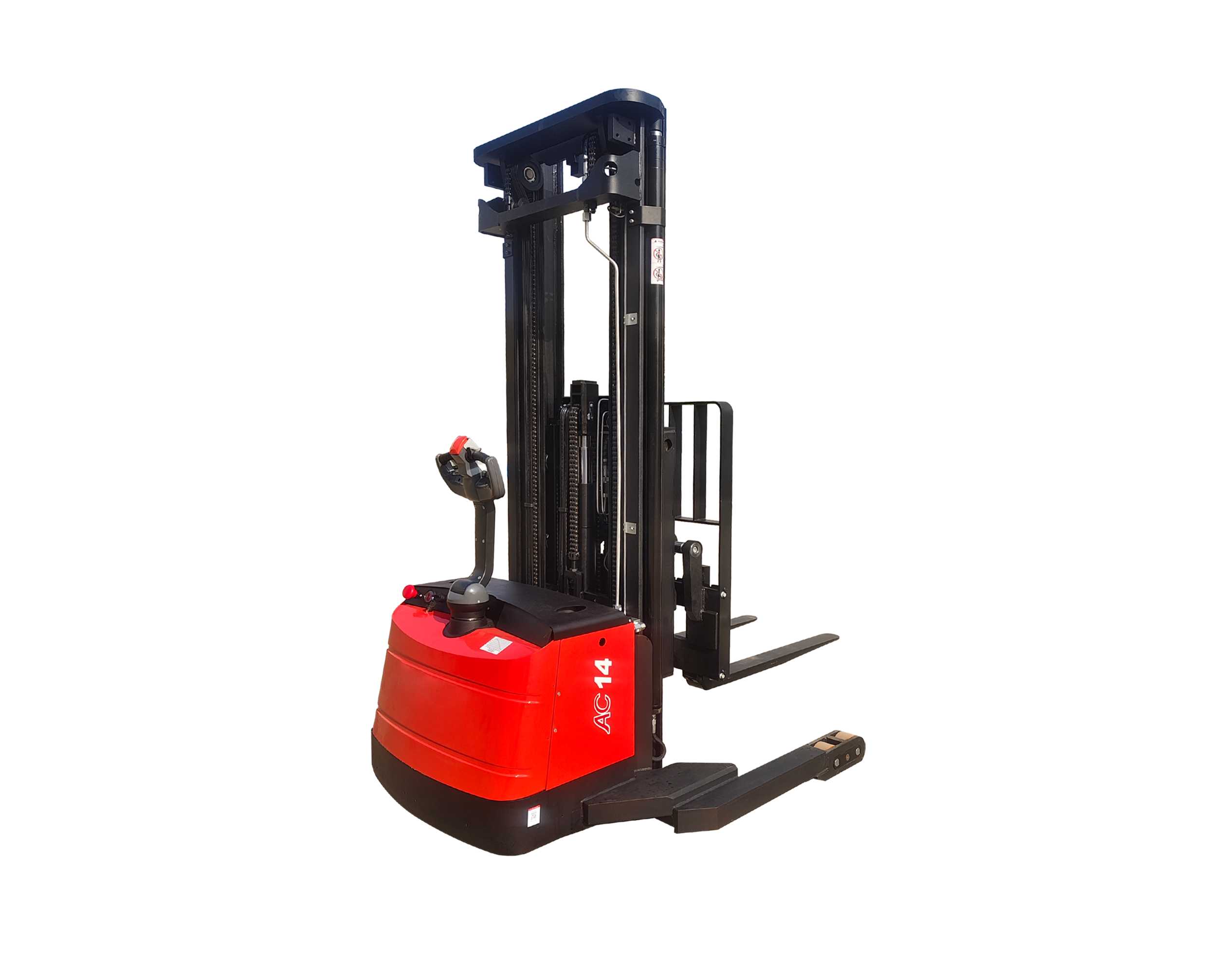
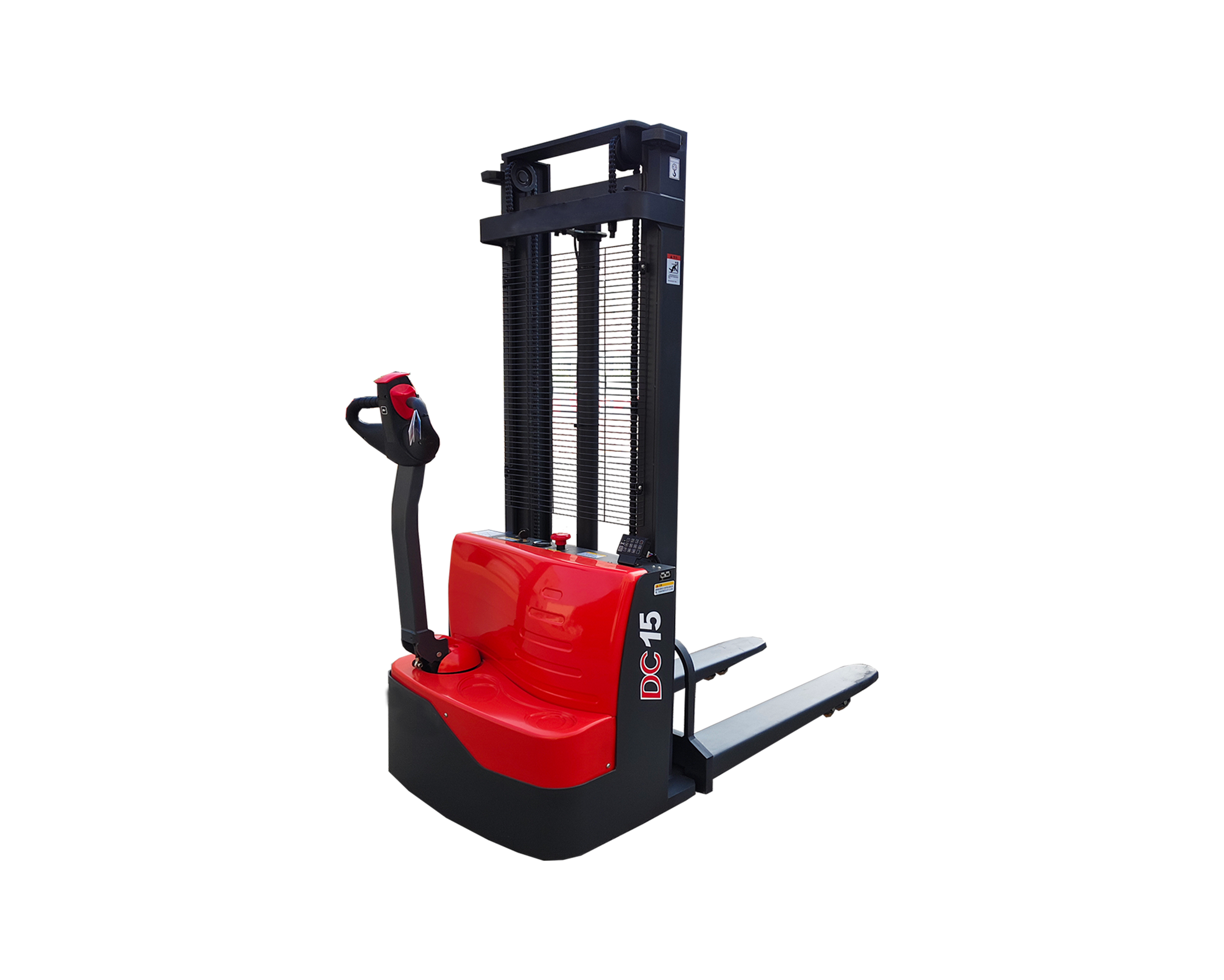
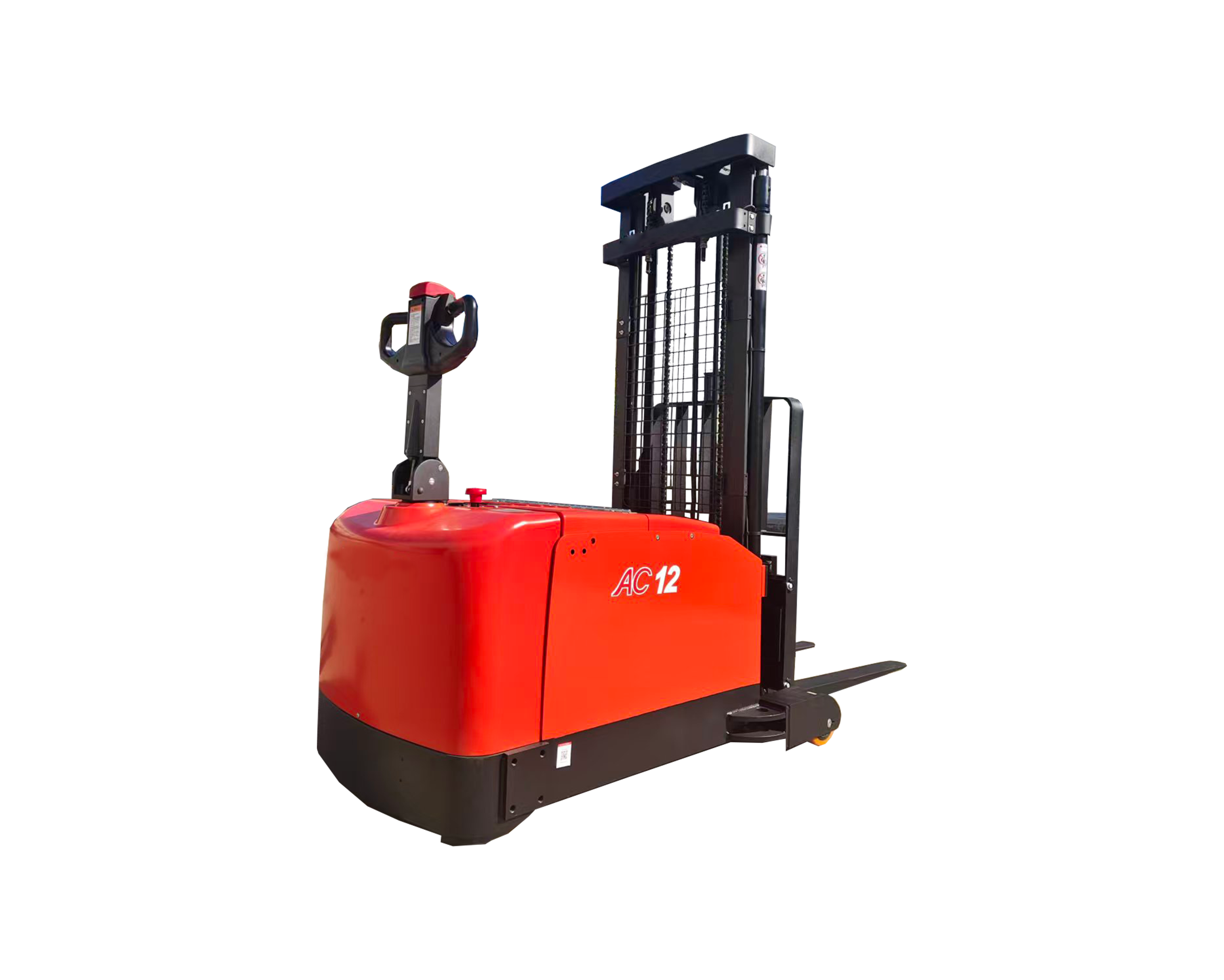
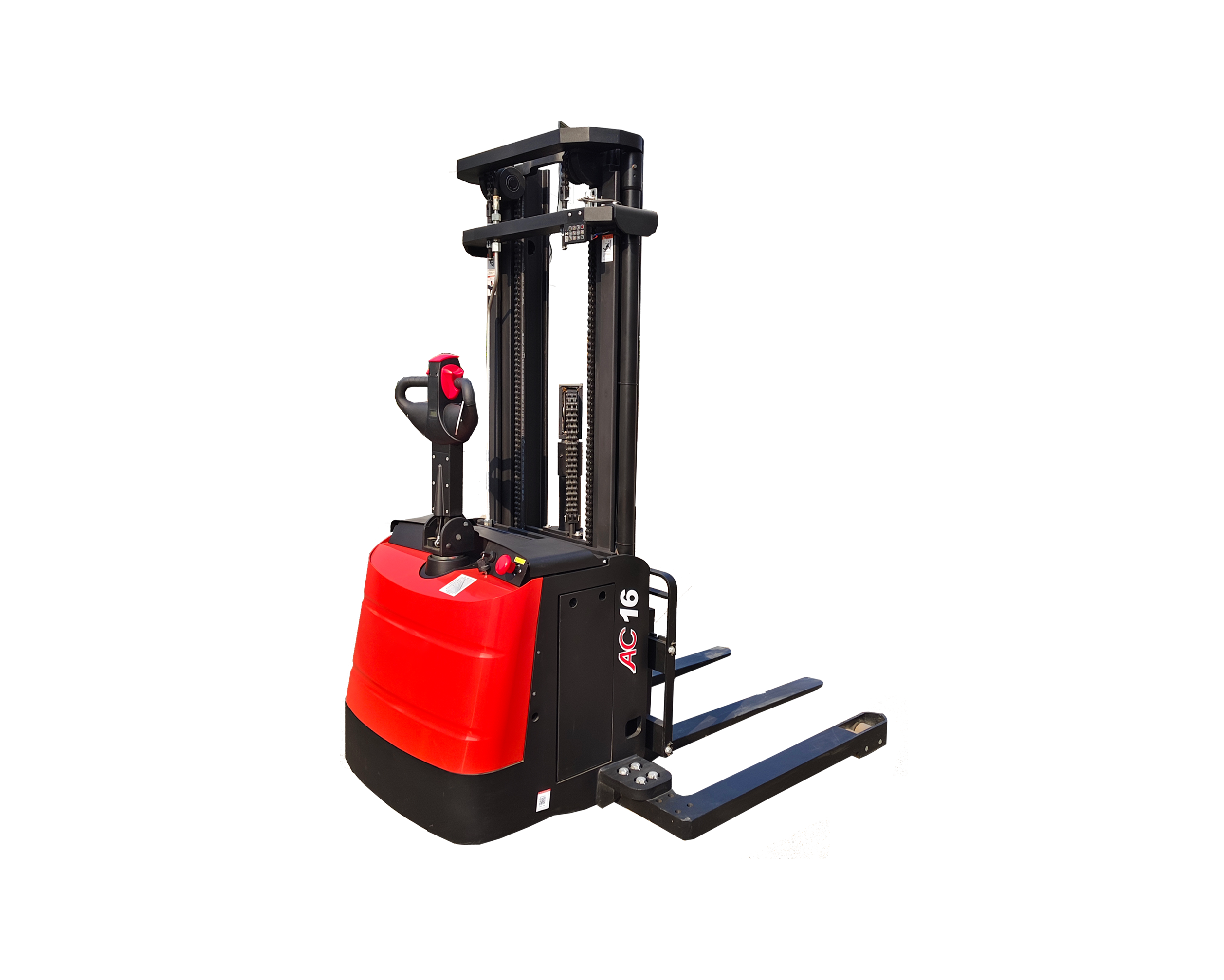
An electric pallet stacker is a battery-powered material handling machine designed to lift, transport, and stack pallets. It typically combines an electric drive system with a hydraulic lifting system, allowing operators to handle palletized loads with significantly less manual effort.
Electric pallet stackers are commonly used for pallet storage, rack handling, internal transportation, and other warehouse operations where loads need to be lifted to different heights.
Main Components of an Electric Pallet Stacker
The main components of an electric pallet stacker typically include:
- Electric drive motor
- Hydraulic lifting system
- Mast assembly
- Fork assembly
- Battery system
- Control handle or tiller
- Drive and steering system
- Braking system
- Safety and control components
The exact configuration depends on the equipment type, rated capacity, lifting height, battery configuration, and manufacturer.
How Does an Electric Pallet Stacker Work?
An electric pallet stacker combines electrical power, mechanical transmission, and hydraulic lifting to move and raise palletized loads.
Step 1: Pallet Pickup
The operator positions the forks inside the pallet openings and ensures that the load is properly supported.
Correct fork positioning and load distribution are important for stable handling.
Step 2: Electric Lifting
When the operator activates the lift control, the electrical system powers the hydraulic lifting mechanism.
The hydraulic pump generates pressure that moves the hydraulic cylinder, causing the forks and mast system to rise.
Step 3: Pallet Transportation
The electric drive motor powers the drive wheel or drive system, allowing the operator to move the pallet without manually pushing or pulling the full load.
Travel speed and acceleration are controlled through the tiller or operating controls.
Step 4: Pallet Stacking
After reaching the required location, the operator positions the pallet at the appropriate storage height.
The forks are then lowered in a controlled manner after the pallet has been correctly positioned on the rack or designated storage surface.
This combination of electric travel and powered lifting allows an electric pallet stacker to perform repetitive pallet handling tasks more efficiently than manual equipment.
Key Features of Electric Pallet Stackers
Efficient Electric Drive System
The electric drive system provides powered travel and reduces the physical effort required from the operator.
Depending on the model, electric stackers may use different drive configurations, motors, controllers, and control systems to meet specific warehouse requirements.
A properly matched drive system can provide:
- Smooth acceleration
- Controlled travel
- Reduced operator effort
- Consistent handling performance
Powerful Hydraulic Lifting System
The hydraulic lifting system is responsible for raising and lowering the forks.
It normally consists of a hydraulic pump, hydraulic cylinder, valves, hoses, and related components.
The lifting capacity and maximum lifting height should be selected according to the intended application and load requirements.
Compact Design for Narrow Warehouse Spaces
Many electric pallet stackers are designed with compact dimensions to operate in areas where larger forklifts may have limited maneuverability.
A compact stacker can be useful for:
- Narrow aisles
- Small warehouses
- Storage rooms
- Retail backrooms
- Short-distance pallet handling
The required turning radius and aisle width should always be checked against the actual warehouse layout before selecting equipment.
Advanced Battery Technology
Battery technology is an important consideration when selecting an electric pallet stacker.
Common options include lead-acid and lithium-ion battery systems.
Lithium battery configurations can provide advantages such as:
- Fast charging
- Opportunity charging
- Low routine maintenance
- High energy efficiency
- Reduced battery handling requirements
The appropriate battery configuration depends on operating hours, charging infrastructure, duty cycle, and working environment.
Why Are Electric Pallet Stackers Important for Modern Warehouses?
Improve Warehouse Productivity
Powered lifting and travel can reduce the time required for repetitive pallet handling tasks.
An electric pallet stacker can help operators:
- Move pallets more efficiently
- Lift loads to storage locations
- Reduce manual handling
- Maintain a more consistent workflow
This can be particularly useful in operations with frequent pallet movement.
Reduce Physical Labor Requirements
Manual pallet handling requires operators to push, pull, pump, or lift loads repeatedly.
Electric stackers provide powered travel and lifting, reducing the physical effort required for many routine operations.
This allows operators to focus more on controlled equipment operation, load positioning, and warehouse workflow.
Support Safer Material Handling
Electric pallet stackers can provide controlled powered movement and lifting.
Features such as emergency stop controls, braking systems, protective tiller designs, and load handling controls can contribute to safer operation when properly used.
However, equipment safety also depends on operator training, load stability, workplace procedures, and correct equipment selection.
Maximize Vertical Storage Space
One of the main advantages of an electric pallet stacker is its ability to lift pallets vertically.
Instead of relying entirely on floor-level storage, warehouses can use suitable racking systems and lifting equipment to make better use of available vertical space.
The required lifting height should be determined based on rack height, pallet dimensions, ceiling clearance, and load characteristics.
Support Efficient Indoor Operations
Electric pallet stackers are particularly suitable for indoor warehouse environments because they produce no tailpipe emissions during operation.
Lithium battery models can also support frequent charging and high-utilization applications when the battery and charging system are correctly specified.
Electric Pallet Stacker vs. Manual Pallet Stacker
Electric and manual pallet stackers serve similar basic functions, but their power systems and operating requirements are different.
| Feature | Electric Pallet Stacker | Manual Pallet Stacker |
|---|---|---|
| Power Source | Battery-powered | Manual operation |
| Lifting Method | Powered hydraulic lifting | Manual or assisted lifting |
| Travel | Electric drive on powered models | Manual pushing |
| Operator Effort | Lower physical effort | Higher physical effort |
| Handling Frequency | Suitable for frequent operations | Better suited to lighter or occasional use |
| Productivity | Higher for repetitive handling | Lower for intensive operations |
| Initial Equipment Cost | Generally higher | Generally lower |
| Labor Requirement | Lower physical handling effort | More operator effort required |
The appropriate option depends on load frequency, travel distance, lifting requirements, warehouse layout, and budget.
Different Types of Electric Pallet Stackers
Electric pallet stackers are available in several configurations for different operating requirements.
Walkie Electric Pallet Stacker
A walkie electric pallet stacker is operated by a person walking behind or beside the equipment.
Typical characteristics include:
- Compact dimensions
- Easy maneuverability
- Short-distance handling capability
- Suitable for smaller warehouse operations
Walkie models are often used where travel distances are relatively short and compact equipment is important.
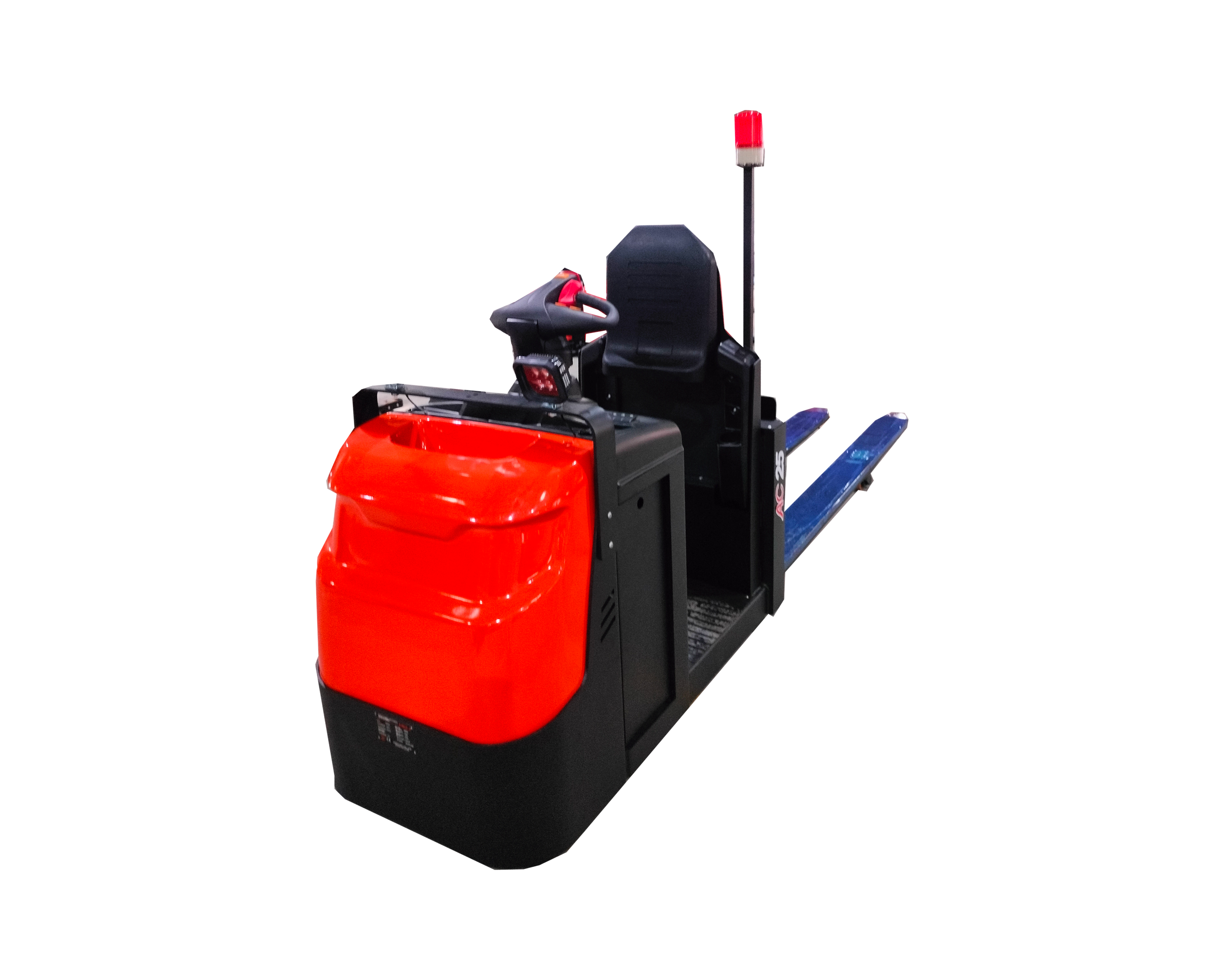
Ride-On Electric Pallet Stacker
A ride-on electric pallet stacker allows the operator to travel on the equipment rather than walking behind it.
This configuration can be useful for:
- Longer travel distances
- Higher handling frequency
- Larger warehouse areas
- Intensive pallet transportation
The exact performance depends on the model’s rated capacity, travel speed, battery capacity, and operating configuration.
Lithium Battery Electric Pallet Stacker
Lithium battery electric pallet stackers use lithium-ion battery technology instead of traditional lead-acid batteries.
Potential advantages include:
- Faster charging
- Opportunity charging capability
- Reduced routine battery maintenance
- High energy efficiency
- Suitable for multi-shift operations when correctly specified
Battery capacity and charging infrastructure should be evaluated together with the expected duty cycle.
Common Electric Pallet Stacker Applications
Warehouses
Electric pallet stackers can be used for:
- Pallet storage
- Rack stacking
- Internal pallet transportation
- Inventory handling
- Warehouse replenishment
Manufacturing Facilities
Manufacturing operations may use electric stackers for:
- Raw material handling
- Production line supply
- Work-in-process movement
- Finished product transportation
Distribution Centers
Distribution centers can use electric pallet stackers for:
- Internal pallet movement
- Inventory operations
- Order fulfillment support
- Loading and unloading assistance
The specific equipment configuration should match the warehouse workflow and load characteristics.
Retail Storage Facilities
Retail backrooms and storage areas can use compact electric stackers for:
- Stock replenishment
- Pallet positioning
- Inventory organization
- Short-distance material movement
Compact dimensions can be especially useful where operating space is limited.
How to Choose the Right Electric Pallet Stacker
Selecting the right electric pallet stacker requires more than simply choosing a rated capacity.
Consider Load Capacity
Common capacity classes include:
- 1,000 kg
- 1,500 kg
- 2,000 kg
The rated capacity must be appropriate for the actual load weight and load center.
Do not select equipment based only on the maximum weight of a typical pallet. Consider the heaviest expected load and the lifting height at which it will be handled.
Consider Lifting Height
The required lifting height depends on:
- Rack height
- Pallet dimensions
- Storage configuration
- Ceiling clearance
- Required free lift
- Warehouse layout
The stacker’s rated capacity at the required lifting height should also be checked.
Compare Battery Types
Lead-acid and lithium-ion batteries have different characteristics.
Lead-acid batteries can be suitable for conventional operating schedules, while lithium batteries can be useful for operations requiring frequent charging, opportunity charging, or reduced battery maintenance.
Evaluate the Working Environment
Consider whether the electric pallet stacker will operate in:
- Narrow aisles
- Cold storage
- High-frequency warehouse operations
- Manufacturing environments
- Retail storage areas
- Heavy-duty applications
Environmental temperature, floor conditions, operating frequency, and travel distance can all influence equipment selection.
Check Fork and Dimension Requirements
Fork length, fork width, overall machine dimensions, mast configuration, and turning radius should match the pallets and warehouse layout.
For example, a machine designed for standard pallets may not be appropriate for specialized pallet dimensions without confirming the fork configuration.
Consider After-Sales Support
For commercial users, after-sales support can have a major impact on long-term equipment operation.
Evaluate:
- Spare parts availability
- Battery support
- Technical assistance
- Warranty terms
- Maintenance service
- Supplier response time
A reliable supplier should be able to provide clear technical specifications and support throughout the equipment lifecycle.
Electric Pallet Stacker Maintenance Tips
Regular maintenance helps keep warehouse equipment operating reliably.
Perform Daily Inspections
Before operation, check relevant components such as:
- Battery condition
- Forks
- Wheels and rollers
- Hydraulic components
- Control handle
- Emergency stop function
- Braking system
- Visible electrical cables and connectors
Any abnormal condition should be addressed according to the manufacturer’s maintenance procedures.
Maintain the Hydraulic System
Inspect the hydraulic system for:
- Oil leakage
- Damaged hoses
- Loose connections
- Abnormal lifting performance
Hydraulic oil should be maintained according to the manufacturer’s recommended specifications and service intervals.
Maintain the Battery
Follow the battery manufacturer’s charging and maintenance requirements.
For lithium battery systems, use the specified charger and charging procedures. For lead-acid batteries, proper charging, inspection, and battery care are important for maintaining battery performance.
Avoid using damaged batteries, chargers, or electrical connections.
Inspect Wheels and Forks
Wheels, rollers, forks, and other mechanical components can experience wear during repeated operation.
Regular inspection can help identify:
- Excessive wheel wear
- Fork damage
- Deformation
- Loose components
- Abnormal vibration
Maintenance intervals should follow the equipment manufacturer’s recommendations.
Future Trends for Electric Pallet Stackers in Smart Warehouses
The development of warehouse automation is influencing the design and application of electric material handling equipment.
Future electric pallet stackers may increasingly incorporate:
- Advanced lithium battery systems
- Intelligent control systems
- Equipment monitoring
- Battery management technology
- Fleet management functions
- Connectivity and data collection
- Automation integration
Electric pallet stackers may also work alongside automated guided vehicles (AGVs), autonomous mobile robots (AMRs), warehouse management systems, and other automated material handling technologies.
The level of automation required depends on warehouse size, workflow complexity, investment level, and operational objectives.
Frequently Asked Questions
What is an electric pallet stacker used for?
An electric pallet stacker is used to lift, transport, and stack palletized loads. It is commonly used in warehouses, manufacturing facilities, distribution centers, and retail storage areas.
How much weight can an electric pallet stacker lift?
Capacity varies by model. Common electric stacker capacities include 1,000 kg, 1,500 kg, and 2,000 kg, although other configurations are available. Always check the manufacturer’s rated capacity and load center requirements.
What is the difference between an electric pallet stacker and a forklift?
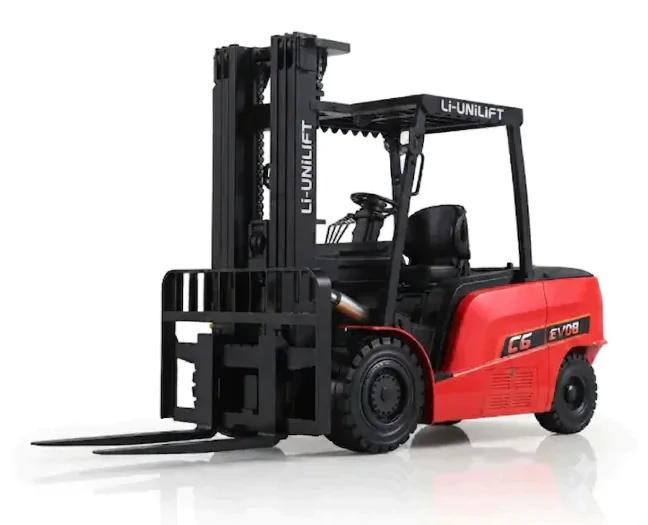
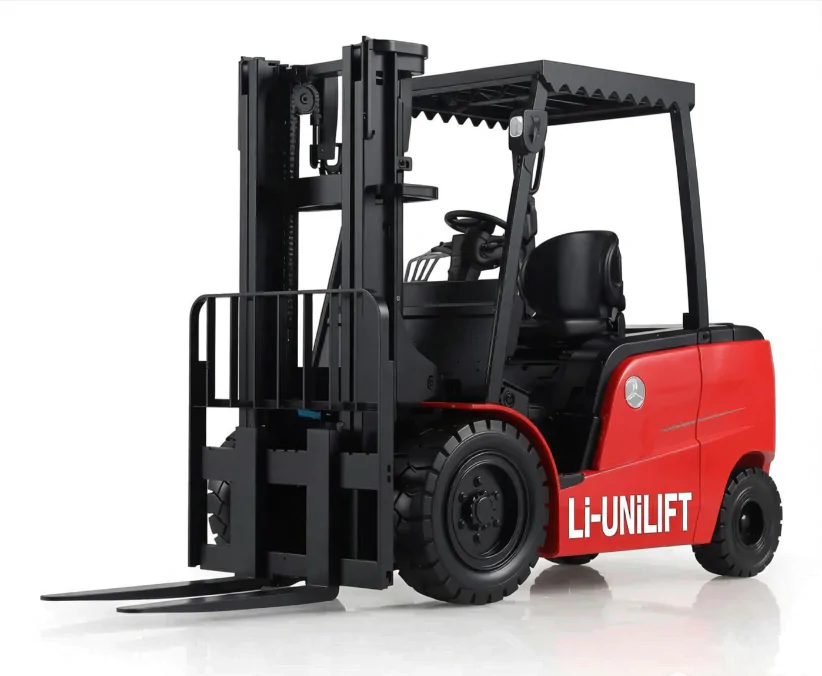
An electric pallet stacker is generally designed for pallet handling and vertical stacking applications, while forklifts are available in a wider range of configurations for heavier loads, greater lifting heights, and more demanding applications.
Is an electric pallet stacker suitable for a small warehouse?
Yes. Compact walkie electric pallet stackers can be suitable for small warehouses, retail backrooms, and areas with limited operating space, provided that the equipment dimensions, capacity, and lifting height match the application.
How long does an electric pallet stacker battery last?
Battery runtime depends on battery capacity, load, travel distance, operating frequency, lifting frequency, temperature, and machine configuration. Lithium battery systems can be advantageous for frequent-use applications because they support opportunity charging when the system is designed for it.
Should I choose a lithium battery electric pallet stacker?
Lithium battery models can be useful for applications requiring frequent operation, opportunity charging, reduced routine battery maintenance, or multi-shift use. The decision should be based on duty cycle, charging infrastructure, operating environment, and total cost of ownership.
Conclusion: Electric Pallet Stackers for Modern Warehouse Operations
An electric pallet stacker combines powered travel and lifting to make pallet handling more efficient and less physically demanding.
Compared with manual stacking equipment, it can support higher handling productivity, vertical storage, and more consistent warehouse operations. Different configurations, capacities, lifting heights, and battery technologies allow businesses to select equipment according to their specific application.
Before purchasing an electric pallet stacker, evaluate load capacity, lifting height, fork dimensions, aisle width, battery type, operating frequency, working environment, and after-sales support.
For businesses looking for electric pallet trucks, electric stackers, and other warehouse material handling solutions, visit UNILIFT MHE.
For product consultation and application requirements, contact the UNILIFT MHE team.
Follow UNILIFT MHE for More Material Handling Insights
Stay connected with UNILIFT MHE for the latest updates on electric pallet trucks, electric stackers, electric tuggers, warehouse equipment, material handling solutions, and industry insights. Follow our social media channels to discover new products, application scenarios, company updates, and practical information for modern warehouse and logistics operations.
Explore reliable electric pallet trucks, electric stackers, and material handling solutions at Unilift MHE.
If you would like to contact us, please click here.
If you would like to learn more about our news, please click here.
Facebook: Follow UNILIFT MHE on Facebook
TikTok: Follow UNILIFT MHE on TikTok
Instagram: Follow UNILIFT MHE on Instagram
X: Follow UNILIFT MHE on X
Pinterest: Explore UNILIFT MHE on Pinterest
LinkedIn: Connect with UNILIFT MHE on LinkedIn