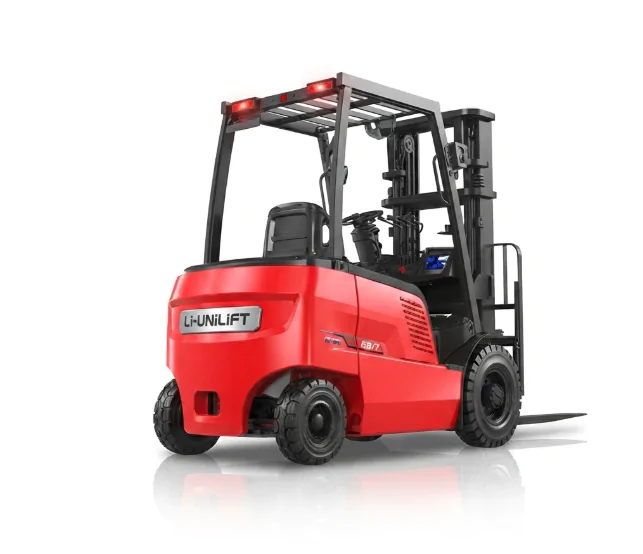
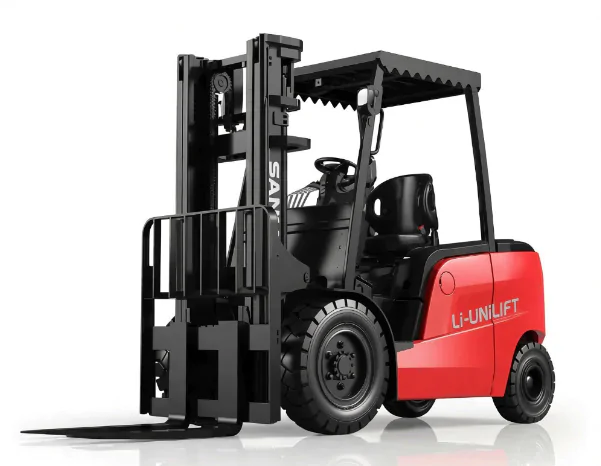
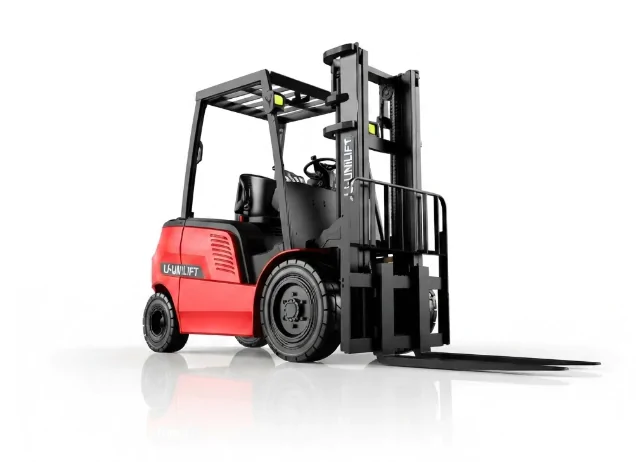
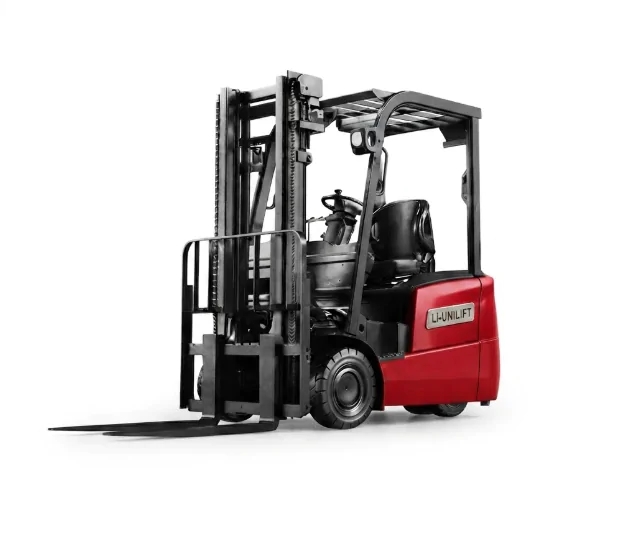
Small warehouses often face limited floor space, restricted aisles, and tight operating budgets. Choosing the right electric stacker for small warehouses can help businesses handle pallets efficiently without taking up unnecessary space. Compared with larger forklifts, compact electric stackers can provide a practical combination of maneuverability, lifting capability, and operating efficiency for pallet stacking and short-distance transportation.
The right equipment depends on several factors, including aisle width, pallet dimensions, load capacity, lifting height, operating frequency, battery type, and available maneuvering space. This guide explains the main challenges faced by small warehouses and how to select an electric stacker that matches their actual handling requirements.
1. What Challenges Do Small Warehouses Face?
1.1 Limited Operating Space
Small warehouses usually have restricted aisle widths, compact storage areas, and limited maneuvering space. Large material handling equipment can make these conditions more difficult by requiring additional clearance for turning and pallet positioning.
Common problems include:
- Difficult equipment movement
- Limited pallet access
- Higher risk of contact with racks or stored products
- Lower warehouse space utilization
- Difficult maneuvering around obstacles
For small facilities, material handling equipment should be selected according to the actual warehouse layout rather than simply choosing the largest available capacity.
1.2 Need for Flexible Material Handling Equipment
Small warehouses require equipment that can move efficiently between storage locations without occupying excessive floor space. An electric stacker for small warehouses should provide a practical balance between compact dimensions, lifting performance, maneuverability, and ease of operation.
Important requirements include:
- Small turning radius
- Compact overall dimensions
- Easy-to-use controls
- Flexible movement
- Reliable lifting performance
- Suitable load capacity
The equipment should also match the pallet size and rack configuration used in the warehouse.
1.3 Limited Budget and Operating Costs
Small businesses often need to control both initial investment and long-term operating expenses. Purchasing a full-size forklift may not be necessary when the primary requirements are pallet stacking, storage, and short-distance transportation.
Electric stackers can provide a cost-effective option for suitable applications because they generally have a simpler operating concept and can require less space than larger forklift equipment.
Potential advantages include:
- Lower initial investment for suitable applications
- Reduced manual handling requirements
- Efficient electric operation
- Lower routine maintenance requirements for some configurations
- Reduced space requirements
The total cost should include the equipment, battery, charging system, maintenance, spare parts, and expected operating life.
2. Why Are Electric Stackers Suitable for Small Warehouses?
2.1 Compact Design Saves Valuable Space
A compact electric stacker can provide better access to restricted warehouse areas than larger material handling equipment. Its smaller footprint can make it easier to maneuver between racks, pallets, workstations, and other obstacles.
Potential benefits include:
- Better aisle accessibility
- Improved warehouse layout flexibility
- Easier pallet positioning
- More efficient use of floor space
- Support for vertical storage
However, compact dimensions should not be considered independently from stability, rated capacity, lifting height, and operator safety.
2.2 Easy Operation for Small Teams
Electric stackers provide powered lifting and travel functions, reducing the physical effort required for pallet handling compared with manual equipment.
For small warehouse teams, this can help simplify repetitive material handling tasks.
Potential benefits include:
- Reduced manual effort
- Lower operator fatigue
- More consistent pallet movement
- Improved handling productivity
- Easier operation for routine warehouse tasks
The appropriate configuration depends on the distance traveled, handling frequency, load characteristics, and operator workflow.
2.3 Lower Investment Than a Full-Size Forklift for Suitable Applications
A full-size forklift may provide capabilities that small warehouses do not always need. If the primary tasks involve pallet stacking and short-distance transportation, an electric stacker may provide the required functionality with a more compact design.
Typical applications include:
- Pallet stacking
- Short-distance pallet transportation
- Inventory movement
- Rack loading and unloading
- Retail backroom handling
- Workshop material handling
For heavy loads, outdoor applications, very high lifting heights, or demanding industrial operations, a forklift or another specialized machine may be more appropriate.
3. What Type of Electric Stacker Is Best for Small Warehouses?
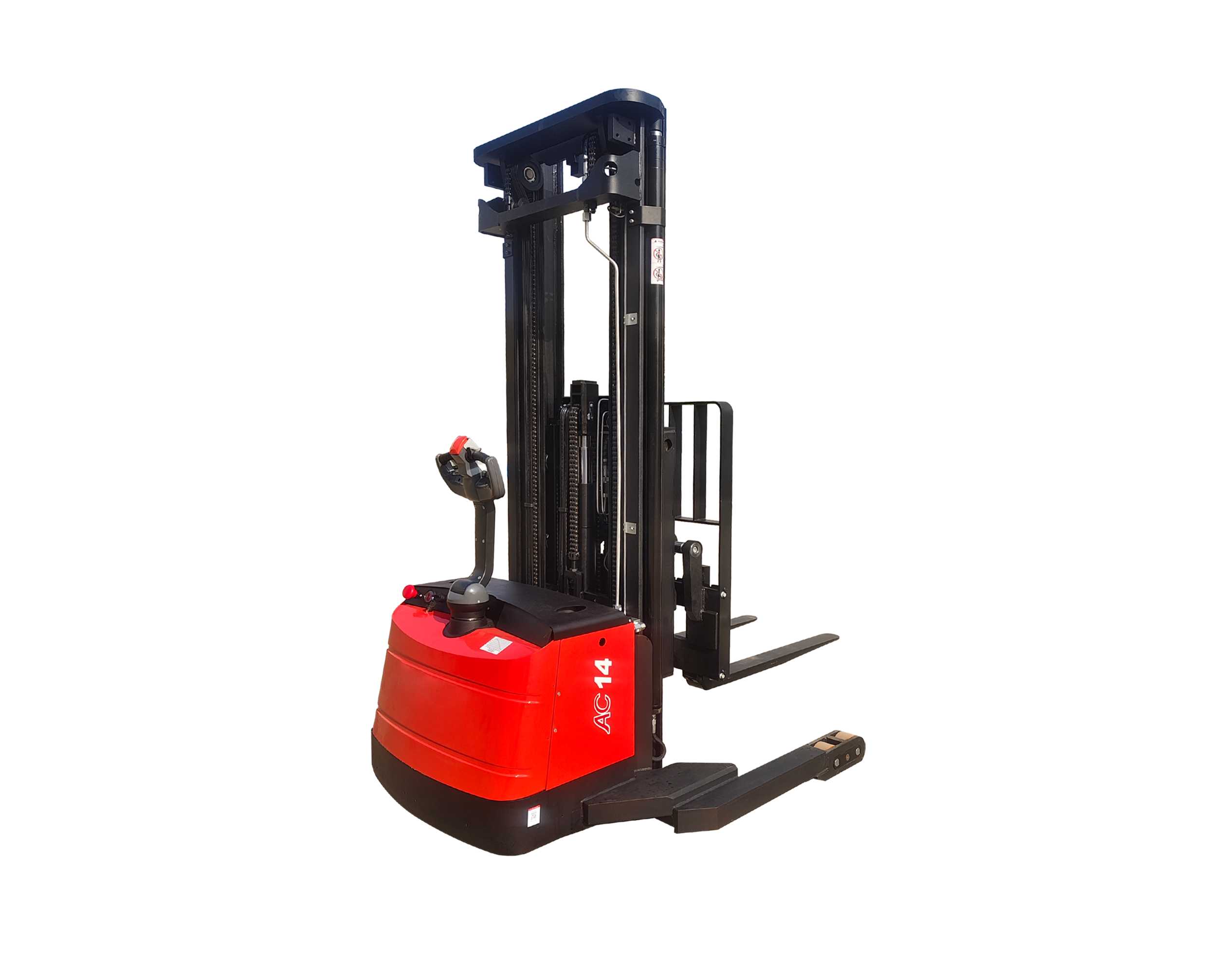
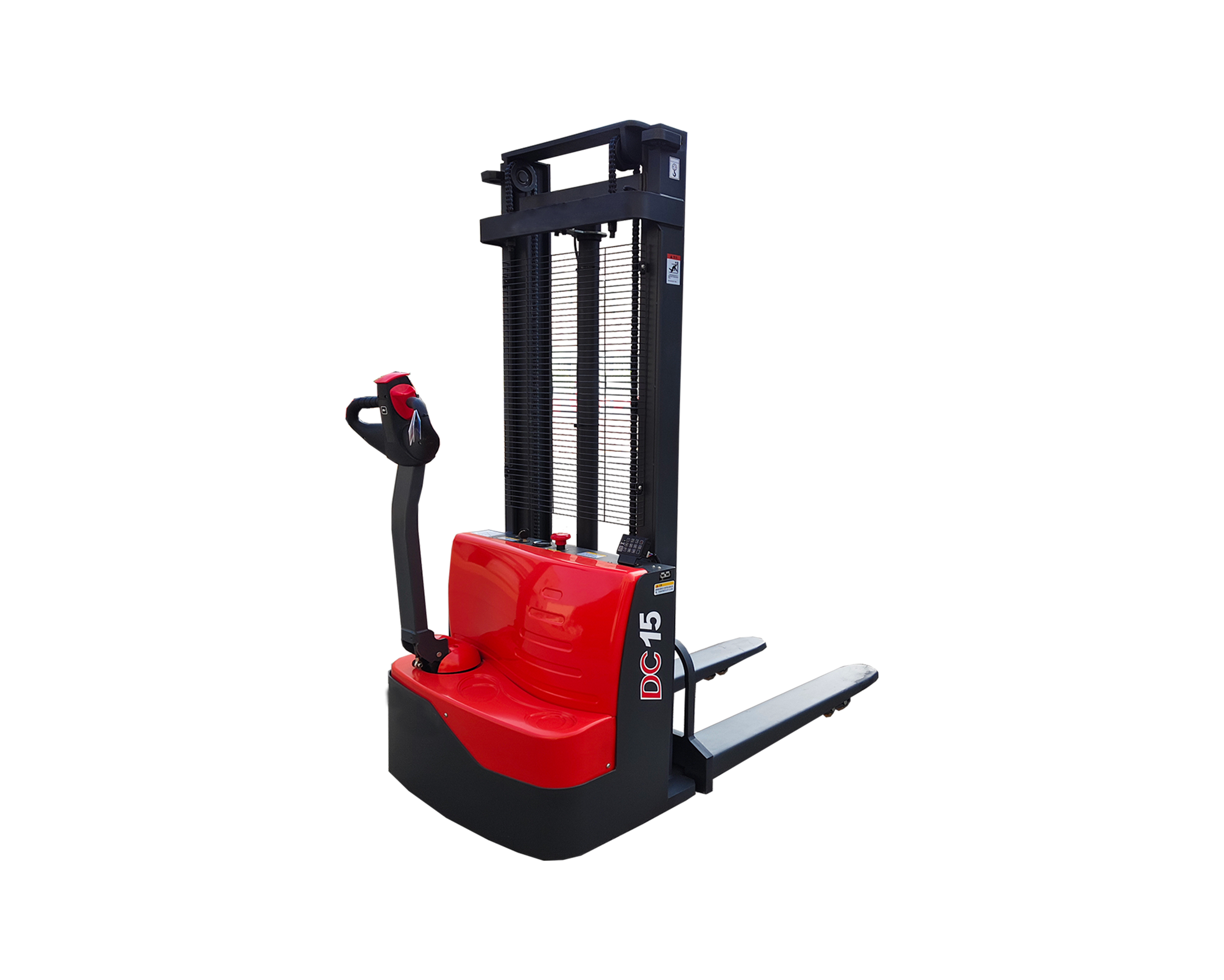
3.1 Walkie Electric Stacker for Compact Warehouse Operations
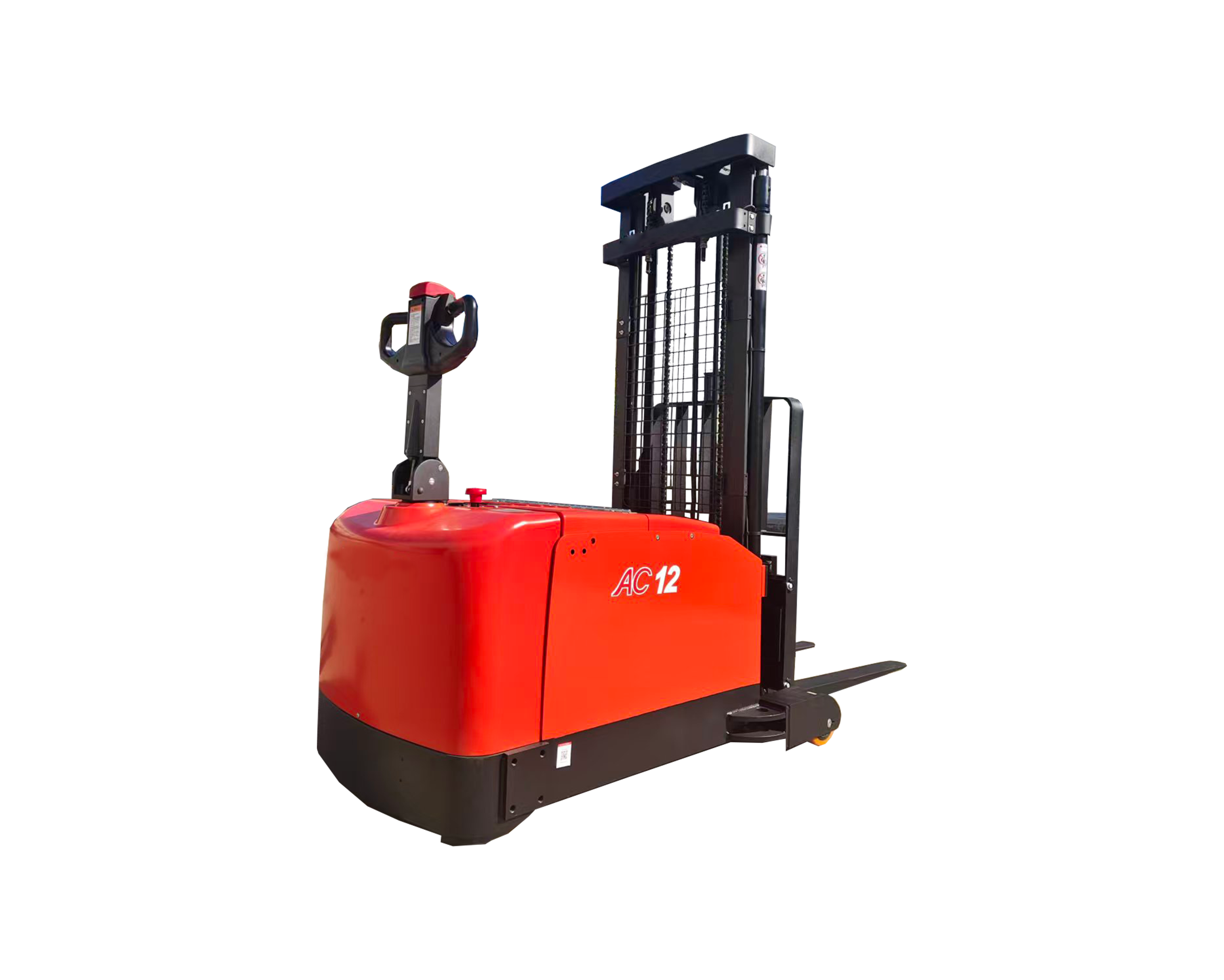
A walkie electric stacker is operated while the operator walks behind the machine. Its compact structure and flexible movement make it suitable for many small warehouse applications.
Key features include:
- Compact footprint
- Flexible maneuverability
- Simple operation
- Powered lifting
- Suitable for short-distance transportation
Suitable applications include:
- Small storage facilities
- Retail warehouses
- Workshops
- Light-duty logistics operations
- Small distribution areas
Advantages include:
- Good maneuverability in restricted spaces
- Lower space requirements
- Easy pallet positioning
- Suitable for relatively short travel distances
For many small warehouses, a compact walkie model is worth considering when aisle space and operating areas are limited.
3.2 Lithium Battery Electric Stacker for Frequent Operations
A lithium battery electric stacker can be suitable for warehouses with frequent pallet handling and extended operating schedules.
Potential advantages include:
- Fast charging
- Opportunity charging
- Long service life when properly managed
- No routine electrolyte watering
- Consistent power delivery
- Suitable for frequent daily operations
Lithium battery stackers can be particularly useful for:
- E-commerce warehouses
- Retail distribution
- Multi-shift operations
- Frequent pallet movement
- Warehouses with limited charging time
Battery capacity should be selected according to daily operating hours, workload, charging opportunities, and the equipment’s duty cycle.
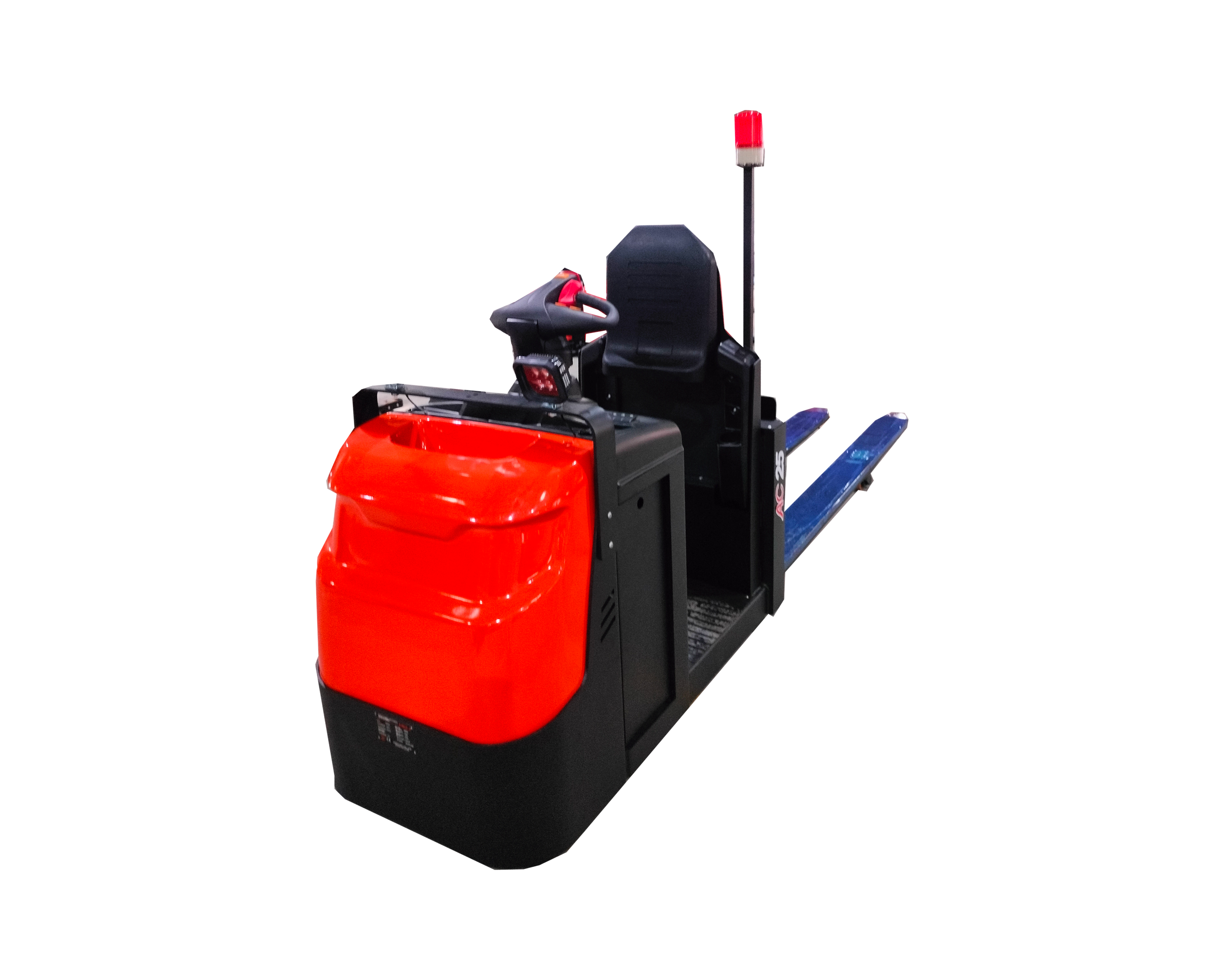
3.3 Stand-On Electric Stacker for Higher Productivity
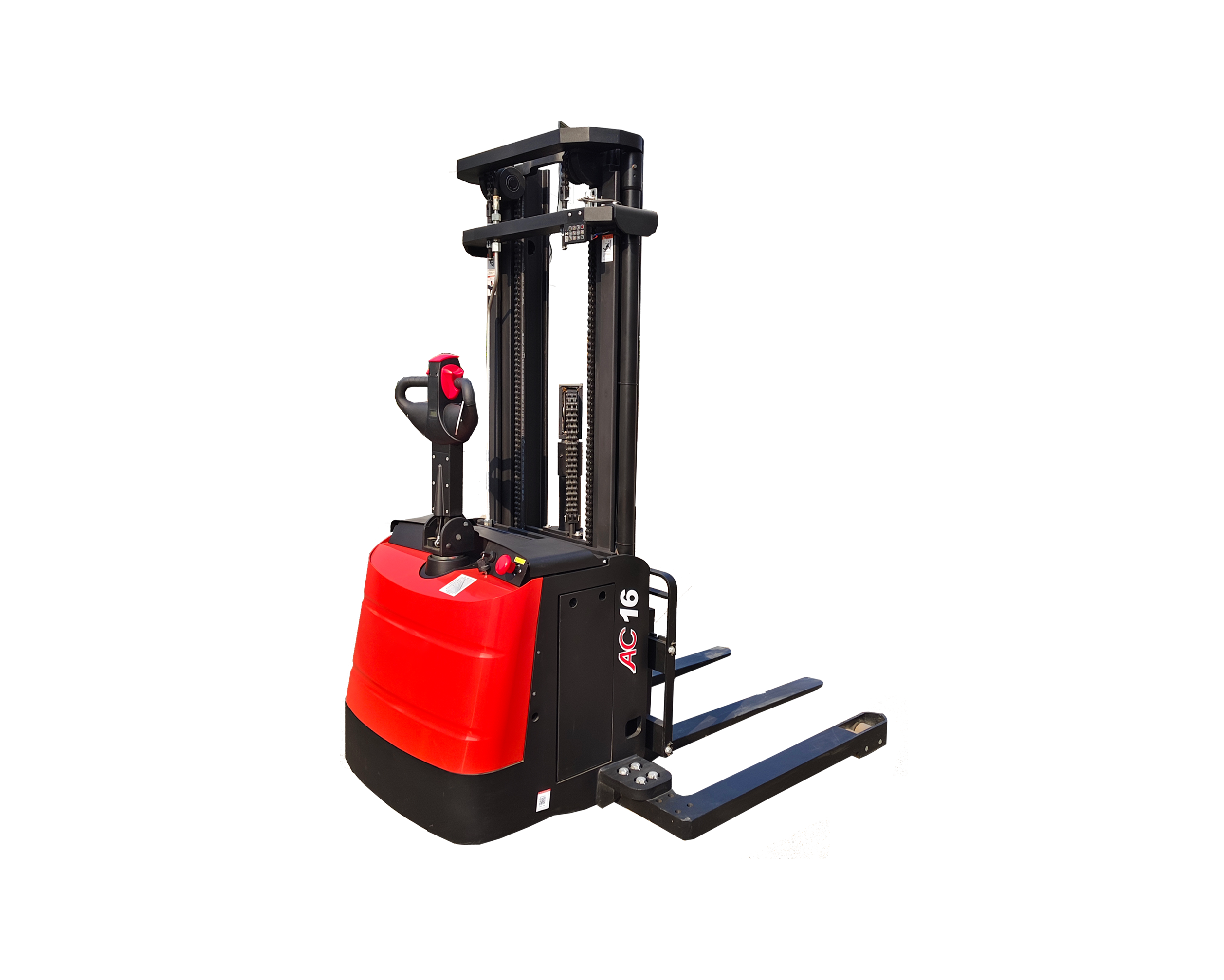
A stand-on electric stacker allows the operator to ride on a platform during travel. This configuration can reduce walking during repetitive transportation tasks and may improve productivity when travel distances are longer.
Suitable applications include:
- Small-to-medium warehouses
- Longer transportation routes
- Higher daily pallet volumes
- Repetitive material handling
Potential advantages include:
- Faster movement between work areas
- Reduced operator walking
- Better suitability for repetitive handling
- Improved productivity for longer travel distances
A stand-on configuration may require more operating space than a compact walkie stacker, so aisle dimensions should be checked before selection.
4. Key Factors to Consider When Choosing an Electric Stacker for Small Warehouses
4.1 Warehouse Aisle Width
Aisle width is one of the most important factors when selecting an electric stacker for small warehouses.
Measure:
- Aisle width
- Rack spacing
- Pallet dimensions
- Turning areas
- Pallet access points
- Available clearance around obstacles
For very restricted areas, a compact walkie electric stacker may be appropriate. If the warehouse provides more operating space and requires longer travel distances, a stand-on configuration may also be considered.
Do not select equipment based on aisle width alone. The actual required operating aisle depends on the machine dimensions, pallet size, turning characteristics, rack layout, and operating method.
4.2 Load Capacity Requirements
Capacity should be based on the actual pallet weight rather than an estimated average.
Common electric stacker capacity ranges include:
1-Ton Electric Stacker
Suitable for:
- Light loads
- Small storage operations
- Retail handling
- Lower-volume pallet movement
1.5-Ton Electric Stacker
Suitable for:
- General warehouse applications
- Medium pallet handling
- Manufacturing and storage operations
- Regular pallet movement
2-Ton Electric Stacker
Suitable for:
- Heavier pallet loads
- Higher-demand material handling
- Industrial warehouse applications
Important:
Do not select equipment only according to average pallet weight. Consider the maximum load, load center, lifting height, and frequency of operation.
4.3 Lifting Height Requirements
Storage rack height determines the required lifting capability.
Consider:
- Rack height
- Highest pallet storage position
- Pallet weight at maximum lift height
- Mast configuration
- Overhead clearance
- Required lifting performance
For low-level storage, a standard-lift electric stacker may be sufficient.
For medium-height racks, a medium-lift configuration may be more appropriate.
For high-level pallet storage, a high-lift electric stacker should be selected according to both maximum lift height and residual capacity.
4.4 Battery Type Selection
Battery technology affects charging time, maintenance, operating availability, and total operating cost.
Lead-Acid Battery Electric Stackers
Potential advantages:
- Lower initial battery cost
- Suitable for occasional operations
- Established battery technology
Considerations:
- Longer charging time
- Regular battery maintenance requirements
- Suitable charging and ventilation arrangements may be required
Lithium Battery Electric Stackers
Potential advantages:
- Faster charging
- Opportunity charging
- Reduced routine battery maintenance
- Good energy efficiency
- Suitable for frequent operation
Lithium battery configurations can be particularly useful for businesses that need equipment available throughout the working day.
5. Electric Stacker vs. Forklift for Small Warehouses
| Feature | Electric Stacker | Forklift |
|---|---|---|
| Equipment Size | Generally compact | Generally larger |
| Space Requirement | Lower for suitable applications | Generally higher |
| Maneuverability | Suitable for restricted areas | Depends on forklift type |
| Initial Investment | Often lower for suitable applications | Generally higher |
| Maintenance | Typically simpler for electric configurations | Depends on powertrain and configuration |
| Best Application | Pallet stacking and storage | Heavy-duty lifting and broader material handling |
For a small warehouse, equipment selection should be based on the actual application rather than a general assumption that one machine type is always better.
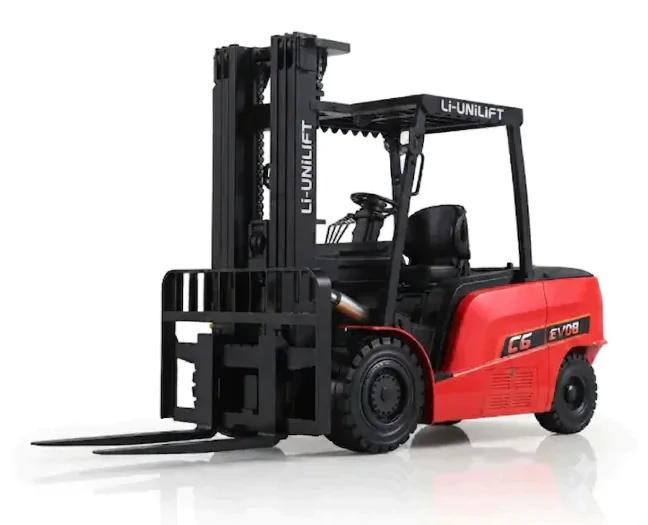
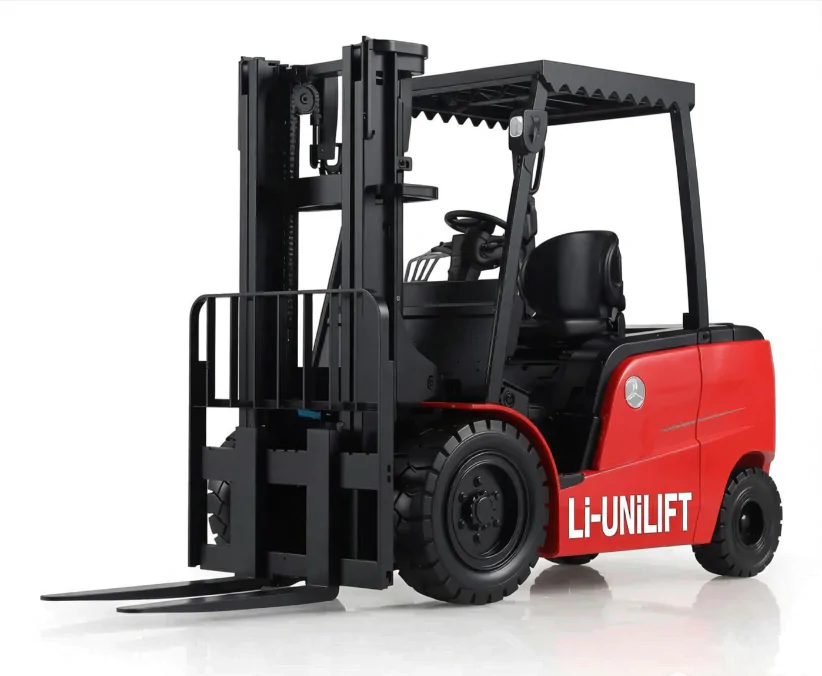
An electric stacker can be suitable when the main requirements are pallet stacking, vertical storage, and short- or medium-distance handling in space-constrained areas. A forklift may be more appropriate when the application requires higher capacity, greater lifting performance, outdoor operation, or heavier-duty handling.
6. How Electric Stackers Help Small Warehouses Improve Efficiency
6.1 Maximize Storage Space
Electric stackers can help small warehouses use vertical storage more effectively. By combining compact equipment with suitable rack systems, businesses can organize pallet storage without allocating excessive floor space to equipment movement.
Potential benefits include:
- More pallet positions
- Better rack utilization
- Improved warehouse organization
- More efficient use of vertical space
The actual storage improvement depends on rack design, pallet dimensions, aisle requirements, and equipment specifications.
6.2 Reduce Manual Handling Work
Powered lifting and travel can reduce the physical effort required for repetitive pallet movement.
Potential benefits include:
- Faster pallet movement
- Reduced manual effort
- Lower operator fatigue
- More consistent handling cycles
- Improved workflow efficiency
Electric stackers should still be used according to manufacturer instructions and appropriate operator training requirements.
6.3 Improve Workplace Safety
Small warehouses often contain racks, pallets, workers, and equipment within a limited operating area. Properly selected equipment can provide controlled movement and stable pallet handling.
Useful safety features may include:
- Emergency stop
- Automatic or electromagnetic braking
- Speed control
- Overload protection
- Anti-rollback function
- Horn
- Safety guards or platform protection
Equipment selection should be combined with operator training, warehouse traffic management, rack protection, and appropriate operating procedures.
7. Common Mistakes When Choosing an Electric Stacker for Small Warehouses
7.1 Choosing Equipment That Is Too Large
Problem:
Large equipment may require more aisle and turning space than the warehouse can provide.
Solution:
Measure aisle width, rack spacing, pallet dimensions, and turning areas before selecting equipment.
7.2 Focusing Only on Purchase Price
Problem:
The lowest purchase price does not necessarily represent the lowest total operating cost.
Solution:
Consider:
- Battery life
- Energy consumption
- Maintenance
- Spare parts
- Productivity
- Service support
- Expected service life
7.3 Ignoring Future Business Growth
Problem:
A machine selected only for today’s workload may become unsuitable as pallet volumes or storage requirements increase.
Solution:
Consider:
- Future pallet volume
- Additional shifts
- Higher storage requirements
- Potential warehouse expansion
- Changes in pallet sizes or load weights
7.4 Ignoring the Maximum Load
Problem:
Selecting equipment based on average pallet weight can create problems when heavier loads need to be handled.
Solution:
Confirm the maximum pallet weight, load center, required lifting height, and corresponding rated or residual capacity.
7.5 Choosing the Wrong Battery Configuration
Problem:
A battery that cannot support the required duty cycle may reduce equipment availability during busy periods.
Solution:
Match battery capacity and charging strategy to daily working hours, shift patterns, charging opportunities, and workload.
8. Step-by-Step Guide to Selecting an Electric Stacker for a Small Warehouse
Step 1: Measure Warehouse Space
Check:
- Aisle width
- Rack spacing
- Storage height
- Turning areas
- Overhead clearance
- Floor conditions
Step 2: Determine Handling Requirements
Evaluate:
- Maximum pallet weight
- Pallet dimensions
- Daily pallet volume
- Travel distance
- Working hours
- Handling frequency
Step 3: Choose the Right Stacker Type
Consider:
- Walkie electric stacker
- Stand-on electric stacker
- Lithium battery electric stacker
Choose the configuration that matches the available space, travel distance, workload, and operator requirements.
Step 4: Select the Battery Configuration
Consider:
- Battery capacity
- Charging time
- Operating hours
- Number of shifts
- Opportunity charging
- Maintenance requirements
Step 5: Confirm Lift Height and Capacity
Check the required lifting height and verify that the stacker can safely handle the intended load at that height.
Step 6: Evaluate Total Cost of Ownership
Compare more than the purchase price.
Review:
- Energy consumption
- Battery replacement
- Maintenance
- Spare parts
- Service support
- Expected service life
- Operator productivity
9. Future Trends of Electric Stackers for Small Warehouses
Small warehouses are increasingly looking for compact, energy-efficient, and easier-to-manage material handling solutions. Electric stackers are evolving with improvements in battery technology, electronic controls, and warehouse connectivity.
Key trends include:
- Lithium battery technology
- Energy-efficient electric motors
- Intelligent control systems
- Electronic safety monitoring
- Compact automated handling solutions
- Smart warehouse integration
- Fleet and maintenance monitoring
As warehouse operations become more digitalized, electric stackers may increasingly operate alongside warehouse management systems, automated storage systems, and other material handling technologies.
FAQ
Q1: What is the best electric stacker for a small warehouse?
A compact walkie electric stacker can be suitable for many small warehouses because it requires relatively little operating space and provides flexible pallet handling. The final choice depends on aisle width, pallet weight, lifting height, and workload.
Q2: Can an electric stacker work in a small warehouse with narrow aisles?
Yes. Compact electric stackers are designed for applications where maneuverability and space efficiency are important. The required aisle width depends on the specific machine, pallet size, rack configuration, and operating method.
Q3: What capacity electric stacker is suitable for a small warehouse?
Common capacities include 1 ton, 1.5 tons, and 2 tons. The correct capacity should be based on the maximum pallet weight, load center, lifting height, and operating requirements.
Q4: Is a lithium battery electric stacker suitable for a small warehouse?
Yes. Lithium battery electric stackers can be suitable for small warehouses with frequent operations because they support fast charging, opportunity charging, and reduced routine battery maintenance.
Q5: Should a small warehouse use an electric stacker or forklift?
The choice depends on the application. An electric stacker can be suitable for pallet stacking, vertical storage, and short- or medium-distance handling where space is limited. A forklift may be required for heavier loads, higher capacities, outdoor work, or more demanding lifting applications.
Q6: What should I measure before buying an electric stacker?
Measure the aisle width, rack spacing, pallet dimensions, turning area, storage height, overhead clearance, floor conditions, maximum pallet weight, and daily workload.
Q7: Are electric stackers cost-effective for small warehouses?
They can be cost-effective when the equipment matches the warehouse’s actual handling requirements. Businesses should evaluate purchase cost together with energy consumption, battery requirements, maintenance, service support, and expected service life.
Conclusion
Selecting the right electric stacker for small warehouses requires a complete evaluation of space, load, lifting height, battery requirements, operating frequency, and total cost of ownership.
For space-constrained facilities focused on pallet stacking and storage, a compact walkie electric stacker can provide flexible handling with relatively low space requirements. For more frequent operations or longer travel distances, lithium battery and stand-on configurations may provide additional operational capabilities.
The most suitable equipment is the one that matches the warehouse layout, pallet specifications, workload, and future operating requirements.
Follow UNILIFT MHE for More Material Handling Insights
Stay connected with UNILIFT MHE for the latest updates on electric pallet trucks, electric stackers, electric tuggers, warehouse equipment, material handling solutions, and industry insights. Follow our social media channels to discover new products, application scenarios, company updates, and practical information for modern warehouse and logistics operations.
Explore reliable electric pallet trucks, electric stackers, and material handling solutions at Unilift MHE.
If you would like to contact us, please click here.
If you would like to learn more about our news, please click here.
Facebook: Follow UNILIFT MHE on Facebook
TikTok: Follow UNILIFT MHE on TikTok
Instagram: Follow UNILIFT MHE on Instagram
X: Follow UNILIFT MHE on X
Pinterest: Explore UNILIFT MHE on Pinterest
LinkedIn: Connect with UNILIFT MHE on LinkedIn