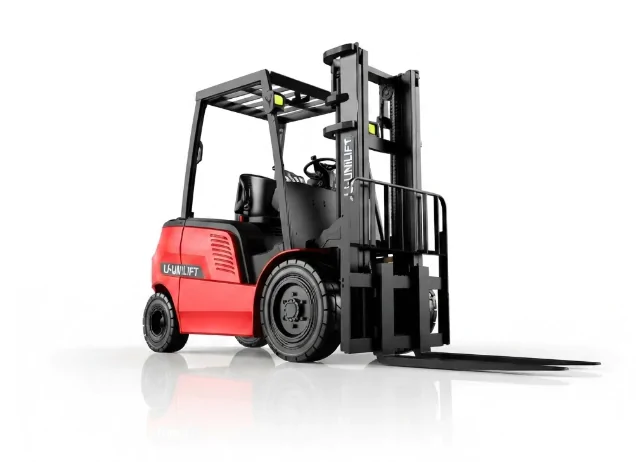
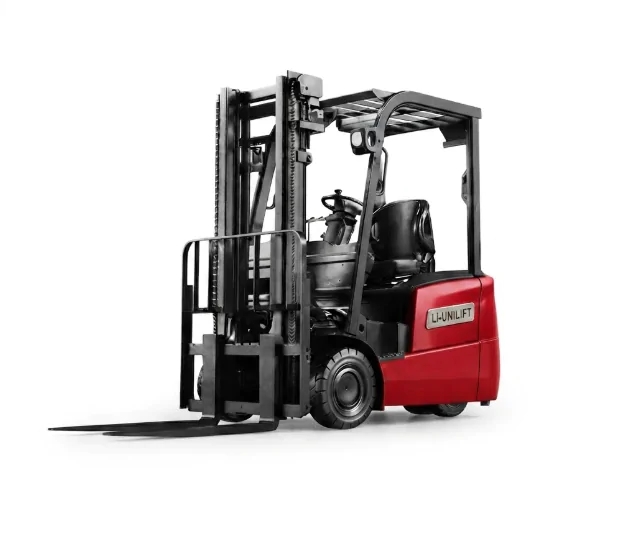
A Four Way Pallet Truck offers greater directional flexibility than a standard pallet truck, making it a practical solution for material handling operations where space is limited and load positioning matters. While standard pallet trucks remain a reliable choice for everyday pallet transportation, four-way models provide additional maneuverability that can help businesses handle loads more efficiently in confined work areas. Understanding the differences between these two types of pallet trucks helps warehouse managers, distributors, and manufacturers select the right equipment for their operational needs.
1. What Is a Four Way Pallet Truck?
A Four Way Pallet Truck is a specialized manual material handling solution designed to move compatible pallets in multiple directions, including forward, backward, and sideways. Unlike conventional pallet trucks, which primarily travel in the direction of their forks, four-way models are designed to improve lateral movement and make pallet positioning easier in restricted spaces.
This directional flexibility is particularly useful when handling long loads, working in narrow aisles, or positioning pallets in areas where turning space is limited. Depending on the model’s design and compatible pallet dimensions, operators can reposition loads without performing large turning maneuvers, helping simplify material handling tasks.
For businesses that regularly handle oversized materials, long pallets, or loads in compact storage areas, a Four Way Pallet Truck can provide a more adaptable alternative to conventional pallet handling equipment.
2. What Is a Standard Pallet Truck?
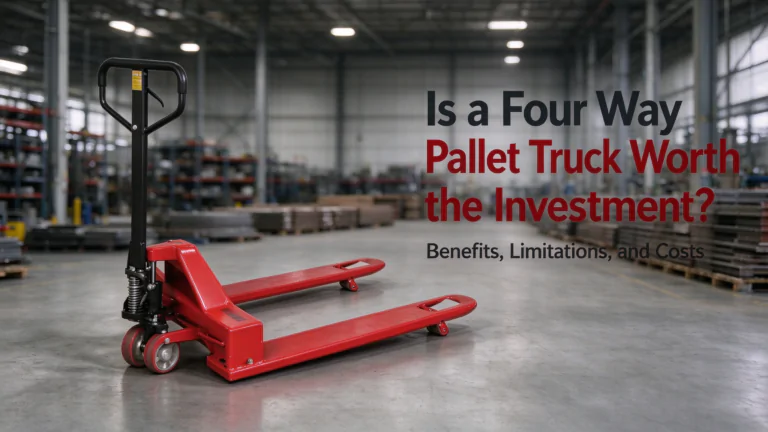
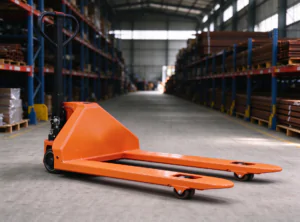
A Four Way Pallet Truck differs from a standard pallet truck primarily in its directional capabilities, while the standard model is designed for straightforward pallet transportation. Standard pallet trucks typically lift pallets using hydraulic mechanisms and move them along a conventional travel path, making them suitable for loading docks, warehouse aisles, retail backrooms, and general industrial environments.
Their simple operating principles, compact design, and relatively low maintenance requirements make standard pallet trucks a dependable choice for everyday material handling. Manual models also offer a cost-effective solution for businesses that need to move palletized goods over short distances without investing in powered equipment.
When pallet sizes are consistent and operators have sufficient room to turn, a standard pallet truck can meet most routine transportation requirements efficiently.
3. Four Way Pallet Truck vs. Standard Pallet Truck: Key Differences
A Four Way Pallet Truck provides greater flexibility in load positioning, whereas a standard pallet truck is generally better suited to conventional forward-and-backward transportation. The right choice depends on pallet dimensions, available floor space, load characteristics, and the frequency of directional adjustments.
Directional Movement
A Four Way Pallet Truck is designed to support lateral movement in addition to conventional travel, allowing operators to position compatible loads in more directions. This capability can be particularly valuable when handling long materials or moving pallets through restricted spaces.
Standard pallet trucks generally require more room to turn and reposition a load. In open warehouse environments, this limitation may have little impact on productivity, but it can become more noticeable in compact storage areas.
Maneuverability and Space Requirements
A Four Way Pallet Truck can simplify load positioning where conventional turning movements are difficult. Its multi-directional design may help operators navigate around obstacles and make better use of available floor space, provided the operating surface and load are suitable for the equipment.
Standard pallet trucks perform well in clear aisles and open work areas. However, when operators frequently need to change direction around long loads or in narrow spaces, the additional maneuverability of a four-way model may offer a practical advantage.
Load Compatibility
A Four Way Pallet Truck is particularly relevant for operations involving long, wide, or specially configured loads that benefit from lateral positioning. Actual compatibility depends on fork dimensions, pallet design, rated capacity, and the truck’s approved operating configuration.
Standard pallet trucks are widely used for conventional pallets and general warehouse loads. Before choosing either type, businesses should confirm the pallet entry points, load dimensions, weight distribution, and required lifting height to ensure safe and reliable operation.
Operating Efficiency
A Four Way Pallet Truck can reduce unnecessary repositioning when lateral movement is required, helping streamline certain material handling tasks. In suitable applications, fewer turning maneuvers can make load placement more convenient and improve workflow consistency.
Standard pallet trucks remain efficient for repetitive transportation along established routes. If most movements involve moving pallets from one point to another along clear aisles, a conventional model may provide all the functionality the operation needs.
Cost and Maintenance
A Four Way Pallet Truck may involve a different purchase cost and maintenance profile from a standard model because of its specialized directional mechanism and construction. Buyers should compare the initial investment with the potential operational benefits, expected service life, replacement parts availability, and total cost of ownership.
Standard pallet trucks often appeal to cost-conscious businesses because of their straightforward design and broad suitability for routine handling. The most economical option is not necessarily the one with the lowest purchase price; it is the one that best matches daily operating requirements and long-term maintenance expectations.
4. Main Advantages of a Four Way Pallet Truck
A Four Way Pallet Truck offers several practical benefits for operations that require flexible positioning rather than simply transporting pallets along a straight route. Its value is most apparent when the equipment is matched to the right load types and workplace layout.
- Improved directional flexibility: Multi-directional movement can simplify the positioning of compatible pallets and long materials.
- Better use of restricted space: Reduced dependence on wide turning movements can help operators work more effectively in compact areas.
- More adaptable load handling: Suitable models can support applications involving specialized pallet configurations and bulky goods.
- Potential workflow improvements: Easier repositioning may reduce unnecessary handling steps in operations that require frequent lateral movement.
- Manual operation without powered drive: Depending on the model, a four-way pallet truck can provide specialized handling capability without requiring an electric drive system.
These advantages make the Four Way Pallet Truck worth considering for warehouses, manufacturing facilities, logistics centers, and other workplaces where load positioning is a regular challenge.
5. Why Standard Pallet Trucks Remain a Practical Choice
A Four Way Pallet Truck is not automatically the best option for every warehouse, because a standard pallet truck may deliver better value for straightforward transportation tasks. Conventional models have an established role in daily logistics thanks to their simple operation and broad application range.
- Cost-effective transportation: Standard pallet trucks offer a practical solution for moving conventional pallets over short distances.
- Straightforward operation: Their familiar handling principles make them easy to integrate into routine material movement.
- Versatile applications: They are suitable for warehouses, distribution centers, production areas, and retail stockrooms.
- Simple maintenance requirements: Conventional designs can help simplify inspections, routine servicing, and replacement-part planning.
- Reliable everyday performance: When aisle space and pallet compatibility are not major constraints, a standard pallet truck can handle repetitive tasks effectively.
For businesses with established transport routes and sufficient maneuvering room, a standard pallet truck remains a dependable and economical material handling solution.
6. How to Choose the Right Pallet Truck for Your Operation
A Four Way Pallet Truck is worth evaluating when your handling process regularly involves sideways movement, long loads, or restricted positioning space. Before purchasing, assess the actual workflow rather than choosing equipment based on product features alone.
Consider these key factors:
Load dimensions and weight: Confirm the maximum load weight, overall dimensions, center of gravity, and required fork specifications. Never exceed the truck’s rated capacity.
Pallet design: Check whether the pallet allows entry from the required directions and whether its dimensions are compatible with the truck’s fork and wheel configuration.
Aisle width and floor conditions: Measure available clearance and assess floor levelness, surface condition, and turning space. Specialized directional movement does not eliminate the need for safe operating clearance.
Handling frequency: Determine how often operators need to move loads sideways or reposition bulky materials. Frequent lateral handling may justify a four-way model, while occasional straight-line transport may favor a standard pallet truck.
Maintenance and service support: Evaluate component durability, serviceability, spare parts availability, and the manufacturer’s technical support. These factors contribute to reliable performance throughout the equipment’s working life.
A structured assessment of these requirements helps businesses choose equipment that supports productivity without paying for capabilities they rarely use.
7. UNILIFT-mhe: Material Handling Solutions Built Around Practical Needs
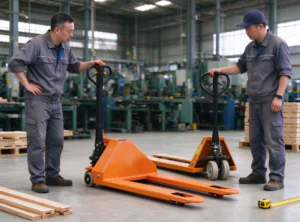
A Four Way Pallet Truck should be selected based on real operating conditions, load compatibility, and long-term reliability. At UNILIFT-mhe, product development and manufacturing focus on practical material handling requirements, with attention to structural strength, dependable performance, and equipment suitability for demanding working environments.
Material handling equipment must withstand repeated use while maintaining consistent performance. Careful attention to steel components, structural design, assembly quality, and functional testing can help support durability and dependable day-to-day operation. These considerations are important when evaluating both specialized pallet trucks and conventional models.
For businesses comparing a Four Way Pallet Truck with a standard pallet truck, UNILIFT-mhe encourages buyers to assess load specifications, workspace limitations, operating frequency, and maintenance expectations before making a decision. Selecting equipment that fits the application is a practical step toward improving material flow and controlling long-term operating costs.
Conclusion
A Four Way Pallet Truck provides an important advantage when lateral movement and precise load positioning are essential, while a standard pallet truck remains an effective solution for routine pallet transportation. Neither design is universally superior; the right choice depends on the loads being handled, available workspace, and the demands of the daily workflow.
For warehouses, factories, and distribution centers seeking to improve material handling efficiency, evaluating these differences can lead to a more suitable equipment investment. By focusing on maneuverability, load compatibility, structural quality, and serviceability, businesses can select a pallet truck that supports safer operations and reliable long-term performance.
Follow UNILIFT MHE for More Material Handling Insights
Stay connected with UNILIFT MHE for the latest updates on electric pallet trucks, electric stackers, electric tuggers, warehouse equipment, material handling solutions, and industry insights. Follow our social media channels to discover new products, application scenarios, company updates, and practical information for modern warehouse and logistics operations.
Explore reliable electric pallet trucks, electric stackers, and material handling solutions at Unilift MHE.
If you would like to contact us, please click here.
If you would like to learn more about our news, please click here.
Facebook: Follow UNILIFT MHE on Facebook
TikTok: Follow UNILIFT MHE on TikTok
Instagram: Follow UNILIFT MHE on Instagram
X: Follow UNILIFT MHE on X
Pinterest: Explore UNILIFT MHE on Pinterest
LinkedIn: Connect with UNILIFT MHE on LinkedIn