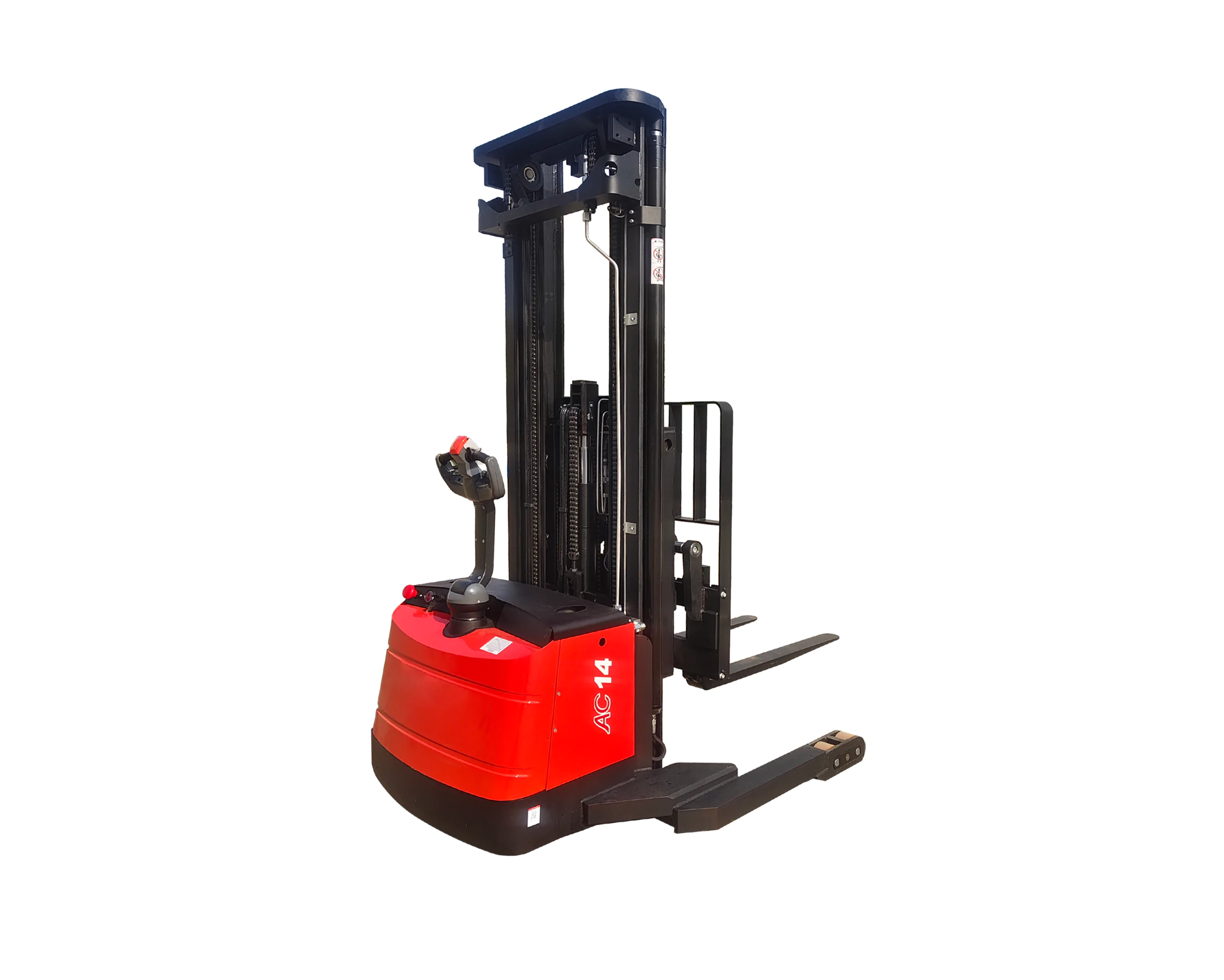
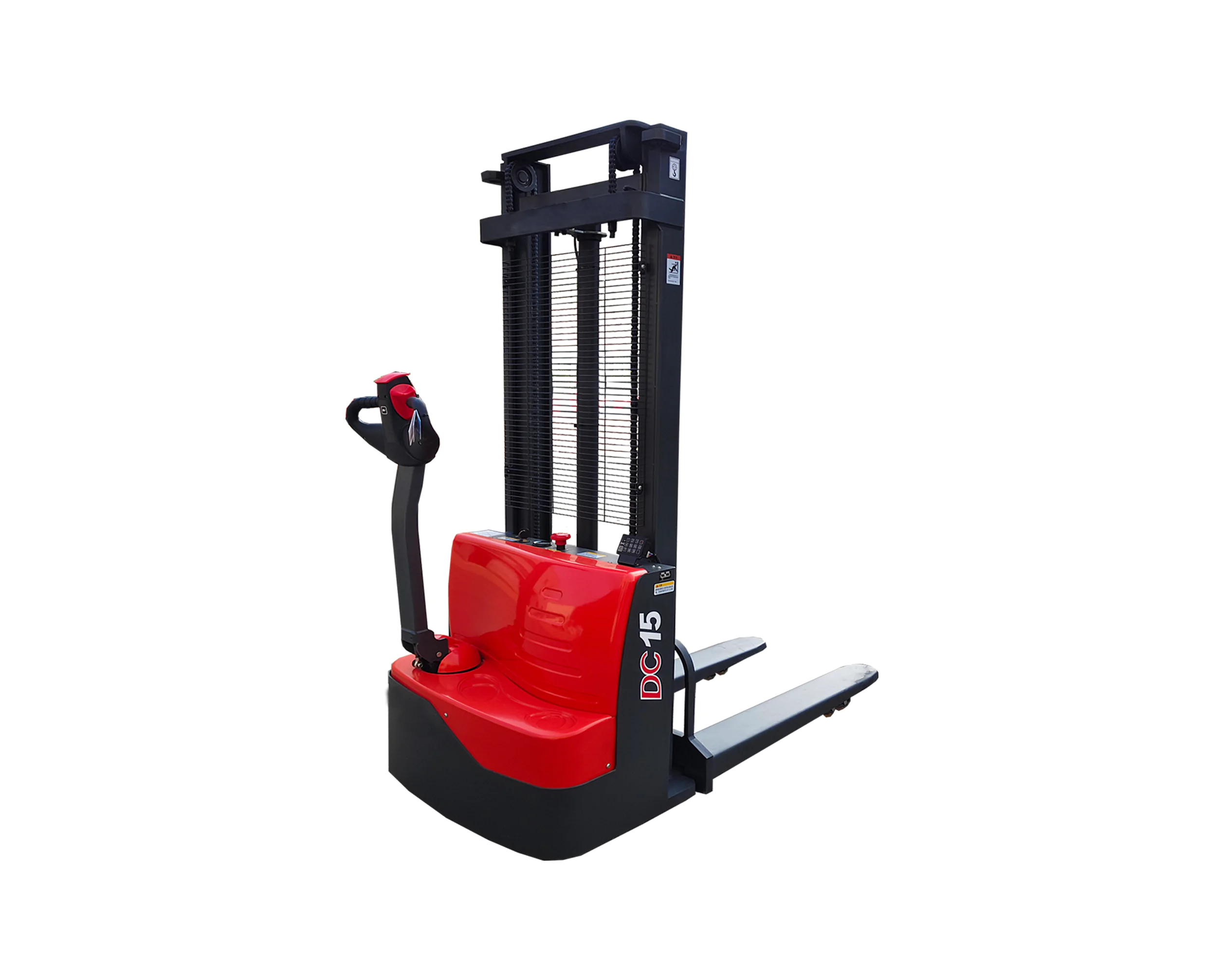
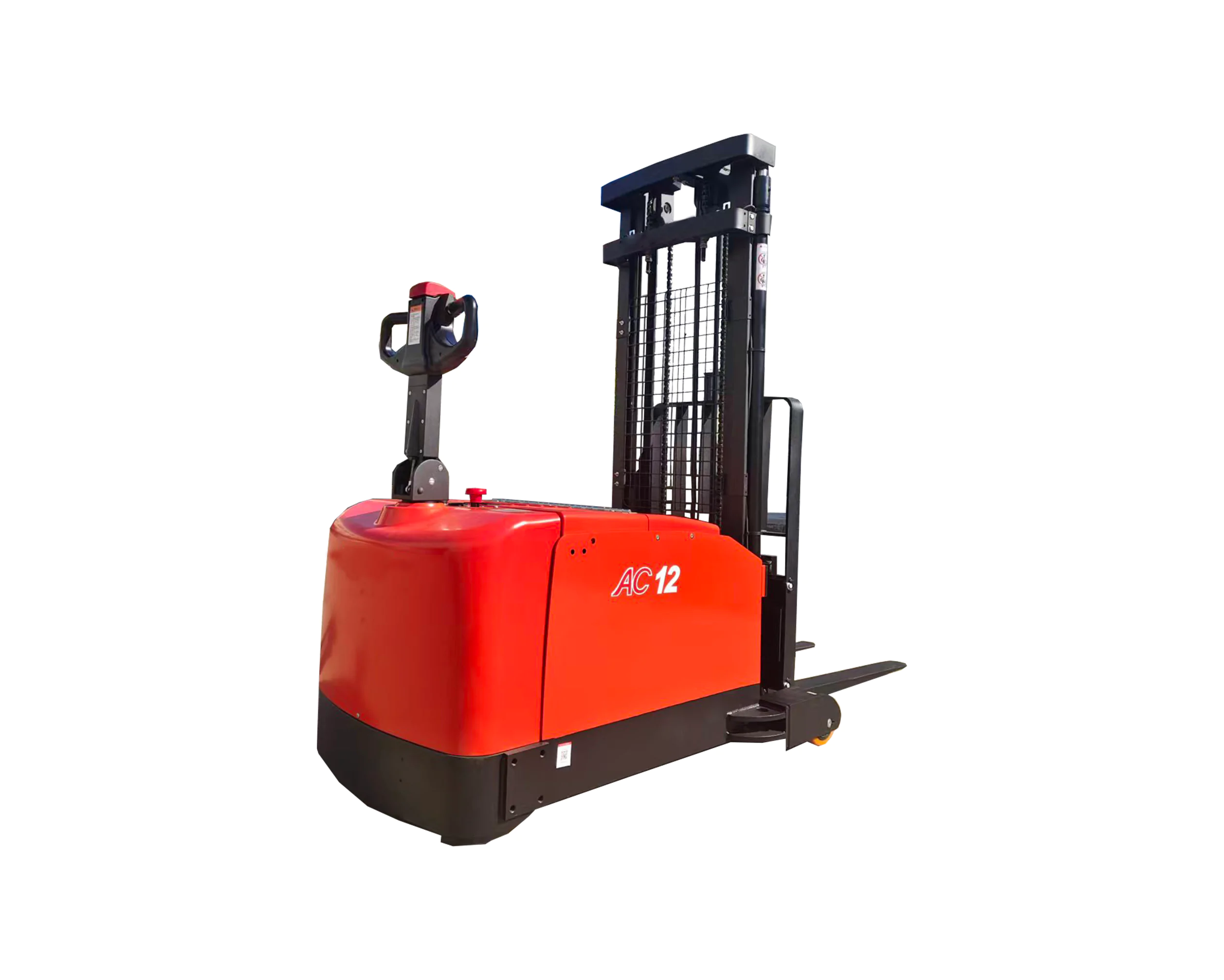
Electric tuggers are designed for different material handling requirements, and choosing the right model depends on towing capacity, travel distance, warehouse layout, operating frequency, and automation needs. The main types of electric tuggers include walk-behind electric tuggers, ride-on electric tuggers, heavy-duty electric tuggers, and automated AGV or AMR tuggers.
Understanding the differences between these electric tugger types can help warehouses, factories, distribution centers, and other industrial facilities select the appropriate material handling solution.
Different applications generally require different tugger designs:
- Small-scale transportation → Walk-behind electric tugger
- High-frequency transportation → Ride-on electric tugger
- Heavy industrial towing → Heavy-duty electric tugger
- Automated logistics → AGV or AMR electric tugger
1. What Are the Main Types of Electric Tuggers?
The main types of electric tuggers can be classified according to their operating method, towing capacity, working environment, and level of automation.
| Electric Tugger Type | Best For | Main Advantage |
|---|---|---|
| Walk-Behind Electric Tugger | Small warehouses and short-distance transport | Excellent maneuverability |
| Ride-On Electric Tugger | Large warehouses and long-distance transport | Higher productivity |
| Heavy-Duty Electric Tugger | Heavy industrial loads | High towing capacity |
| AGV/AMR Electric Tugger | Automated logistics operations | Autonomous transportation |
Each type has a different combination of towing capacity, operating range, maneuverability, and automation. The correct choice should therefore be based on the actual material handling process rather than towing capacity alone.
2. Walk-Behind Electric Tugger
What Is a Walk-Behind Electric Tugger?
A walk-behind electric tugger is a compact battery-powered tugger operated by a worker walking behind or beside the machine. It is designed for applications where flexibility and maneuverability are more important than maximum towing capacity.
Because of its compact design, a walk-behind electric tugger can be useful in facilities with narrow aisles, limited turning space, and frequent loading and unloading operations.
Key Features
Typical features include:
- Compact structure
- Easy maneuverability
- Simple operator control
- Low operating cost
- Easy access to confined areas
- Battery-powered operation
Advantages of Walk-Behind Electric Tuggers
Excellent Maneuverability
Walk-behind models are suitable for narrow aisles, crowded warehouse areas, and compact production spaces where larger ride-on equipment may be difficult to operate.
Lower Initial Investment
Their relatively simple structure can make walk-behind models suitable for operations that do not require high towing capacity or long-distance transportation.
Flexible Operation
A walk-behind tugger can be used for short-distance transportation and frequent loading or unloading between workstations.
Common Applications
Walk-behind electric tuggers are commonly considered for:
- Small warehouses
- Retail distribution areas
- Manufacturing workshops
- Internal material transport
- Healthcare facilities
- Short-distance cart movement
3. Ride-On Electric Tugger
What Is a Ride-On Electric Tugger?
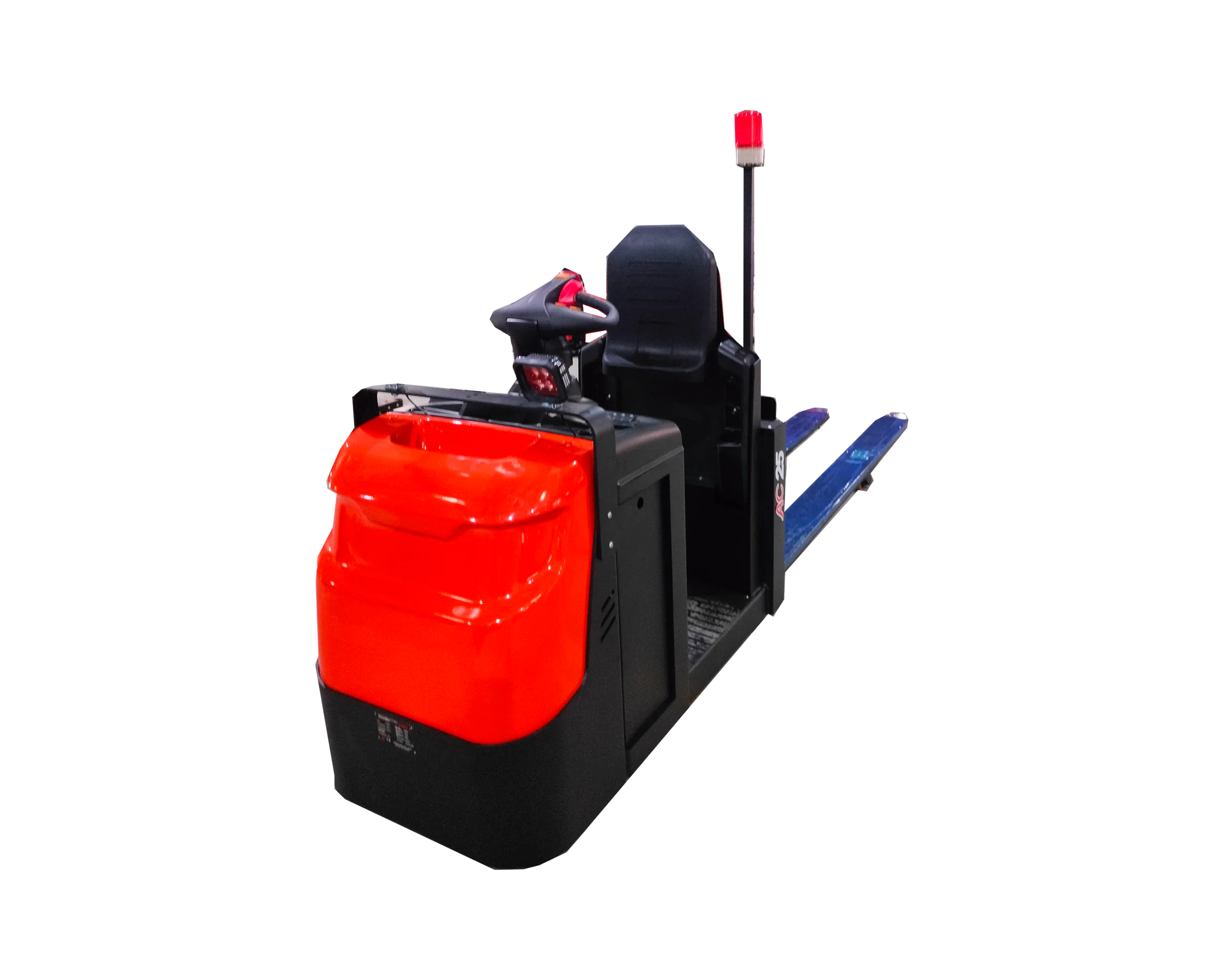
A ride-on electric tugger allows the operator to sit or stand on the machine while towing one or more carts. Compared with a walk-behind electric tugger, a ride-on model is generally better suited to longer travel distances and high-frequency internal transportation.
These machines can reduce the amount of walking required by operators and support more continuous material movement across large facilities.
Key Features
Common features include:
- Operator riding platform or seat
- Higher operating speed
- Longer working range
- Higher towing capacity
- Improved operator ergonomics
- Efficient cart transportation
Advantages of Ride-On Electric Tuggers
Better for Long-Distance Transportation
Ride-on tuggers are suitable for large warehouses, manufacturing plants, logistics centers, and other facilities where materials need to travel longer distances.
Reduced Operator Fatigue
The operator can ride on the machine rather than walking behind it throughout the entire transportation cycle. This can make the equipment more suitable for repetitive internal logistics tasks.
Higher Transportation Efficiency
A ride-on tugger can tow multiple carts in a single trip, depending on the equipment configuration, load requirements, and operating environment. This can reduce the number of transportation cycles required for repetitive material movement.
Common Applications
Typical applications include:
- Automotive manufacturing
- Large distribution centers
- Manufacturing plants
- Logistics centers
- Airports
- Industrial warehouses
4. Heavy-Duty Electric Tugger
What Is a Heavy-Duty Electric Tugger?
A heavy-duty electric tugger is designed for applications that require higher towing force and a more robust machine structure. These industrial electric tuggers are used to move heavy carts, containers, equipment, and other loads that exceed the requirements of standard tugger equipment.
The appropriate model should be selected according to the total towing weight, number of carts, floor conditions, gradients, travel distance, and required operating speed.
Key Features
Heavy-duty electric tuggers may include:
- High-capacity traction motor
- Reinforced chassis
- Heavy-duty wheels
- High towing force
- Robust towing connection
- Suitable drivetrain configuration
Common Applications
Heavy-duty models can be used for:
- Industrial containers
- Large material carts
- Heavy production equipment
- Manufacturing components
- Factory internal logistics
- Industrial material transportation
For heavy loads, towing capacity should always be evaluated together with the actual operating conditions. A tugger’s rated capacity alone does not determine whether it is suitable for a particular towing application.
5. AGV and AMR Electric Tuggers
What Are Automated Electric Tuggers?
AGV and AMR electric tuggers combine electric towing equipment with automated navigation and control technologies. They can transport carts or materials with limited manual intervention and are increasingly considered for smart manufacturing and automated logistics environments.
Unlike conventional electric tugger types, automated tugger systems may use navigation technologies, sensors, software, and fleet management systems to control transportation routes.
Key Features
Automated electric tuggers may provide:
- Automatic route planning
- Sensor-based navigation
- Obstacle detection
- Automated cart transportation
- Fleet management integration
- Reduced dependence on manual driving
Common Applications
AGV and AMR tuggers are suitable for applications such as:
- Smart factories
- Automated warehouses
- High-volume logistics operations
- Production line material delivery
- Repetitive internal transportation
The automation level required depends on the facility layout, transportation frequency, integration requirements, and available infrastructure.
6. Electric Tugger Type Comparison
Understanding the differences between the main types of electric tuggers makes it easier to match equipment with a specific material handling process.
| Feature | Walk-Behind | Ride-On | Heavy-Duty | AGV/AMR Tugger |
|---|---|---|---|---|
| Operator | Walking | Riding | Walking or riding, depending on design | Automatic |
| Towing Capacity | Low to medium | Medium to high | High | Medium to high |
| Typical Distance | Short | Medium to long | Medium to long | Medium to long |
| Maneuverability | Excellent | Good | Moderate | High |
| Automation | No | No | Optional | Yes |
| Best Use | Compact facilities | Large facilities | Heavy industrial tasks | Automated logistics |
This comparison is a general guide. Actual performance varies according to the specific tugger model, battery configuration, towing load, operating environment, and manufacturer specifications.
7. How to Choose an Electric Tugger Type?
Choosing an electric tugger requires more than comparing the rated towing capacity. Buyers should evaluate the complete material handling process before selecting equipment.
7.1 Consider the Towing Requirements
First, determine:
- Total towing weight
- Number of carts
- Cart dimensions
- Towing frequency
- Required travel speed
- Floor conditions
- Ramp or gradient requirements
A general selection guide is:
| Requirement | Recommended Type |
|---|---|
| Light carts and short-distance movement | Walk-behind tugger |
| Frequent internal transportation | Ride-on tugger |
| Heavy industrial loads | Heavy-duty tugger |
| Automated material transportation | AGV/AMR tugger |
7.2 Consider Operating Distance
Operating distance is an important factor when selecting between different electric tugger types.
For short-distance transportation, a walk-behind electric tugger may provide the maneuverability required for compact facilities.
For longer-distance transportation, a ride-on or heavy-duty electric tugger can reduce operator walking and support more efficient internal logistics.
7.3 Consider Warehouse Layout
The working environment should also be evaluated carefully.
Important factors include:
- Aisle width
- Turning radius
- Floor condition
- Loading and unloading areas
- Doorway dimensions
- Traffic conditions
- Available storage space
Compact facilities may benefit from a smaller tugger with high maneuverability, while large facilities may require a ride-on model with a longer operating range.
7.4 Consider Working Frequency
Transportation frequency can affect the appropriate equipment configuration.
For occasional and short-distance transportation, a walk-behind model may be sufficient.
For high-frequency and continuous transportation, a ride-on tugger may provide greater operational efficiency.
For repetitive transportation processes requiring minimal manual intervention, an AGV or AMR tugger can be considered.
8. Electric Tugger Applications by Industry
Different types of electric tuggers can be used across a wide range of industries. The appropriate model depends on load requirements, travel distance, facility layout, and workflow.
Warehousing and Distribution
Electric tuggers can transport carts and materials between receiving areas, storage zones, picking areas, and shipping operations.
Typical applications include:
- Cart transportation
- Internal logistics
- Order fulfillment support
- Line-side material movement
Manufacturing
Manufacturing facilities use electric tuggers to move materials between warehouses, production areas, and assembly stations.
Typical applications include:
- Production line feeding
- Material replenishment
- Work-in-process transportation
- Empty cart return
Automotive Industry
Automotive production often requires repetitive transportation of components between different production areas.
Electric tuggers can support:
- Parts delivery
- Assembly line support
- Component transportation
- Cart-based logistics
Healthcare Facilities
Compact electric tuggers can also support internal transportation in larger healthcare facilities where carts must be moved between designated areas.
Potential applications include:
- Linen carts
- Supply transportation
- Waste cart movement
- Internal logistics
9. Battery Options for Different Electric Tuggers
Battery selection affects operating time, charging requirements, maintenance, and overall equipment utilization.
Lead-Acid Batteries
Lead-acid batteries remain an established option for electric material handling equipment.
Potential advantages include:
- Lower initial battery cost
- Established technology
- Suitable for certain lower-frequency applications
They can be considered where charging time and battery replacement requirements are compatible with the operating schedule.
Lithium-Ion Batteries
Lithium-ion batteries are increasingly used in modern battery-powered tuggers, particularly where equipment operates frequently throughout the day.
Potential advantages include:
- Faster charging
- Opportunity charging capability
- High energy efficiency
- Lower routine battery maintenance
- Suitable for intensive operating schedules
Battery selection should consider the tugger’s electrical system, operating hours, charging infrastructure, ambient temperature, and expected duty cycle.
10. Electric Tugger Maintenance Requirements
Regular maintenance helps maintain equipment reliability and safe operation. The exact maintenance schedule should follow the manufacturer’s operating and maintenance instructions.
Daily Inspection
Before operation, check:
- Battery charge level
- Wheels and tires
- Tow hook and towing connection
- Steering and controls
- Braking system
- Warning devices
- Visible damage or abnormal conditions
Regular Maintenance
Depending on the equipment design and operating conditions, regular maintenance may include:
- Electrical system inspection
- Brake system inspection
- Battery inspection
- Wheel and tire inspection
- Steering system inspection
- Tow connection inspection
- Fastener and structural checks
A preventive maintenance schedule can help identify wear or potential faults before they interrupt material handling operations.
FAQ
1. What are the different types of electric tuggers?
The main types include walk-behind electric tuggers, ride-on electric tuggers, heavy-duty electric tuggers, and automated AGV or AMR tuggers. Each type is designed for different towing, distance, layout, and automation requirements.
2. Which electric tugger is suitable for warehouses?
The appropriate warehouse tugger depends on the facility size, towing load, travel distance, and transportation frequency. Walk-behind models can suit compact warehouses, while ride-on models can support longer-distance and higher-frequency transportation.
3. What is the difference between a walk-behind and ride-on electric tugger?
A walk-behind electric tugger is operated while the worker walks behind or beside the machine, making it suitable for compact areas and short-distance movement. A ride-on tugger allows the operator to travel on the machine and is generally suited to longer distances and higher-frequency transportation.
4. Can electric tuggers move heavy loads?
Yes. Heavy-duty electric tuggers are designed for applications requiring higher towing force. The correct model should be selected according to total towing weight, cart configuration, floor conditions, gradients, and other operating requirements.
5. Are AGV electric tuggers suitable for automated warehouses?
AGV and AMR electric tuggers can be used in automated warehouses and smart factories for repetitive transportation tasks. Their suitability depends on facility layout, navigation requirements, software integration, traffic conditions, and the required level of automation.
6. How do I choose between different electric tugger types?
Start by evaluating towing weight, number of carts, travel distance, aisle width, operating frequency, floor conditions, battery requirements, and automation needs. These factors help determine whether a walk-behind, ride-on, heavy-duty, or automated tugger is appropriate.
For more information about electric pallet trucks, electric stackers, electric tuggers, and other material handling solutions, visit UNILIFT MHE.
If you need product information or a customized material handling solution, visit Contact UNILIFT MHE.
For the latest company and industry updates, visit UNILIFT MHE News.
Follow UNILIFT MHE for More Material Handling Insights
Stay connected with UNILIFT MHE for the latest updates on electric pallet trucks, electric stackers, electric tuggers, warehouse equipment, material handling solutions, and industry insights. Follow our social media channels to discover new products, application scenarios, company updates, and practical information for modern warehouse and logistics operations.
Explore reliable electric pallet trucks, electric stackers, and material handling solutions at Unilift MHE.
If you would like to contact us, please click here.
If you would like to learn more about our news, please click here.
Facebook: Follow UNILIFT MHE on Facebook
TikTok: Follow UNILIFT MHE on TikTok
Instagram: Follow UNILIFT MHE on Instagram
X: Follow UNILIFT MHE on X
Pinterest: Explore UNILIFT MHE on Pinterest
LinkedIn: Connect with UNILIFT MHE on LinkedIn