Applications
Choosing the right Electric Stacker Lift Height is essential for safe and efficient warehouse operations. The required lifting height depends on rack height, pallet dimensions, load weight, aisle space, operating frequency, and the way materials are stored.
An electric stacker that cannot reach the required storage level may limit warehouse capacity, while a model with unnecessary lifting capability can increase equipment cost and may affect maneuverability. Understanding electric stacker lifting height helps warehouse managers select equipment that matches both current storage requirements and future operational needs.
1. What Is Electric Stacker Lift Height?
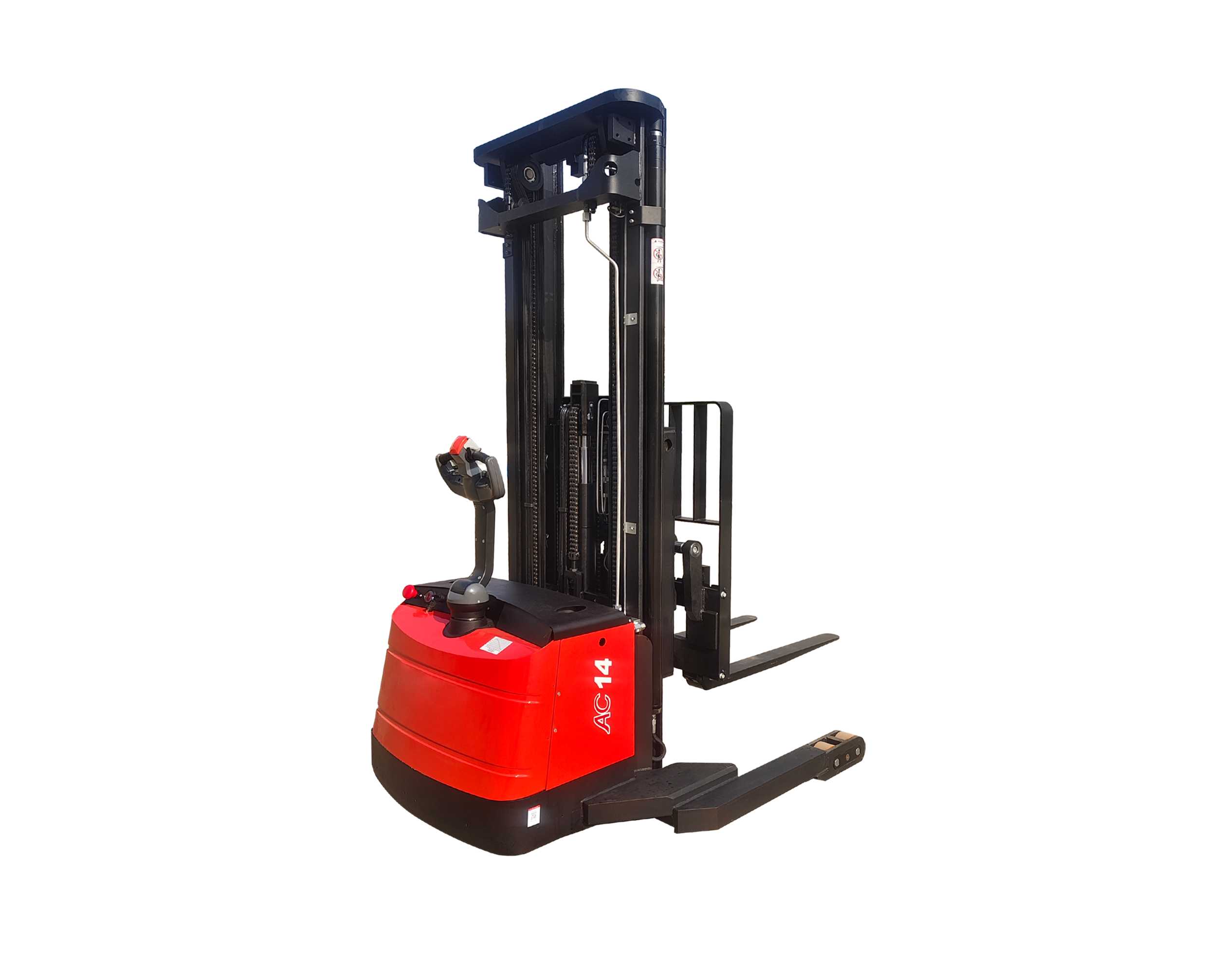
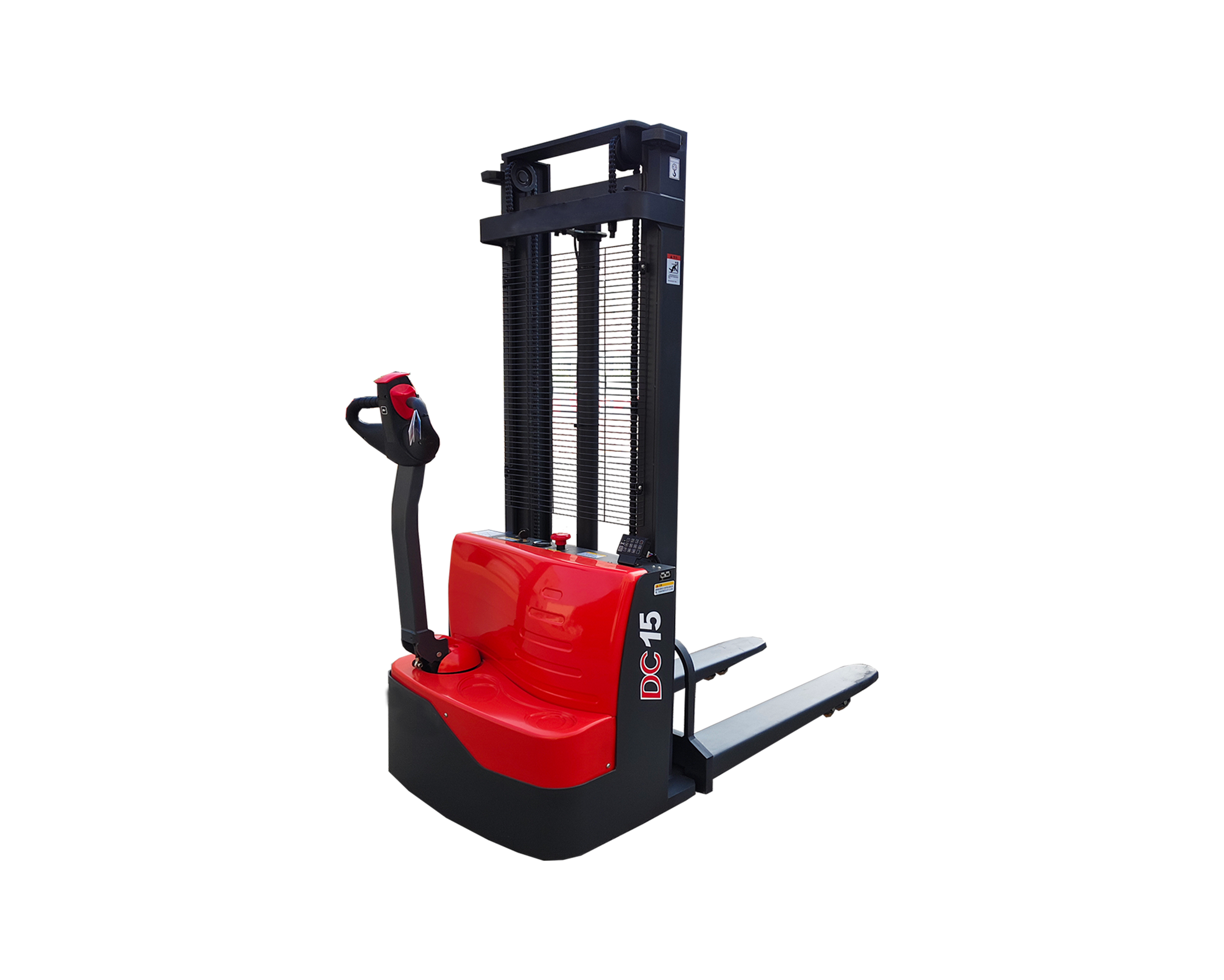
Electric Stacker Lift Height refers to the maximum height to which an electric stacker can raise its forks or load, depending on the specific mast and lifting configuration.
It is an important specification for warehouses that use pallet racks, floor stacking, production storage areas, and other vertical material handling systems.
When comparing electric stackers, do not consider lift height alone. The actual working height should also be evaluated together with:
- Rated load capacity
- Load center distance
- Mast configuration
- Overall mast height
- Free lift height
- Pallet dimensions
- Rack beam height
- Aisle width
- Ground conditions
For example, a warehouse with a 4-meter-high pallet rack may require more than simply a 4-meter lifting specification. The operator must also consider pallet height, required clearance, load capacity at height, and the overall mast height available within the building.
Typical Electric Stacker Lift Height Ranges
Electric stackers are available with different lifting configurations. The exact range varies by manufacturer and model, but they can generally be considered in the following application categories:
| Application Type | Typical Lift Height | Common Use |
|---|---|---|
| Low-level stacking | About 1.6–2.5 m | Floor stacking and low storage |
| Medium-height storage | About 2.5–3.5 m | General warehouse and manufacturing |
| High-level storage | About 3.5–6 m+ | Pallet racks and high-density storage |
| Specialized high-lift applications | Model dependent | High racks and demanding warehouse layouts |
These ranges are intended as general guidelines rather than fixed industry classifications. Always check the manufacturer’s technical specifications before selecting equipment.
2. Why Electric Stacker Lift Height Matters
The correct electric stacker lifting height directly affects how efficiently a warehouse can use its available vertical space.
2.1 Warehouse Space Utilization
Vertical storage allows warehouses to increase storage density without expanding their floor area.
If the storage system uses high pallet racks, a low-lift electric stacker may not be able to access upper rack positions. A suitable high-lift configuration can make better use of the available vertical space.
2.2 Storage Capacity
Higher rack positions can increase the number of pallet locations available within the same building footprint.
However, higher lifting capability should only be selected when the warehouse layout and storage system actually require it.
2.3 Operating Efficiency
The right lifting height reduces unnecessary handling steps.
When the equipment can reach the required storage position directly, operators can move pallets between the floor and rack locations more efficiently.
2.4 Stability and Safety
As the load is raised higher, stability becomes increasingly important.
Load weight, load center, mast design, floor conditions, and operating practices all affect equipment stability. The rated capacity at the required lifting height must therefore be checked rather than relying only on the maximum rated capacity shown for the machine.
For workplace safety requirements, operators should also follow applicable regulations and the equipment manufacturer’s instructions. OSHA Powered Industrial Trucks safety requirements
3. Factors to Consider When Choosing Electric Stacker Lift Height
Knowing how to choose electric stacker lift height requires more than measuring the warehouse ceiling. Several operating factors should be evaluated together.
3.1 Warehouse Rack Height
Rack height is usually the starting point for determining the required lifting capability.
Measure:
- Rack beam height
- Highest pallet storage position
- Pallet height
- Required clearance above the pallet
- Available ceiling height
- Potential future rack expansion
The electric stacker should have enough lifting capability to place the load at the highest required position while maintaining the manufacturer’s specified capacity and operating conditions.
3.2 Pallet Size and Load Weight
Pallet dimensions and load weight can significantly affect stacker selection.
Important parameters include:
- Maximum pallet weight
- Pallet length and width
- Load center distance
- Load height
- Load stability
- Fork dimensions
A stacker’s rated capacity may change at different lift heights and load centers. For this reason, warehouse managers should review the actual capacity chart for the selected model instead of assuming that the maximum rated capacity applies at every lifting height.
3.3 Aisle Width and Turning Space
Warehouse layout is another important part of the selection process.
Check:
- Working aisle width
- Turning radius
- Stacker overall dimensions
- Fork dimensions
- Pallet orientation
- Obstructions around storage racks
A high-lift electric stacker may provide the required vertical reach but still be unsuitable if the available aisle does not provide enough operating space.
3.4 Building Ceiling Height
The maximum lift height must also be compatible with the building.
When the forks are raised, the mast extends upward. The warehouse must provide sufficient clearance for the selected mast configuration.
This means operators should check both:
- Required fork lifting height
- Maximum overall mast height
A stacker that can technically reach the rack may not be suitable if the mast interferes with overhead doors, lighting, sprinklers, beams, or other structures.
3.5 Operating Frequency
Daily operating frequency can influence the overall equipment configuration.
For occasional pallet movement, a standard electric stacker may be sufficient.
For intensive warehouse operations, buyers may need to consider:
- Lifting speed
- Travel speed
- Battery capacity
- Charging method
- Duty cycle
- Operator ergonomics
- Maintenance requirements
Lift height remains important, but it should be considered as part of the complete equipment specification rather than as an isolated number.
4. Electric Stacker Lift Height for Different Warehouse Applications
The appropriate Electric Stacker Lift Height varies according to the warehouse application.
4.1 Low-Lift Electric Stackers for Small Warehouses
Typical lifting height:
- About 1.6–2.5 m
Suitable applications include:
- Small warehouses
- Retail storage areas
- Workshops
- Low-level pallet storage
- Ground-level stacking
Low-lift electric stackers are useful when pallets do not need to be placed on high racks.
Common advantages include:
- Compact design
- Easy maneuverability
- Simple operation
- Lower equipment investment
- Efficient low-level pallet handling
They are particularly suitable for businesses that primarily perform floor stacking or low-level storage.
4.2 Medium-Lift Electric Stackers for General Warehouses
Typical lifting height:
- About 2.5–3.5 m
Typical applications include:
- Manufacturing facilities
- Distribution warehouses
- General storage areas
- Production material storage
- Small and medium-sized logistics operations
Medium-lift models provide a practical balance between lifting capability, maneuverability, and general warehouse requirements.
They can be suitable for warehouses that use standard pallet racks without requiring very high vertical storage.
4.3 High-Lift Electric Stackers for High Racks
Typical lifting height:
- About 3.5 m and above, depending on the model
Suitable applications include:
- Large warehouses
- Distribution centers
- Logistics facilities
- High-density storage systems
- Tall pallet racks
A high lift electric stacker can help warehouses use vertical storage more effectively.
However, higher lifting height also makes capacity verification, mast selection, load stability, and operating clearance more important.
4.4 Electric Stackers for Narrow Aisle Warehouses
Narrow-aisle applications require attention to both lifting height and equipment dimensions.
Important features may include:
- Compact chassis
- Small turning radius
- Appropriate fork dimensions
- Precise lifting control
- Suitable mast configuration
- Good operator visibility
For high-density warehouses, selecting equipment based only on maximum lift height can lead to an unsuitable configuration. The stacker must also be compatible with the actual aisle width and pallet handling method.
5. Relationship Between Lift Height and Electric Stacker Capacity
One of the most important points in an electric pallet stacker lifting height guide is the relationship between lifting height and rated capacity.
5.1 Higher Lifting Heights Can Affect Rated Capacity
When a pallet is raised higher, the equipment must maintain stability while supporting the load.
The actual allowable capacity can depend on:
- Lift height
- Load center
- Load weight
- Mast configuration
- Attachment type
- Pallet dimensions
- Ground conditions
For example, a stacker rated for 1,500 kg at a particular reference condition may have a lower allowable capacity at greater lift heights or longer load centers.
Therefore, buyers should always check the manufacturer’s capacity chart for the intended operating conditions.
5.2 Load Center Is Also Important
Load center distance describes the horizontal distance between the load’s center of gravity and the vertical face of the forks or the relevant reference point specified by the manufacturer.
A longer load center can reduce the effective capacity of the equipment.
This is particularly important when handling:
- Long pallets
- Irregular loads
- Tall loads
- Loads extending beyond the standard pallet dimensions
6. Mast Type and Electric Stacker Lift Height
Mast configuration plays a major role in determining lifting performance and overall equipment dimensions.
6.1 Single Mast
Single-mast configurations are generally associated with lower lifting requirements.
Potential advantages include:
- Simple structure
- Good visibility
- Compact configuration
- Suitable for basic material handling
They can be appropriate for low-level storage and simple stacking applications.
6.2 Duplex Mast
A duplex mast provides greater lifting capability than a basic single-mast configuration.
It can be suitable for:
- General warehouse storage
- Medium-height pallet racks
- Manufacturing applications
- Routine pallet stacking
The actual lift height and free-lift characteristics depend on the specific model.
6.3 Triplex Mast
Triplex configurations are designed for applications requiring greater lifting height while maintaining a suitable overall mast configuration.
They are commonly considered for:
- High pallet racks
- High-density warehouses
- Distribution centers
- Applications with limited overhead clearance
When choosing a triplex electric stacker, buyers should evaluate both maximum lift height and collapsed mast height.
7. How to Match Electric Stacker Lift Height to Warehouse Applications
The following table provides a general starting point for warehouse electric stacker selection:
| Warehouse Application | General Lift Height Range | Recommended Equipment Type |
|---|---|---|
| Small storage room | 1.6–2.5 m | Low-lift electric stacker |
| Retail backroom | 1.6–3.0 m | Compact electric stacker |
| Manufacturing workshop | 2.5–3.5 m | Medium-lift electric stacker |
| Distribution center | 3.5 m+ | High-lift electric stacker |
| High-density warehouse | 4–6 m+ | High-lift or specialized stacker |
| Narrow-aisle storage | Model dependent | Compact high-lift stacker |
These ranges are general guidelines. The final equipment selection should be based on the actual rack dimensions, load characteristics, aisle width, and manufacturer’s rated capacity.
8. Common Mistakes When Choosing Electric Stacker Lift Height
8.1 Choosing Lift Height Based Only on Rack Height
A common mistake is to compare the maximum rack height directly with the maximum lifting height.
The actual calculation should also consider:
- Pallet height
- Required clearance
- Load center
- Rated capacity at height
- Mast configuration
- Building clearance
8.2 Ignoring Capacity at Maximum Lift Height
Maximum lifting height and maximum load capacity should not be treated as independent specifications.
Always confirm whether the equipment can safely handle the required pallet weight at the actual storage height.
8.3 Ignoring Future Warehouse Expansion
Warehouse requirements can change as inventory levels and storage systems expand.
If a business plans to install taller racks in the future, it may be useful to consider the expected storage configuration during equipment selection.
The goal is not to choose the highest possible lifting height, but to select equipment that remains appropriate for the planned operating environment.
8.4 Selecting Excessive Lift Height
A higher lifting specification is not automatically better.
If the warehouse only requires low-level pallet handling, excessive lifting capability may add unnecessary equipment cost and may result in a configuration that is not optimized for the application.
The correct approach is to match lifting performance to actual storage requirements.
9. Lift Height and Battery Selection for Electric Stackers
Battery selection should be considered alongside the lifting requirements and daily duty cycle.
9.1 Lead-Acid Battery Electric Stackers
Lead-acid batteries can be suitable for conventional warehouse operations where charging time and battery maintenance can be incorporated into the operating schedule.
Typical applications include:
- Standard warehouse operations
- Moderate daily usage
- Single-shift operations
9.2 Lithium-Ion Battery Electric Stackers
Lithium-ion battery configurations are increasingly used for applications requiring frequent operation and flexible charging.
Potential advantages include:
- Opportunity charging
- Reduced routine battery maintenance
- High energy efficiency
- Suitability for multi-shift operations
- Consistent performance during repeated material handling
However, battery selection should be based on actual working hours, charging infrastructure, duty cycle, and total cost of ownership rather than lift height alone.
10. How to Choose the Right Electric Stacker Lift Height
Follow these steps when selecting an electric stacker:
Step 1: Measure the Storage System
Record:
- Rack beam height
- Highest pallet position
- Pallet height
- Required clearance
Step 2: Determine the Maximum Load
Identify:
- Maximum pallet weight
- Load center
- Load dimensions
- Load stability
Step 3: Check the Warehouse Layout
Measure:
- Aisle width
- Turning space
- Door clearance
- Ceiling height
- Overhead obstructions
Step 4: Select the Appropriate Mast
Compare:
- Single mast
- Duplex mast
- Triplex mast
- Required free lift
- Collapsed mast height
Step 5: Verify Capacity at the Required Height
Do not rely only on the nominal capacity listed in the product name.
Confirm that the selected model can handle the required load at the intended lifting height and load center.
Step 6: Consider Daily Operating Conditions
Evaluate:
- Daily pallet movements
- Operating hours
- Number of shifts
- Charging opportunities
- Travel distance
- Required lifting frequency
Step 7: Consider Future Requirements
Review planned changes to:
- Rack height
- Warehouse capacity
- Pallet specifications
- Operating volume
- Storage layout
This approach provides a more reliable basis for selecting an electric stacker than choosing equipment according to lift height alone.
11. Future Trends in Electric Stacker Lifting Technology
Modern warehouse operations increasingly focus on higher storage density, energy efficiency, operator safety, and precise material handling.
Future electric stacker development is expected to focus on technologies such as:
- Intelligent lifting control
- Automatic height positioning
- Lithium-ion battery systems
- Smart warehouse integration
- Improved operator assistance
- Enhanced safety monitoring
- More precise load handling
These technologies can help warehouse operators improve productivity while making better use of available storage space.
12. FAQ About Electric Stacker Lift Height
Q1: What lift height do I need for an electric stacker?
The required lift height depends on rack height, pallet dimensions, load weight, required clearance, and warehouse layout. Always check the manufacturer’s capacity and mast specifications at the required height.
Q2: Is a higher lifting height always better?
No. The appropriate lift height should match the actual storage requirements. Excessive lifting capability may add unnecessary cost without providing a practical operational benefit.
Q3: Does lifting height affect electric stacker capacity?
Yes. Rated capacity can vary according to lifting height, load center, mast configuration, and other operating conditions. Check the manufacturer’s rated capacity chart for the intended application.
Q4: What electric stacker is suitable for a small warehouse?
A low- or medium-lift electric stacker may be suitable for small warehouses with low or medium storage heights. The final selection should also consider aisle width, pallet weight, and operating frequency.
Q5: What lift height is suitable for distribution centers?
Distribution centers often use medium- or high-lift electric stackers because pallet racks and vertical storage systems are common. The required height should be determined from the actual rack configuration and load requirements.
Q6: How do I calculate the required lift height?
Start with the highest pallet storage position, then consider pallet height, required clearance, load capacity at height, and the mast configuration. The manufacturer’s technical specifications should be used to verify the final selection.
Conclusion
Choosing the correct Electric Stacker Lift Height requires a complete assessment of the warehouse rather than simply selecting the highest available lifting specification.
Rack height, pallet weight, load center, aisle width, mast configuration, ceiling clearance, battery requirements, and daily operating frequency should all be considered together.
For businesses looking for electric pallet trucks, electric stackers, and customized material handling solutions, explore UNILIFT MHE electric material handling solutions.
For product inquiries or equipment selection support, visit UNILIFT MHE Contact Us.
You can also explore the latest company updates and industry information through UNILIFT MHE News.
Follow UNILIFT MHE for More Material Handling Insights
Stay connected with UNILIFT MHE for the latest updates on electric pallet trucks, electric stackers, electric tuggers, warehouse equipment, material handling solutions, and industry insights. Follow our social media channels to discover new products, application scenarios, company updates, and practical information for modern warehouse and logistics operations.
Explore reliable electric pallet trucks, electric stackers, and material handling solutions at Unilift MHE.
If you would like to contact us, please click here.
If you would like to learn more about our news, please click here.
Facebook: Follow UNILIFT MHE on Facebook
TikTok: Follow UNILIFT MHE on TikTok
Instagram: Follow UNILIFT MHE on Instagram
X: Follow UNILIFT MHE on X
Pinterest: Explore UNILIFT MHE on Pinterest
LinkedIn: Connect with UNILIFT MHE on LinkedIn