Introduction
Modern warehouses require efficient, safe, and reliable material handling equipment to manage increasing demands for storage and distribution.
An Electric Counterbalance Forklift Truck has become one of the most widely used solutions for transporting pallets, loading goods, and supporting warehouse operations.Compared with diesel forklifts, electric models provide quieter operation, zero emissions, lower maintenance requirements, and better suitability for indoor environments.
This Electric Counterbalance Forklift Truck Warehouse Operation Guide explains how electric forklifts work, how to operate them safely, and how they improve warehouse productivity.
What Is an Electric Counterbalance Forklift Truck?
An Electric Counterbalance Forklift Truck is a battery-powered industrial vehicle that works for lifting and transporting materials.Unlike reach trucks or pallet trucks, counterbalance forklifts use a rear counterweight to balance the load carried by the forks.
This structure allows the forklift to handle heavier loads without requiring additional support legs.The main components of counterbalance forklift truck include:
- Battery system
- Electric drive motor
- Hydraulic lifting system
- Fork assembly
- Counterweight structure
- Control system
If you want to learn more about the structure of electric counterbalance forklifts, you can read this article.
How Does an Electric Counterbalance Forklift Work?
The working principle of an electric forklift is based on several integrated systems parts.The working mechanism of a forklift consists of the cooperation between each system.
Battery System
Drive Motor System
The electric motor converts battery power into movement, providing smooth acceleration, low noise, high efficiency, and reduced maintenance.
Hydraulic Lifting System
The hydraulic system controls lifting, lowering, and positioning operations, enabling safe and accurate pallet handling.
Electric Counterbalance Forklift:Step By Step
1. Hydraulic System for Load Lifting
The lifting operation of a counterbalance forklift mainly relies on the hydraulic system. When the operator activates the lifting control lever, the hydraulic pump delivers oil into the lift cylinder, pushing the piston to move. The piston drives the mast upward and uses the chain and fork carriage to raise or lower the forks, allowing the forklift to lift and position loads efficiently.
2. Counterweight for Stability
The key feature of a counterbalance forklift is the rear counterweight. Since the load is carried at the front of the forklift, it creates a forward tipping force. The rear counterweight offsets this force by balancing the load weight, reducing the risk of tipping and improving overall operating safety and stability.
3. Drive System for Movement
Electric counterbalance forklifts are powered by the battery, controller, and drive motor. The lithium battery supplies electrical energy, the controller regulates power output, and the drive motor converts electrical energy into mechanical power to move the forklift forward and backward. Compared with fuel-powered forklifts, electric models offer lower noise, zero emissions, and reduced maintenance requirements, making them ideal for indoor applications.
4. Steering System for Direction Control
Counterbalance forklifts usually adopt a rear-wheel steering system, which is different from standard vehicles. This design provides a smaller turning radius, allowing operators to maneuver easily in narrow warehouse aisles and confined working spaces.
5. Mast System for Precise Material Handling
The mast system is an essential structure for lifting and handling operations, including the mast, lift cylinder, fork carriage, and forks. By controlling the mast lifting and tilting functions, operators can accurately position the forks to pick up, transport, and stack pallets safely and efficiently.
Electric Counterbalance Forklift Operate Safely Guidelines
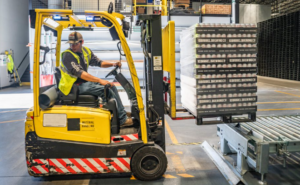
Safety should always be the top priority.Important safety practices include:
Operator Training
Load Management
Never exceed the rated capacity of the forklift.
Pedestrian Safety
Maintain safe distance from workers and use warning signals when necessary.It is a safety operation competency that a qualified operator must possess.
Applications of Electric Counterbalance Forklifts in Warehouses
Electric Counterbalance Forklift for Warehouse
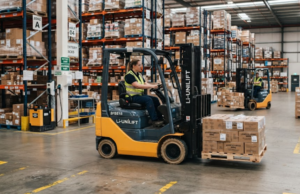
Electric forklifts are widely used for pallet handling, rack storage, loading, unloading, and internal logistics. With low noise, efficient performance, and excellent maneuverability, they help warehouses and factories improve handling efficiency and optimize operations.
Electric Forklift for Distribution Center
Distribution centers use electric forklifts for frequent handling, order fulfillment, and goods movement. They help improve warehouse efficiency and ensure smooth logistics operations.
Manufacturing Warehouse Applications
Factories use electric forklifts for raw material supply, production line transport, and finished product handling. They help improve material flow efficiency and support smooth production operations.
Maintenance Tips for Electric Counterbalance Forklift Trucks
Regular maintenance improves powered counterbalance forklift truck reliability.Important maintenance tasks include:
Battery Inspection
Check the battery condition, connections, and charging performance to ensure stable power supply and reliable operation.
Tire Checking
Inspect tire wear, damage, and pressure to maintain safe driving performance and forklift stability.
Hydraulic System Inspection
Check hydraulic oil levels, cylinders, and hoses to ensure smooth lifting and lowering operations.
Brake Testing
Test the braking system regularly to ensure safe stopping and prevent operational risks.
Electrical Component Inspection
Inspect controllers, wiring, and electrical connections to ensure proper system performance.
Following Electric Forklift Maintenance and Safety practices reduces downtime and extends equipment lifespan.
Why Choose a Professional Electric Counterbalance Forklift Supplier?
Choosing a reliable supplier ensures long-term equipment performance.A professional Electric Counterbalance Forklift Supplier should provide:
- Advanced manufacturing capability
- Quality control systems
- OEM services
- Customized solutions
- Spare parts support
Conclusion
An Electric Counterbalance Forklift Truck is an essential solution for modern warehouse operations.
UNILIFT-mhe is a professional material handling equipment manufacturer specializing in various types of forklifts, including electric counterbalance forklifts, reach trucks, and lightweight forklifts, designed to meet different industrial and warehouse handling needs. If you are looking for reliable forklift solutions to improve your business operations, please feel free to contact us. We are committed to providing high-quality products and customized material handling solutions for customers worldwide.
FAQ
1. What is an Electric Counterbalance Forklift Truck?
An Electric Counterbalance Forklift Truck is an electric-powered forklift that uses a rear counterweight or battery weight to balance loads during lifting and transportation.
2. How does an Electric Counterbalance Forklift Truck work?
It uses battery power to drive the motor and hydraulic system for moving, lifting, and lowering loads.
3. Where are Electric Counterbalance Forklift Trucks used?
They are widely used in warehouses, factories, logistics centers, and manufacturing facilities.
4. What are the advantages of Electric Counterbalance Forklift Trucks?
They provide zero emissions, low noise, high efficiency, and lower maintenance costs.
5. How can you operate an Electric Counterbalance Forklift Truck safely?
Follow load limits, inspect the forklift before use, and operate according to safety procedures.
6. How do you maintain an Electric Counterbalance Forklift Truck?
Regularly check the battery, hydraulic system, tires, and electrical components to ensure reliable operation.